Malik Ihtzaz Ahmed, Ramadori Giuliano
Department of Geriatrics, University Medical Center Goettingen, Waldweg 33, D-37073 Goettingen, Germany.
Center of Internal Medicine, University Medical Center Goettingen, Robert-Koch Str. 38, D-37075 Goettingen, Germany.
Biology (Basel). 2022 Mar 18;11(3):470. doi: 10.3390/biology11030470.
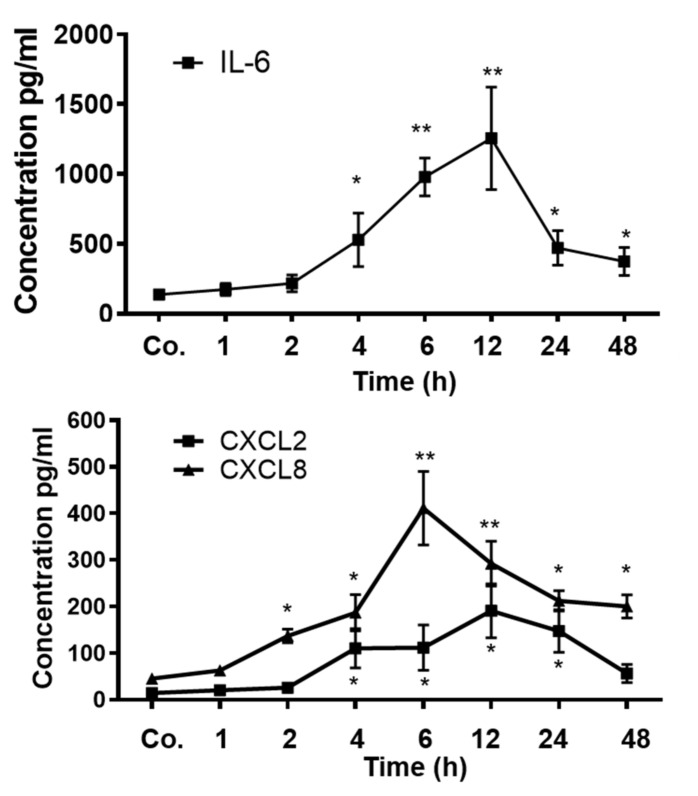
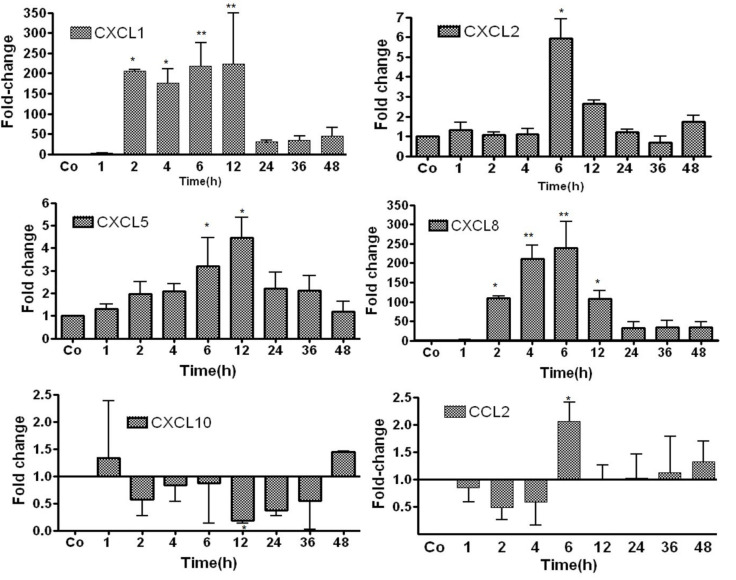
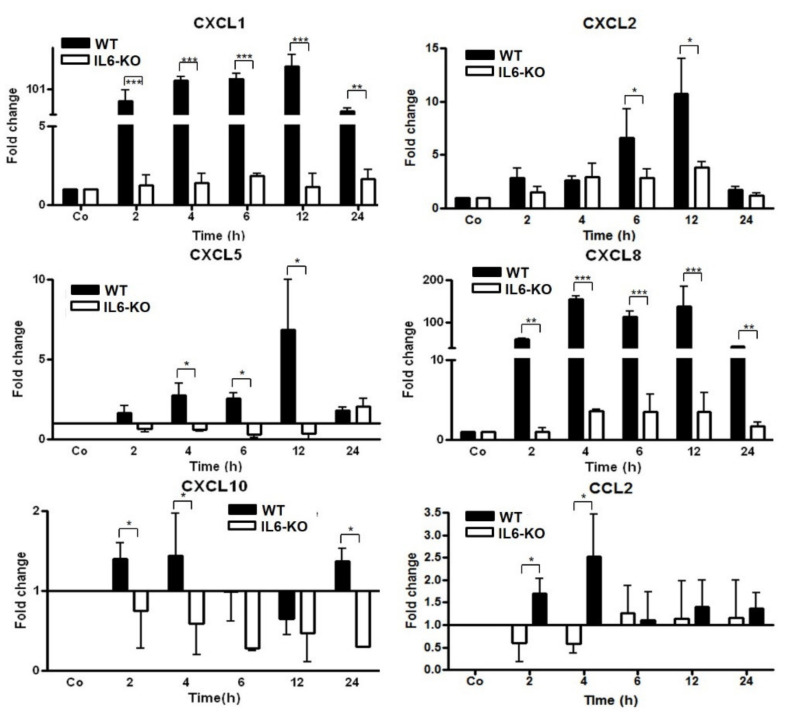
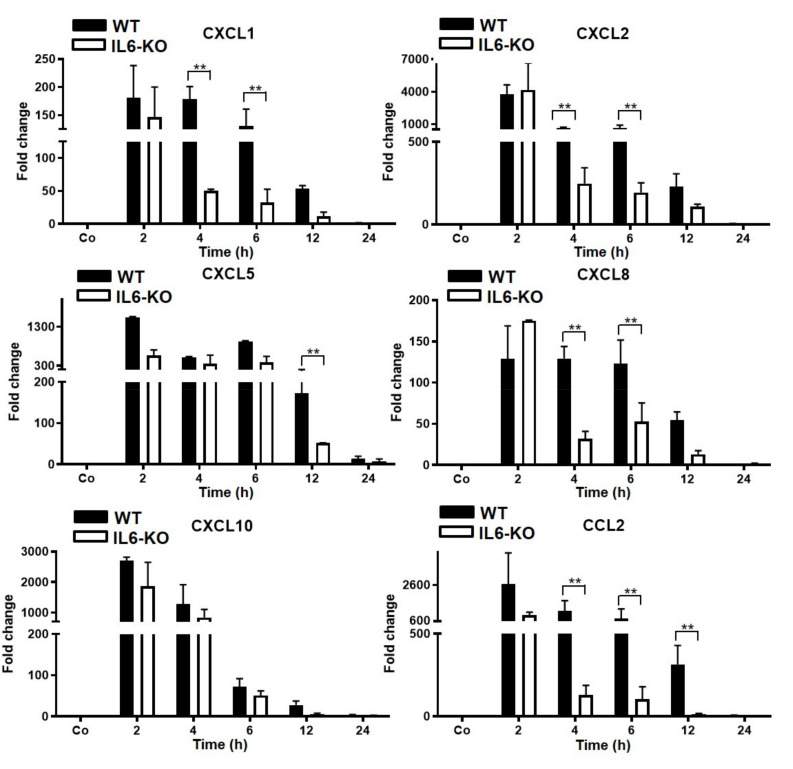
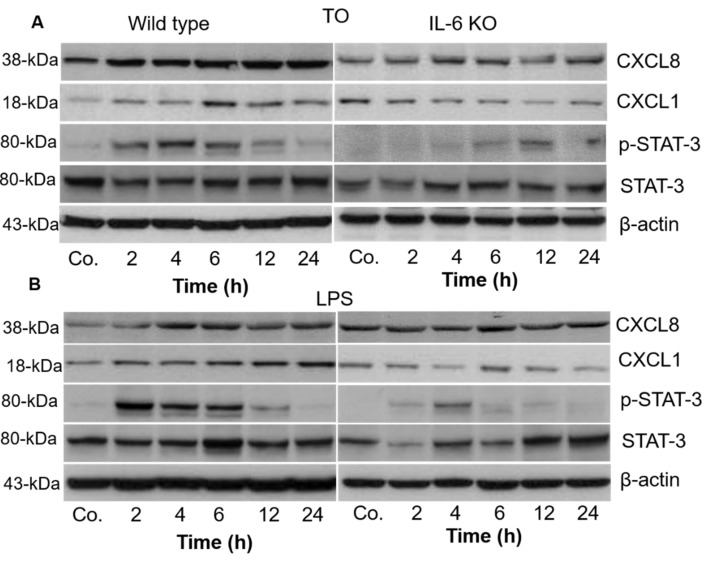
A mild to moderate increase in acute-phase proteins (APPs) and a decrease in serum albumin levels are detected in hospitalized COVID-19 patients. A similar trend is also observed for acute-phase cytokines (APC), mainly IL6, besides chemokines (e.g., CXCL8 and CCL2). However, the source of the chemokines in these patients at different stages of disease remains to be elucidated. We investigated hepatic gene expression of CXC- and CC-chemokines in a model of a localized extrahepatic aseptic abscess and in a model of septicemia produced by the intramuscular injection of turpentine oil (TO) into each hindlimb or lipopolysaccharide (LPS) intraperitoneally (i.p.) in rats and mice (wild-type (WT) and IL6-KO). Together with a striking increase in the serum IL6 level, strong serum CXCL2 and CXCL8 concentrations were detected. Correspondingly, rapid (2 h) upregulation of CXCL1, CXCL2, CXCL5, and CXCL8 was observed in rat liver after intramuscular TO injection. The induction of the gene expression of CXCL1 and CXCL8 was the fastest and strongest. The hepatic CXC-chemokines behaved like positive APPs that depend on IL6 production by activated macrophages recruited to extrahepatic damaged tissue. Chemokine upregulation was greatly reduced in IL6-KO mice. However, IL6 was dispensable in the LPS-APR model, as massive induction of hepatic chemokines studied was measured in IL6-KO mice.
在住院的新冠病毒疾病(COVID-19)患者中检测到急性期蛋白(APPs)有轻度至中度升高,血清白蛋白水平降低。除趋化因子(如CXCL8和CCL2)外,急性期细胞因子(APC),主要是白细胞介素6(IL6)也观察到类似趋势。然而,这些患者在疾病不同阶段趋化因子的来源仍有待阐明。我们在局部肝外无菌性脓肿模型以及通过向大鼠和小鼠(野生型(WT)和IL6基因敲除(IL6-KO))的每个后肢肌肉注射松节油(TO)或腹腔内(i.p.)注射脂多糖(LPS)产生的败血症模型中,研究了CXC趋化因子和CC趋化因子的肝脏基因表达。随着血清IL6水平显著升高,检测到血清CXCL2和CXCL8浓度升高。相应地,肌肉注射TO后2小时,在大鼠肝脏中观察到CXCL1、CXCL2、CXCL5和CXCL8迅速上调。CXCL1和CXCL8基因表达的诱导最快且最强。肝脏CXC趋化因子的表现类似于依赖募集到肝外受损组织的活化巨噬细胞产生的IL6的阳性急性期蛋白。趋化因子上调在IL6-KO小鼠中大大降低。然而,在LPS-急性期反应(APR)模型中,IL6是可有可无的,因为在IL6-KO小鼠中检测到所研究的肝脏趋化因子大量诱导。