Institute of Biomedicine, University of Turku, 20520 Turku, Finland.
Turku Doctoral Programme of Molecular Medicine, University of Turku, 20520 Turku, Finland.
Viruses. 2022 Mar 4;14(3):525. doi: 10.3390/v14030525.
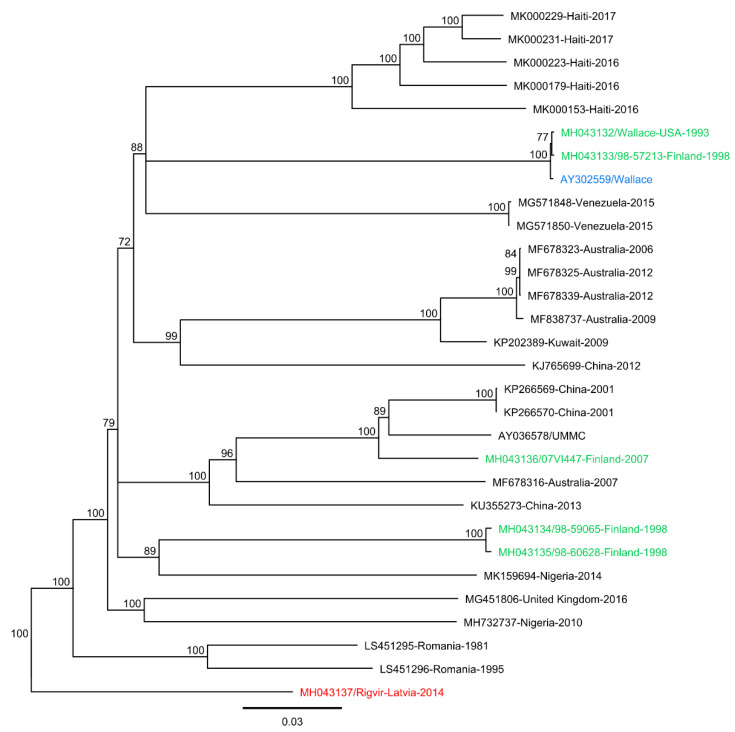
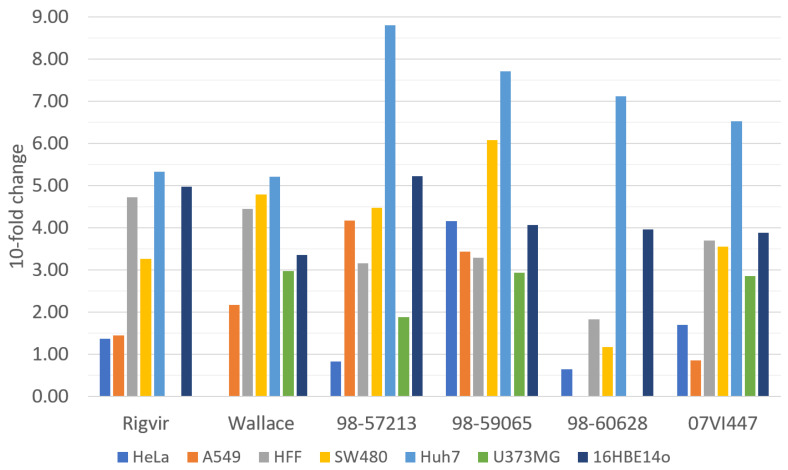
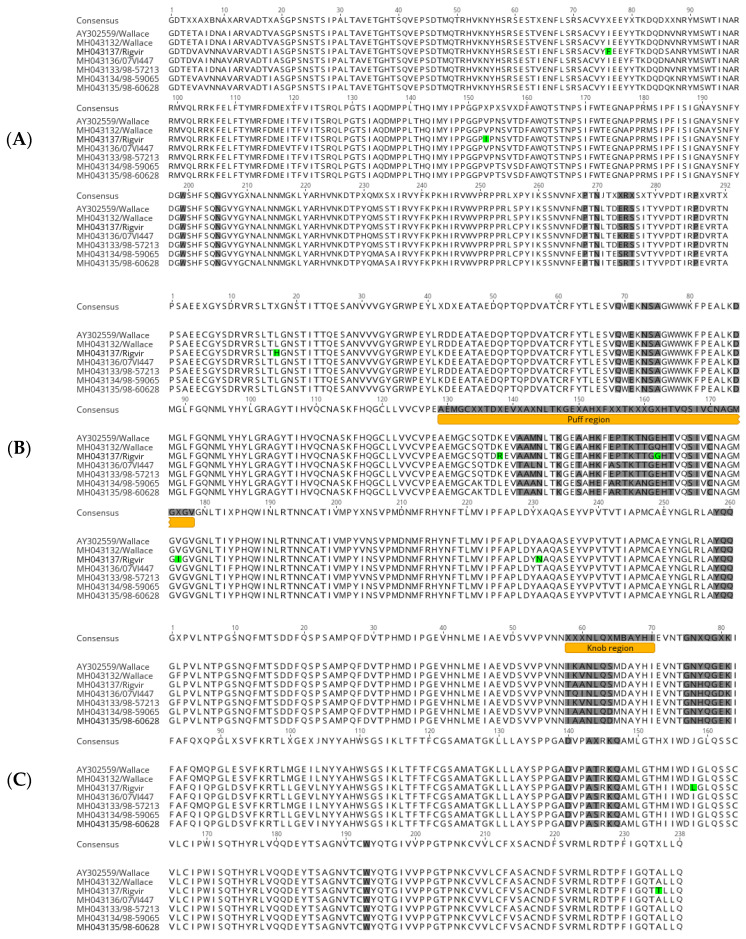
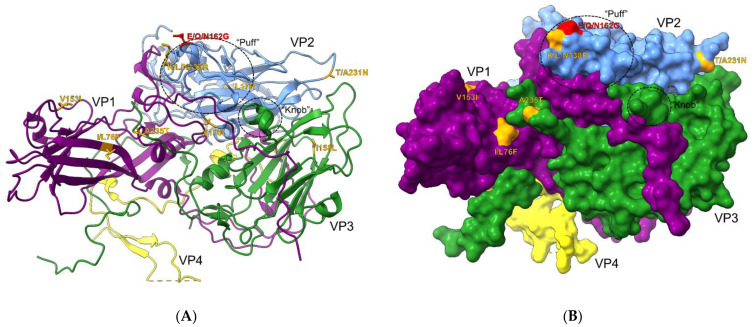
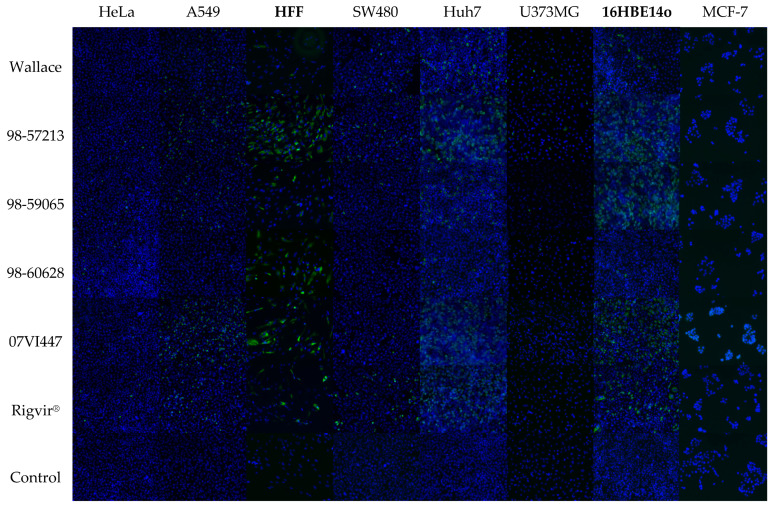
Rigvir is a cell-adapted, oncolytic virotherapy enterovirus, which derives from an echovirus 7 (E7) isolate. While it is claimed that Rigvir causes cytolytic infection in several cancer cell lines, there is little molecular evidence for its oncolytic and oncotropic potential. Previously, we genome-sequenced Rigvir and five echovirus 7 isolates, and those sequences are further analyzed in this paper. A phylogenetic analysis of the full-length data suggested that Rigvir was most distant from the other E7 isolates used in this study, placing Rigvir in its own clade at the root of the phylogeny. Rigvir contained nine unique mutations in the viral capsid proteins VP1-VP4 across the whole data set, with a structural analysis showing six of the mutations concerning residues with surface exposure on the cytoplasmic side of the viral capsid. One of these mutations, E/Q/N162G, was located in the region that forms the contact interface between decay-accelerating factor (DAF) and E7. Rigvir and five other isolates were also subjected to cell infectivity assays performed on eight different cell lines. The used cell lines contained both cancer and non-cancer cell lines for observing Rigvir's claimed properties of being both oncolytic and oncotropic. Infectivity assays showed that Rigvir had no discernable difference in the viruses' oncolytic effect when compared to the Wallace prototype or the four other E7 isolates. Rigvir was also seen infecting non-cancer cell lines, bringing its claimed effect of being oncotropic into question. Thus, we conclude that Rigvir's claim of being an effective treatment against multiple different cancers is not warranted under the evidence presented here. Bioinformatic analyses do not reveal a clear mechanism that could elucidate Rigvir's function at a molecular level, and cell infectivity tests do not show a discernable difference in either the oncolytic or oncotropic effect between Rigvir and other clinical E7 isolates used in the study.
里格维是一种细胞适应的溶瘤病毒治疗药物,来源于肠道病毒 7(E7)分离株。虽然据称里格维可导致几种癌细胞系发生细胞溶解性感染,但它的溶瘤和致癌潜力的分子证据很少。先前,我们对里格维和五种肠道病毒 7 分离株进行了基因组测序,本文进一步分析了这些序列。全长数据的系统发育分析表明,里格维与本研究中使用的其他 E7 分离株最为不同,在系统发育树的根部自成一个分支。在整个数据集的病毒衣壳蛋白 VP1-VP4 中,里格维包含 9 个独特突变,结构分析显示其中 6 个突变涉及病毒衣壳细胞质侧表面暴露的残基。这些突变之一 E/Q/N162G 位于形成衰变加速因子(DAF)和 E7 之间接触界面的区域。里格维和其他五种分离株也在八种不同细胞系上进行了细胞感染性测定。所用的细胞系包括癌症细胞系和非癌症细胞系,以观察里格维据称的溶瘤和致癌特性。感染性测定表明,与华莱士原型或其他四种 E7 分离株相比,里格维在病毒的溶瘤作用方面没有明显差异。还观察到里格维感染非癌细胞系,这使其声称的致癌作用受到质疑。因此,我们得出结论,根据这里提出的证据,里格维作为一种有效治疗多种不同癌症的药物是没有根据的。生物信息学分析没有揭示出可以阐明里格维在分子水平上功能的明确机制,细胞感染性测试也没有显示里格维和本研究中使用的其他临床 E7 分离株在溶瘤或致癌作用方面有明显差异。