Ivanov Marija, Novović Katarina, Malešević Milka, Dinić Miroslav, Stojković Dejan, Jovčić Branko, Soković Marina
Institute for Biological Research "Siniša Stanković"-National Institute of Republic of Serbia, University of Belgrade, Bulevar despota Stefana 142, 11000 Belgrade, Serbia.
Institute of Molecular Genetics and Genetic Engineering, University of Belgrade, Vojvode Stepe 444A, 11042 Belgrade, Serbia.
Pharmaceuticals (Basel). 2022 Mar 21;15(3):385. doi: 10.3390/ph15030385.
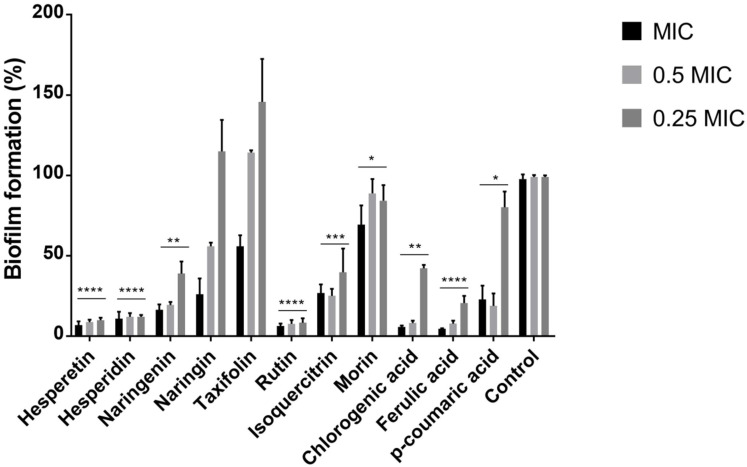
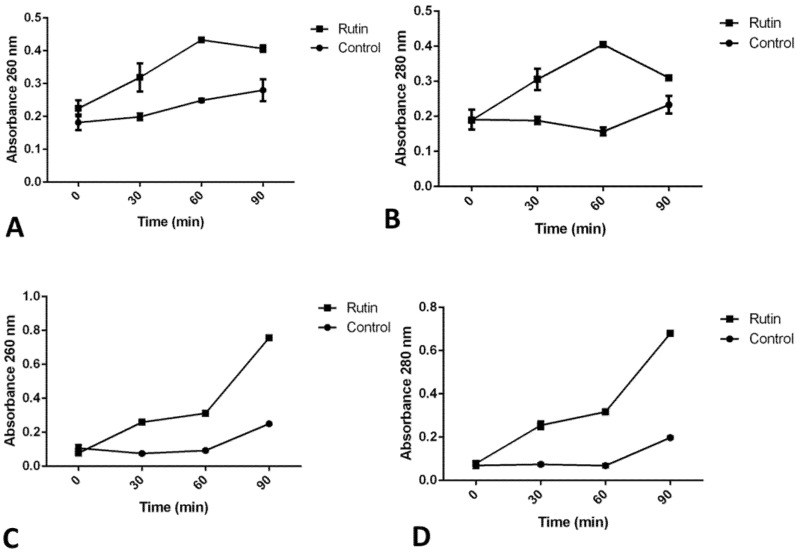
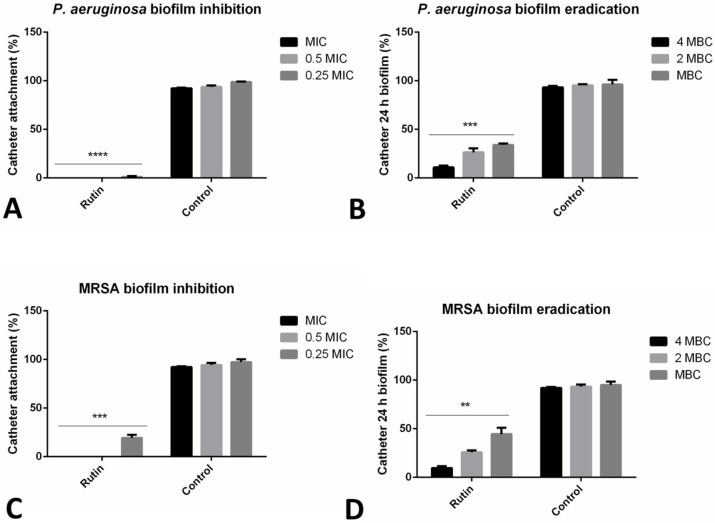
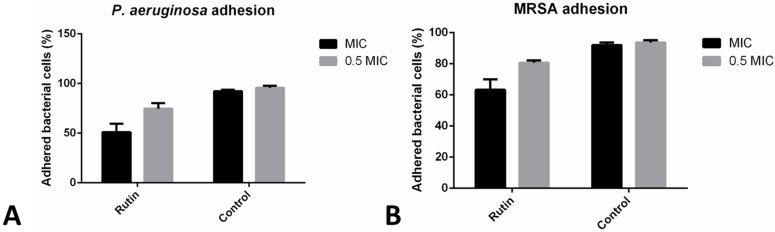
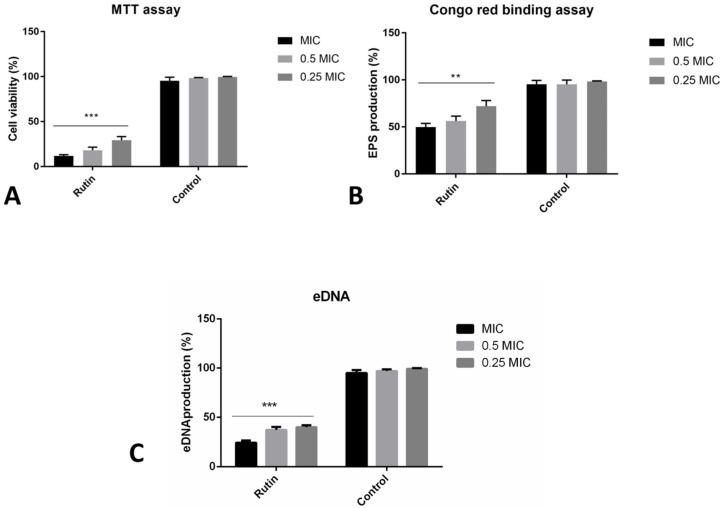
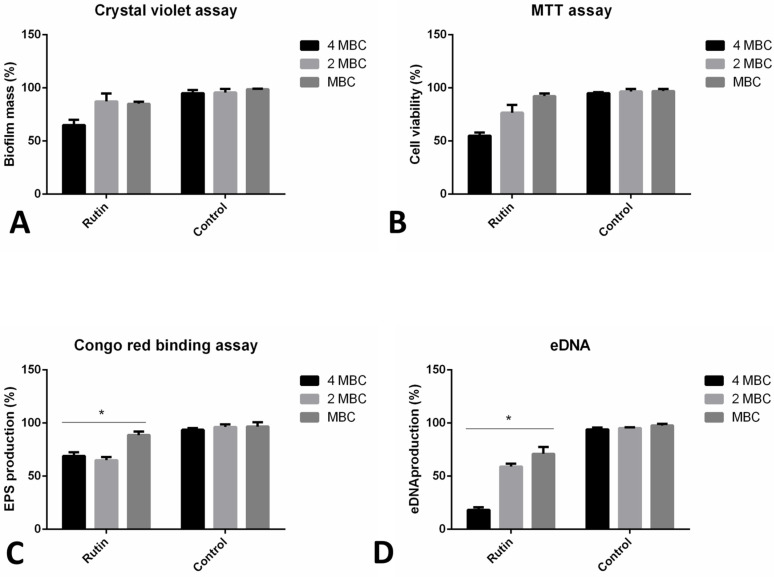
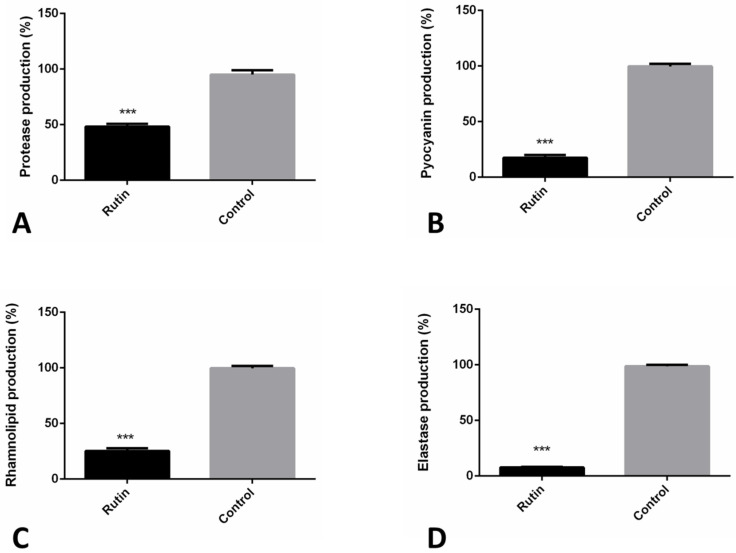
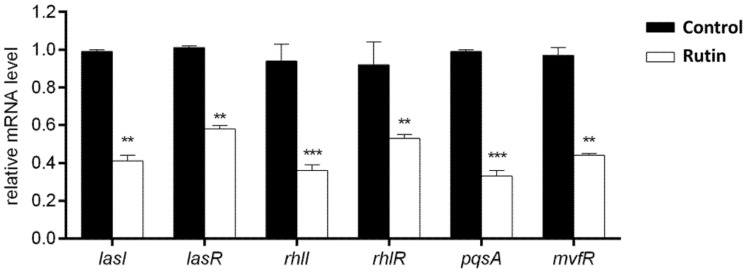
The rising incidence of antibiotic resistant microorganisms urges novel antimicrobials development with polyphenols as appealing potential therapeutics. We aimed to reveal the most promising polyphenols among hesperetin, hesperidin, naringenin, naringin, taxifolin, rutin, isoquercitrin, morin, chlorogenic acid, ferulic acid, -coumaric acid, and gallic acid based on antimicrobial capacity, antibiofilm potential, and lack of cytotoxicity towards HaCaT, and to further test its antivirulence mechanisms. Although the majority of studied polyphenols were able to inhibit bacterial growth and biofilm formation, the most promising activities were observed for rutin. Further investigation proved rutin's ability to prevent/eradicate and MRSA urinary catheter biofilms. Besides reduction of biofilm biomass, rutin antibiofilm mechanisms included reduction of cell viability, exopolysaccharide, and extracellular DNA levels. Moderate reduction of bacterial adhesion to human keratinocytes upon treatment was observed. Rutin antivirulence mechanisms included an impact on protease, pyocyanin, rhamnolipid, and elastase production and the downregulation of the , , , , and genes. Rutin also interfered with membrane permeability. Polyphenols could repress antibiotic resistant bacteria. Rutin has shown wide antimicrobial and antibiofilm capacity employing a range of mechanisms that might be used for the development of novel antimicrobials.
抗生素耐药微生物的发病率不断上升,促使人们开发新型抗菌药物,而多酚作为具有吸引力的潜在治疗药物备受关注。我们旨在基于抗菌能力、抗生物膜潜力以及对HaCaT细胞无细胞毒性,揭示橙皮素、橙皮苷、柚皮素、柚皮苷、 taxifolin、芦丁、异槲皮苷、桑色素、绿原酸、阿魏酸、对香豆酸和没食子酸中最具潜力的多酚,并进一步测试其抗毒力机制。尽管大多数研究的多酚能够抑制细菌生长和生物膜形成,但芦丁表现出最具潜力的活性。进一步研究证明芦丁能够预防/根除耐甲氧西林金黄色葡萄球菌(MRSA)的导尿管生物膜。除了减少生物膜生物量外,芦丁的抗生物膜机制还包括降低细胞活力、胞外多糖和细胞外DNA水平。观察到处理后细菌对人角质形成细胞的粘附适度降低。芦丁的抗毒力机制包括影响蛋白酶、绿脓杆菌素、鼠李糖脂和弹性蛋白酶的产生,以及下调 、 、 、 、 和 基因。芦丁还干扰膜通透性。多酚可以抑制抗生素耐药细菌。芦丁已显示出广泛的抗菌和抗生物膜能力,采用了一系列可能用于开发新型抗菌药物的机制。