• 文献检索
  • 文档翻译
  • 深度研究
  • 学术资讯
  • Suppr Zotero 插件Zotero 插件
  • 邀请有礼
  • 套餐&价格
  • 历史记录
应用&插件
Suppr Zotero 插件Zotero 插件浏览器插件Mac 客户端Windows 客户端微信小程序
定价
高级版会员购买积分包购买API积分包
服务
文献检索文档翻译深度研究API 文档MCP 服务
关于我们
关于 Suppr公司介绍联系我们用户协议隐私条款
关注我们

Suppr 超能文献

核心技术专利:CN118964589B侵权必究
粤ICP备2023148730 号-1Suppr @ 2026

文献检索

告别复杂PubMed语法,用中文像聊天一样搜索,搜遍4000万医学文献。AI智能推荐,让科研检索更轻松。

立即免费搜索

文件翻译

保留排版,准确专业,支持PDF/Word/PPT等文件格式,支持 12+语言互译。

免费翻译文档

深度研究

AI帮你快速写综述,25分钟生成高质量综述,智能提取关键信息,辅助科研写作。

立即免费体验

人工智能在 ICU 感染管理中的应用。

Artificial Intelligence in Infection Management in the ICU.

机构信息

Department of Internal Medicine and Pediatrics, Faculty of Medicine and Health Sciences, Ghent University, Ghent, Belgium.

Department of Intensive Care Medicine, Ghent University Hospital, Ghent, Belgium.

出版信息

Crit Care. 2022 Mar 22;26(1):79. doi: 10.1186/s13054-022-03916-2.

DOI:10.1186/s13054-022-03916-2
PMID:35337363
原文链接:https://pmc.ncbi.nlm.nih.gov/articles/PMC8951654/
Abstract

This article is one of ten reviews selected from the Annual Update in Intensive Care and Emergency Medicine 2022. Other selected articles can be found online at https://www.biomedcentral.com/collections/annualupdate2022 . Further information about the Annual Update in Intensive Care and Emergency Medicine is available from https://link.springer.com/bookseries/8901 .

摘要

本文选自 2022 年《重症监护与急诊医学年度更新》的十篇综述之一。其他精选文章可在以下网址在线查看:https://www.biomedcentral.com/collections/annualupdate2022。更多关于《重症监护与急诊医学年度更新》的信息可在以下网址获取:https://link.springer.com/bookseries/8901。
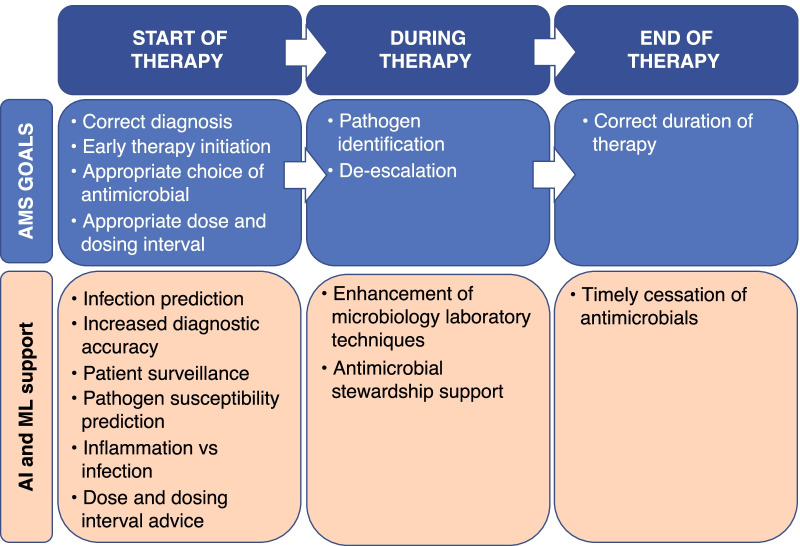
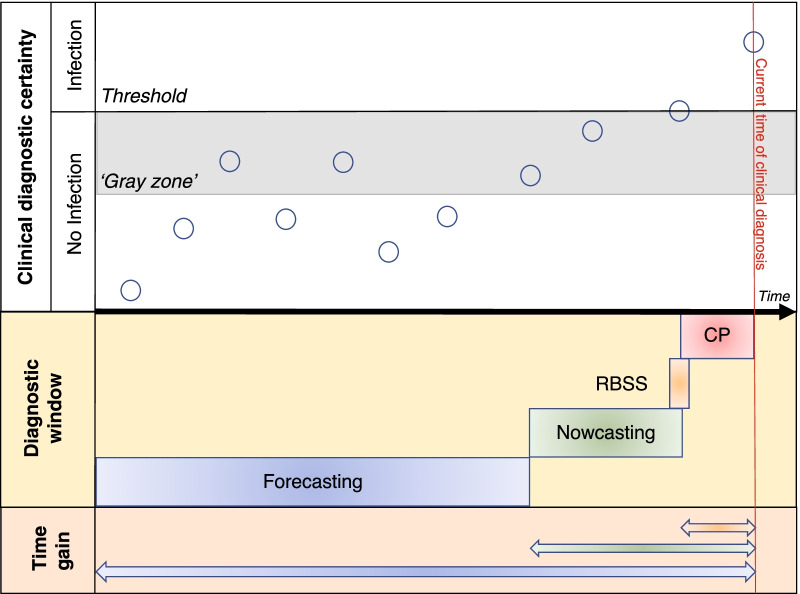
https://cdn.ncbi.nlm.nih.gov/pmc/blobs/d4fe/8957179/476dcc477911/13054_2022_3916_Fig2_HTML.jpg
https://cdn.ncbi.nlm.nih.gov/pmc/blobs/d4fe/8957179/1d5cc9eb384d/13054_2022_3916_Fig1_HTML.jpg
https://cdn.ncbi.nlm.nih.gov/pmc/blobs/d4fe/8957179/476dcc477911/13054_2022_3916_Fig2_HTML.jpg
https://cdn.ncbi.nlm.nih.gov/pmc/blobs/d4fe/8957179/1d5cc9eb384d/13054_2022_3916_Fig1_HTML.jpg
https://cdn.ncbi.nlm.nih.gov/pmc/blobs/d4fe/8957179/476dcc477911/13054_2022_3916_Fig2_HTML.jpg

相似文献

1
Artificial Intelligence in Infection Management in the ICU.人工智能在 ICU 感染管理中的应用。
Crit Care. 2022 Mar 22;26(1):79. doi: 10.1186/s13054-022-03916-2.
2
Artificial Intelligence in Critical Care Medicine.重症医学中的人工智能
Crit Care. 2022 Mar 22;26(1):75. doi: 10.1186/s13054-022-03915-3.
3
Advanced Life Support Update.高级生命支持更新。
Crit Care. 2022 Mar 22;26(1):73. doi: 10.1186/s13054-022-03912-6.
4
The Importance of Neuromonitoring in Non Brain Injured Patients.神经监测在非脑损伤患者中的重要性。
Crit Care. 2022 Mar 22;26(1):78. doi: 10.1186/s13054-022-03914-4.
5
Sepsis Performance Improvement Programs: From Evidence Toward Clinical Implementation.脓毒症绩效改进计划:从证据到临床实施
Crit Care. 2022 Mar 22;26(1):77. doi: 10.1186/s13054-022-03917-1.
6
The Role of Mitochondria in the Immune Response in Critical Illness.线粒体在危重症免疫反应中的作用
Crit Care. 2022 Mar 22;26(1):80. doi: 10.1186/s13054-022-03908-2.
7
Metagenomic Sequencing in the ICU for Precision Diagnosis of Critical Infectious Illnesses.重症监护病房宏基因组测序对精准诊断危急感染性疾病的价值
Crit Care. 2023 Mar 21;27(1):90. doi: 10.1186/s13054-023-04365-1.
8
Immunomodulation by Tetracyclines in the Critically Ill: An Emerging Treatment Option?四环素对危重症患者的免疫调节作用:一种新兴的治疗选择?
Crit Care. 2022 Mar 22;26(1):74. doi: 10.1186/s13054-022-03909-1.
9
Setting and Monitoring of Mechanical Ventilation During Venovenous ECMO.在静脉-静脉体外膜肺氧合期间的机械通气设置和监测。
Crit Care. 2023 Mar 21;27(1):95. doi: 10.1186/s13054-023-04372-2.
10
Brain Injury Biomarkers for Predicting Outcome After Cardiac Arrest.用于预测心脏骤停后预后的脑损伤生物标志物。
Crit Care. 2022 Mar 22;26(1):81. doi: 10.1186/s13054-022-03913-5.

引用本文的文献

1
Diagnostic Innovations to Combat Antibiotic Resistance in Critical Care: Tools for Targeted Therapy and Stewardship.重症监护中对抗抗生素耐药性的诊断创新:靶向治疗与管理工具
Diagnostics (Basel). 2025 Sep 5;15(17):2244. doi: 10.3390/diagnostics15172244.
2
The Role of Artificial Intelligence in Managing Central Line-Associated Bloodstream Infection (CLABSI) for Patient Safety and Quality of Care.人工智能在管理中心静脉导管相关血流感染(CLABSI)以保障患者安全和护理质量方面的作用。
Risk Manag Healthc Policy. 2025 Sep 3;18:2887-2898. doi: 10.2147/RMHP.S520035. eCollection 2025.
3
Exploring the Potentials of Artificial Intelligence in Sepsis Management in the Intensive Care Unit.

本文引用的文献

1
Evaluation of artificial intelligence on a reference standard based on subjective interpretation.基于主观解读的参考标准对人工智能的评估。
Lancet Digit Health. 2021 Nov;3(11):e693-e695. doi: 10.1016/S2589-7500(21)00216-8. Epub 2021 Sep 21.
2
The Clinician and Dataset Shift in Artificial Intelligence.临床医生与人工智能中的数据集偏移
N Engl J Med. 2021 Jul 15;385(3):283-286. doi: 10.1056/NEJMc2104626.
3
Supervised machine learning to support the diagnosis of bacterial infection in the context of COVID-19.在新冠肺炎背景下,使用监督式机器学习辅助细菌感染诊断。
探索人工智能在重症监护病房脓毒症管理中的潜力。
Crit Care Res Pract. 2025 Aug 28;2025:9031137. doi: 10.1155/ccrp/9031137. eCollection 2025.
4
Primer on large language models: an educational overview for intensivists.大语言模型入门:重症医学专家的教育概述
Crit Care. 2025 Jun 12;29(1):238. doi: 10.1186/s13054-025-05479-4.
5
mHealth Apps Available in Italy to Support Health Care Professionals in Antimicrobial Stewardship Implementation: Systematic Search in App Stores and Content Analysis.意大利可用的移动医疗应用程序,用于支持医疗保健专业人员实施抗菌药物管理:在应用商店中的系统搜索和内容分析。
JMIR Mhealth Uhealth. 2025 Apr 29;13:e51122. doi: 10.2196/51122.
6
The use of machine learning based models to predict the severity of community acquired pneumonia in hospitalised patients: A systematic review.使用基于机器学习的模型预测住院患者社区获得性肺炎的严重程度:一项系统评价。
J Intensive Care Soc. 2025 Feb 3;26(2):237-248. doi: 10.1177/17511437251315319. eCollection 2025 May.
7
Development and evaluation of a model for predicting the risk of healthcare-associated infections in patients admitted to intensive care units.开发和评估一种预测 ICU 住院患者发生医源性感染风险的模型。
Front Public Health. 2024 Sep 12;12:1444176. doi: 10.3389/fpubh.2024.1444176. eCollection 2024.
8
Prediction of carbapenem-resistant gram-negative bacterial bloodstream infection in intensive care unit based on machine learning.基于机器学习的重症监护病房碳青霉烯类耐药革兰氏阴性菌血流感染预测。
BMC Med Inform Decis Mak. 2024 May 14;24(1):123. doi: 10.1186/s12911-024-02504-4.
9
Lung ultrasound and procalcitonin, improving antibiotic management and avoiding radiation exposure in pediatric critical patients with bacterial pneumonia: a randomized clinical trial.肺部超声联合降钙素原在儿童重症细菌性肺炎患者抗生素管理中的应用:一项随机临床试验。
Eur J Med Res. 2024 Apr 6;29(1):222. doi: 10.1186/s40001-024-01712-y.
10
Harnessing of Artificial Intelligence for the Diagnosis and Prevention of Hospital-Acquired Infections: A Systematic Review.利用人工智能诊断和预防医院获得性感染:一项系统综述。
Diagnostics (Basel). 2024 Feb 23;14(5):484. doi: 10.3390/diagnostics14050484.
JAC Antimicrob Resist. 2021 Feb 3;3(1):dlab002. doi: 10.1093/jacamr/dlab002. eCollection 2021 Mar.
4
Predicting ventilator-associated pneumonia with machine learning.利用机器学习预测呼吸机相关性肺炎。
Medicine (Baltimore). 2021 Jun 11;100(23):e26246. doi: 10.1097/MD.0000000000026246.
5
Moving from bytes to bedside: a systematic review on the use of artificial intelligence in the intensive care unit.从字节到床边:人工智能在重症监护病房中的应用的系统评价。
Intensive Care Med. 2021 Jul;47(7):750-760. doi: 10.1007/s00134-021-06446-7. Epub 2021 Jun 5.
6
Artificial intelligence in clinical care amidst COVID-19 pandemic: A systematic review.COVID-19大流行期间临床护理中的人工智能:一项系统综述。
Comput Struct Biotechnol J. 2021;19:2833-2850. doi: 10.1016/j.csbj.2021.05.010. Epub 2021 May 7.
7
Prediction of vancomycin dose on high-dimensional data using machine learning techniques.利用机器学习技术对高维数据进行万古霉素剂量预测。
Expert Rev Clin Pharmacol. 2021 Jun;14(6):761-771. doi: 10.1080/17512433.2021.1911642. Epub 2021 Apr 9.
8
Artificial Intelligence to Get Insights of Multi-Drug Resistance Risk Factors during the First 48 Hours from ICU Admission.人工智能助力洞察重症监护病房入院后首个48小时内多重耐药危险因素
Antibiotics (Basel). 2021 Feb 27;10(3):239. doi: 10.3390/antibiotics10030239.
9
Artificial intelligence in sepsis early prediction and diagnosis using unstructured data in healthcare.人工智能在使用医疗保健中的非结构化数据进行脓毒症早期预测和诊断中的应用。
Nat Commun. 2021 Jan 29;12(1):711. doi: 10.1038/s41467-021-20910-4.
10
A comparison of machine learning models versus clinical evaluation for mortality prediction in patients with sepsis.机器学习模型与临床评估在预测脓毒症患者死亡率方面的比较。
PLoS One. 2021 Jan 19;16(1):e0245157. doi: 10.1371/journal.pone.0245157. eCollection 2021.