Department of Cognitive Neuroscience, Donders Institute for Brain, Cognition and Behaviour, Radboud University Nijmegen Medical Centre, Radboudumc, Kapittelweg 29, 6525 EN, Nijmegen, Gelderland, The Netherlands.
Department of Internal Medicine, Radboudumc Center for Infectious Diseases, Radboudumc, 6500 HB, Nijmegen, Gelderland, The Netherlands.
Sci Rep. 2022 Mar 25;12(1):5149. doi: 10.1038/s41598-022-08544-y.
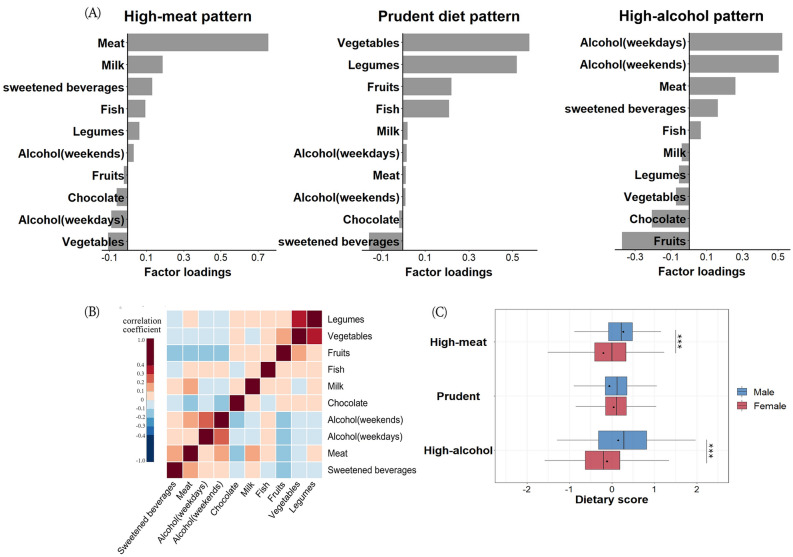
Dietary habits may affect inflammatory status in humans. Here we explore this interaction as well as the potential mediating role of the gut microbiome (GM), given that the GM is both involved in processing of dietary components and influences the immune system. A cross-sectional analysis of a sample of 482 healthy participants (207 males and 275 females) was performed. Dietary intake was assessed by a semiquantitative food questionnaire. Adipokines and soluble inflammatory mediators were assayed with multiple immunoassays and ELISA. Microbial DNA was extracted from frozen stool samples of 471 participants. Polychoric correlation analysis was used to establish dietary patterns, and joint multivariate associations between these dietary patterns and immune biomarkers were studied using regression analyses with adjustment for sex, age, BMI, smoking, education levels and physical exercise and other dietary patterns. Non-parametric entropy mediation was applied to investigate whether diet-immune relationships are mediated by abundance of microbial species. In this cohort, we identified three dietary patterns, characterized as "high-meat" (meat and sweetened drink), "prudent diet" (fish, fruit, legumes and vegetables) and "high alcohol" (higher alcohol consumption). Higher adherence to prudent diet was associated with a higher adiponectin level. The high alcohol pattern was associated with high concentrations of circulating concentrations of pro-inflammatory markers (CRP, IL-6, VEGF). Dialister invisus was found to mediate the relationship between a prudent dietary pattern and adiponectin, AAT, CRP, IL-6, and VEGF. In conclusion, a meat-based diet and a diet with high alcohol consumption were associated with high concentrations of biomarkers of chronic low-grade inflammation, and conversely, a prudent diet was associated with anti-inflammatory biomarkers. Diet-inflammation regulation may differ between sexes. Mediation analyses revealed that the association between prudent diet and immune function was partially mediated by the GM. The study adds to our understanding of the associations between diet, the immune system and the GM in a healthy population.
饮食习惯可能会影响人体的炎症状态。在这里,我们探索这种相互作用,以及肠道微生物组(GM)的潜在介导作用,因为 GM 既参与处理膳食成分,又影响免疫系统。对 482 名健康参与者(207 名男性和 275 名女性)的样本进行了横断面分析。通过半定量食物问卷评估饮食摄入。使用多种免疫测定和 ELISA 测定脂肪因子和可溶性炎症介质。从 471 名参与者的冷冻粪便样本中提取微生物 DNA。使用多元相关分析确定饮食模式,并使用回归分析研究这些饮食模式与免疫生物标志物之间的联合多变量关联,调整性别、年龄、BMI、吸烟、教育水平和体育锻炼以及其他饮食模式。应用非参数熵中介分析来研究饮食与免疫的关系是否由微生物物种丰度介导。在本队列中,我们确定了三种饮食模式,分别为“高肉”(肉和加糖饮料)、“谨慎饮食”(鱼、水果、豆类和蔬菜)和“高酒精”(较高的酒精摄入量)。较高的谨慎饮食依从性与较高的脂联素水平相关。高酒精模式与循环中促炎标志物(CRP、IL-6、VEGF)的浓度较高相关。发现Dialister invisus 介导了谨慎饮食模式与脂联素、AAT、CRP、IL-6 和 VEGF 之间的关系。总之,基于肉类的饮食和高酒精摄入的饮食与慢性低度炎症生物标志物的浓度较高有关,相反,谨慎的饮食与抗炎生物标志物有关。饮食-炎症调节可能在性别之间存在差异。中介分析显示,谨慎饮食与免疫功能之间的关联部分由 GM 介导。该研究增加了我们对健康人群中饮食、免疫系统和 GM 之间关联的理解。