National Center for Clinical Laboratories, Institute of Geriatric Medicine, Chinese Academy of Medical Sciences, Beijing Hospitalgrid.414350.7/National Center of Gerontology, People's Republic of China.
Graduate School of Peking Union Medical College, Chinese Academy of Medical Sciences, Beijing, People's Republic of China.
J Clin Microbiol. 2022 Apr 20;60(4):e0237421. doi: 10.1128/jcm.02374-21. Epub 2022 Mar 28.
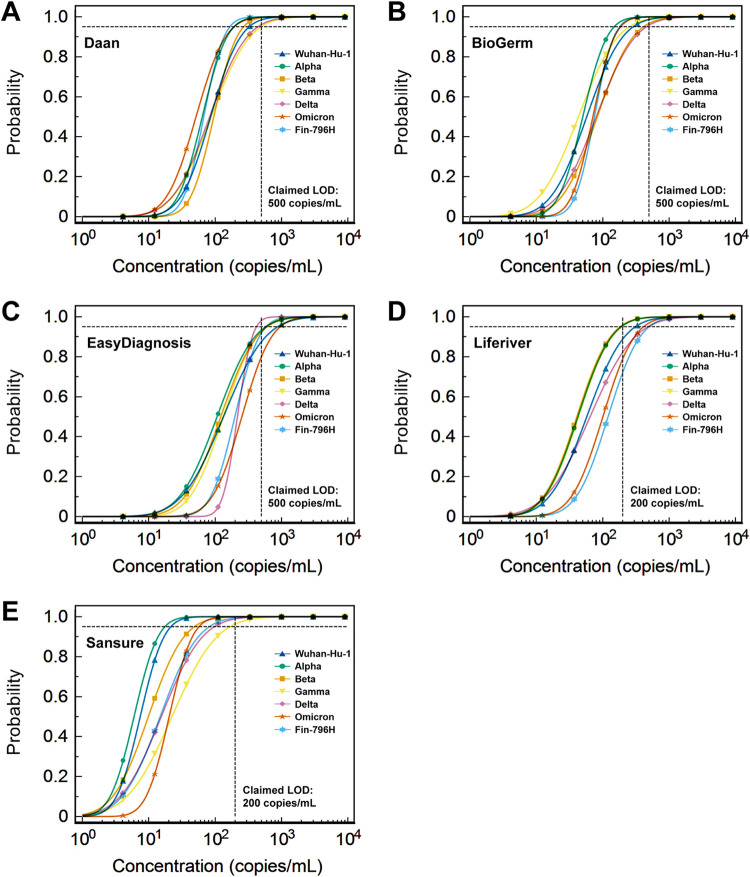
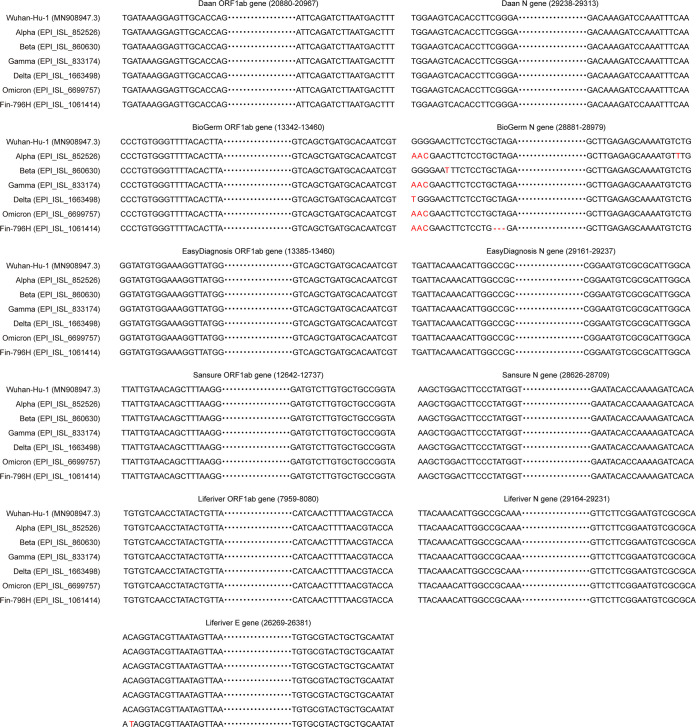
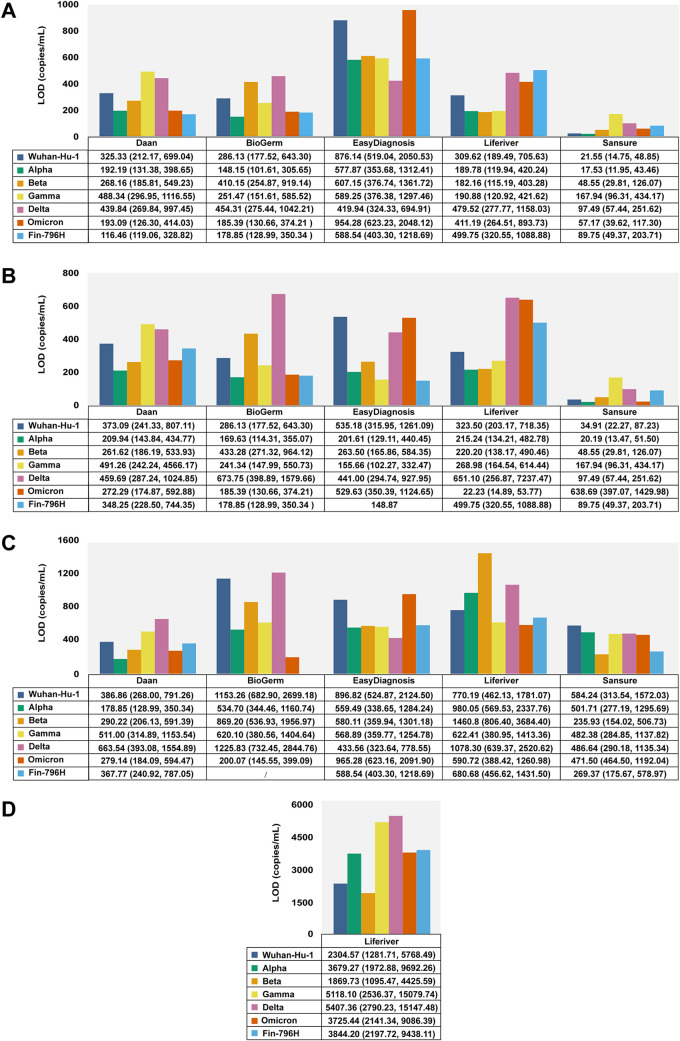
Emerging severe acute respiratory syndrome coronavirus 2 (SARS-CoV-2) variants with enhanced transmissibility, pathogenicity, and immune escape ability have ravaged many countries and regions, which has brought substantial challenges to pandemic prevention and control. Real-time reverse transcriptase PCR (rRT-PCR) is widely used for SARS-CoV-2 detection but may be limited by the continuous evolution of the virus. However, the sensitivity of Chinese commercial rRT-PCR kits to critical SARS-CoV-2 variants remains unknown. In this study, contrived MS2 virus-like particles were used as reference materials to evaluate the analytical sensitivity of Daan, BioGerm, EasyDiagnosis, Liferiver, and Sansure kits when detecting six important variants (Alpha, Beta, Gamma, Delta, Omicron, and Fin-796H). The Beta and Delta variants adversely affected the analytical sensitivity of the BioGerm ORF1ab gene assay (9.52% versus 42.96%, = 0.014, and 14.29% versus 42.96%, = 0.040, respectively), whereas the N gene assay completely failed in terms of the Fin-796H variant. The Gamma and Fin-796H variants impeded the PCR amplification efficiency for the Sansure ORF1ab gene assay (33.33% versus 66.67%, = 0.031, and 66.67% versus 95.24%, = 0.040, respectively), and the Delta variant compromised the E gene assay (52.38% versus 85.71%, = 0.019). The Alpha and Omicron variants had no significant effect on the kits. This study highlights the necessity of identifying the potential effect of viral mutations on the efficacy and sensitivity of clinical detection assays. It can also provide helpful insights regarding the development and optimization of diagnostic assays and aid the strategic management of the ongoing pandemic.
新兴的具有更强传染性、致病性和免疫逃逸能力的严重急性呼吸综合征冠状病毒 2 (SARS-CoV-2) 变种肆虐许多国家和地区,给大流行防控带来了巨大挑战。实时逆转录聚合酶链反应 (rRT-PCR) 广泛用于 SARS-CoV-2 检测,但可能受到病毒不断进化的限制。然而,中国商业 rRT-PCR 试剂盒对关键 SARS-CoV-2 变种的敏感性仍不清楚。在这项研究中,我们使用人造 MS2 病毒样颗粒作为参考材料,评估 Daan、BioGerm、EasyDiagnosis、Liferiver 和 Sansure 试剂盒在检测六种重要变种(Alpha、Beta、Gamma、Delta、Omicron 和 Fin-796H)时的分析灵敏度。Beta 和 Delta 变种对 BioGerm ORF1ab 基因检测的分析灵敏度产生了不利影响(分别为 9.52% 对 42.96%, = 0.014,和 14.29% 对 42.96%, = 0.040),而 N 基因检测在 Fin-796H 变种时完全失败。Gamma 和 Fin-796H 变种阻碍了 Sansure ORF1ab 基因检测的 PCR 扩增效率(分别为 33.33% 对 66.67%, = 0.031,和 66.67% 对 95.24%, = 0.040),Delta 变种影响了 E 基因检测(52.38% 对 85.71%, = 0.019)。Alpha 和 Omicron 变种对试剂盒没有显著影响。本研究强调了识别病毒突变对临床检测试验疗效和敏感性的潜在影响的必要性。它还可以为诊断检测的开发和优化提供有用的见解,并有助于大流行的战略管理。