Yamagami Momona, Steele Katherine M, Burden Samuel A
University of Washington Seattle, WA.
Proc SIGCHI Conf Hum Factor Comput Syst. 2020 Apr;2020. doi: 10.1145/3313831.3376224. Epub 2020 Apr 23.
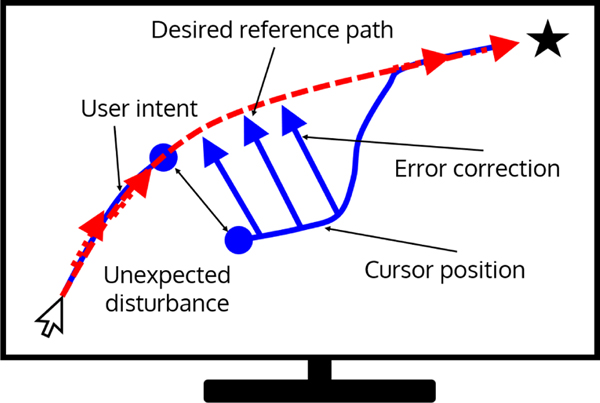
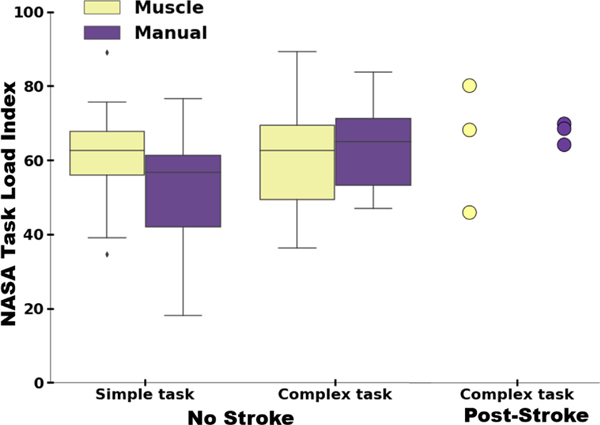
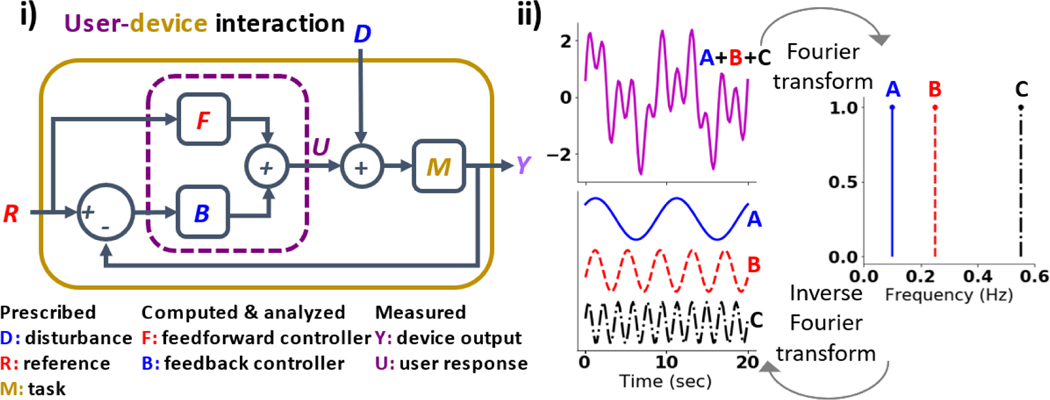
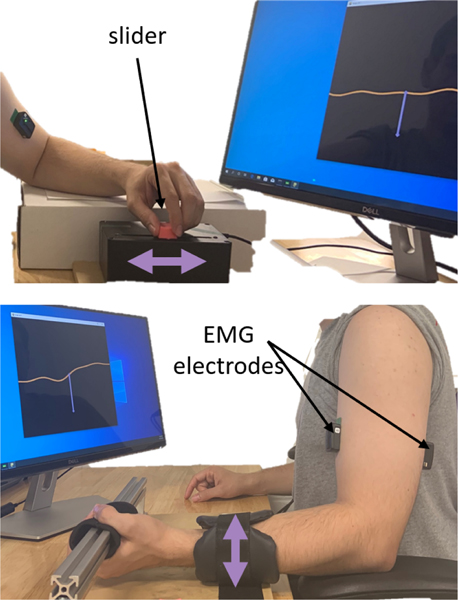
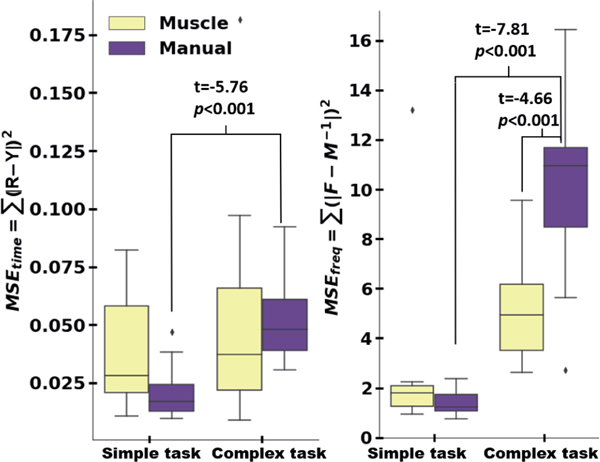
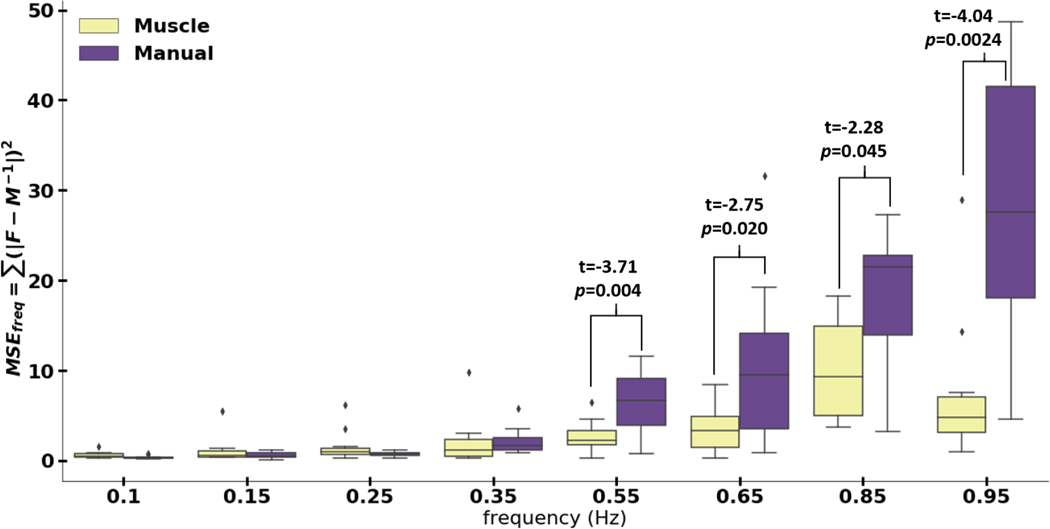
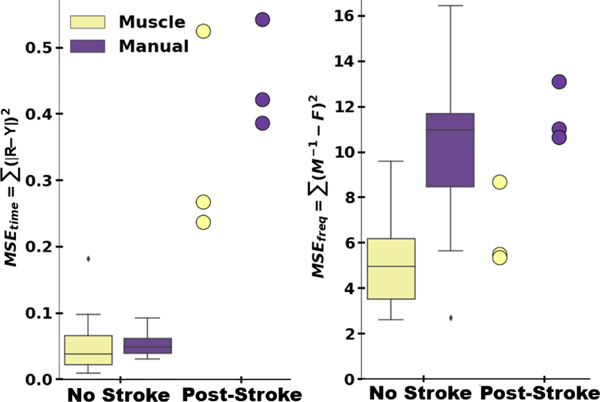
Manual device interaction requires precise coordination which may be difficult for users with motor impairments. Muscle interfaces provide alternative interaction methods that may enhance performance, but have not yet been evaluated for simple (eg. mouse tracking) and complex (eg. driving) continuous tasks. Control theory enables us to probe continuous task performance by separating user input into intent and error correction to quantify how motor impairments impact device interaction. We compared the effectiveness of a manual versus a muscle interface for eleven users without and three users with motor impairments performing continuous tasks. Both user groups preferred and performed better with the muscle versus the manual interface for the complex continuous task. These results suggest muscle interfaces and algorithms that can detect and augment user intent may be especially useful for future design of interfaces for continuous tasks.
手动设备交互需要精确的协调,这对于有运动障碍的用户来说可能很困难。肌肉接口提供了可能提高性能的替代交互方法,但尚未针对简单(如鼠标跟踪)和复杂(如驾驶)的连续任务进行评估。控制理论使我们能够通过将用户输入分为意图和纠错来探究连续任务性能,以量化运动障碍如何影响设备交互。我们比较了11名无运动障碍用户和3名有运动障碍用户使用手动接口和肌肉接口执行连续任务的有效性。对于复杂的连续任务,两个用户组都更喜欢肌肉接口,并且使用肌肉接口的表现更好。这些结果表明,能够检测和增强用户意图的肌肉接口和算法可能对未来连续任务接口的设计特别有用。