Fujian University of Traditional Chinese Medicine, Fuzhou, 350122, Fujian, China.
The Second Affiliated Hospital of Fujian Traditional Chinese Medical University, Fuzhou, 350003, Fujian, China.
BMC Pulm Med. 2022 Mar 27;22(1):108. doi: 10.1186/s12890-022-01894-3.
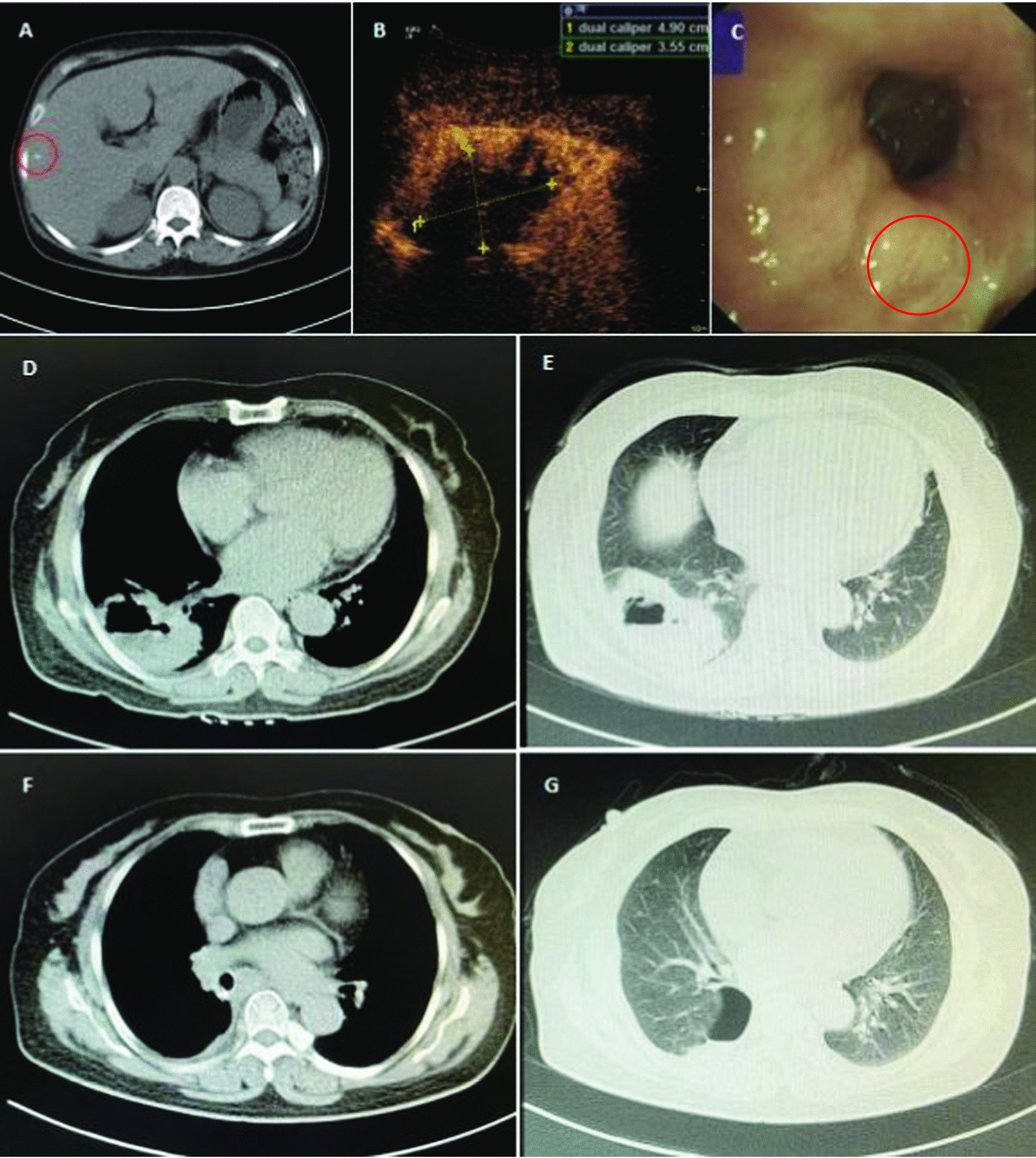
The clinical treatment of patients suspected of pulmonary infections often rely on empirical antibiotics. However, preliminary diagnoses were based on clinical manifestations and conventional microbiological tests, which could later be proved wrong. In this case, we presented a patient whose initial diagnosis was lung abscess, but antibiotic treatments had no effect, and metagenomic Next-Generation Sequencing (mNGS) indicated presence of neoplasm.
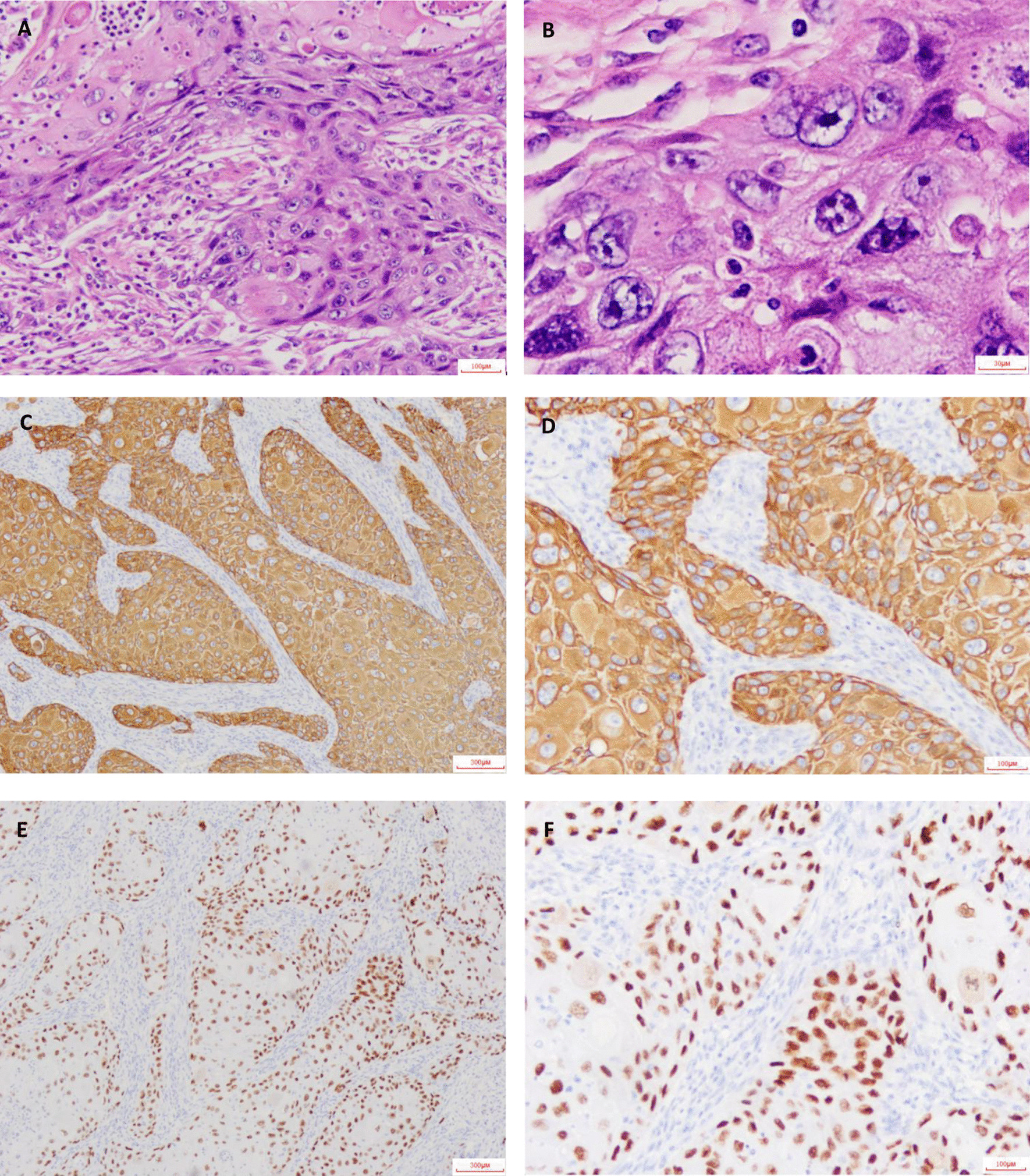
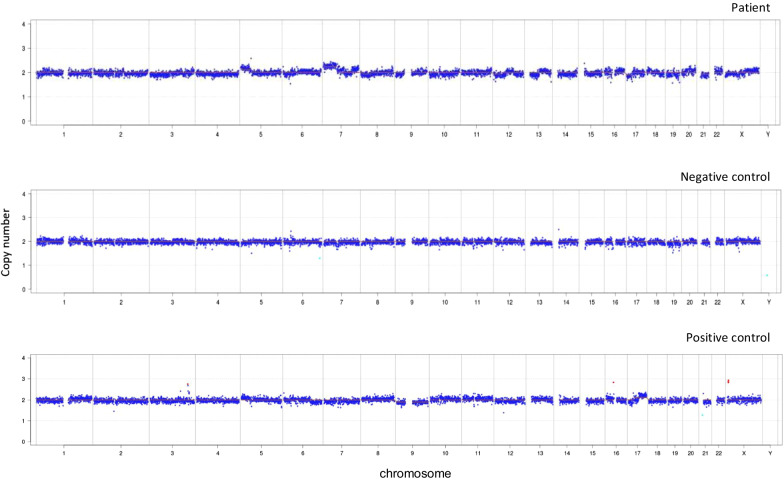
A 62-year-old female was diagnosed with lung abscess at three different health facilities. However, mNGS of bronchoalveolar lavage fluid did not support pulmonary infections. Rather, the copy number variation analysis using host DNA sequences suggested neoplasm. Using H&E staining and immunohistochemistry of lung biopsy, the patient was eventually diagnosed with lung squamous cell carcinoma.
mNGS not only detects pathogens and helps diagnose infectious diseases, but also has potential in detecting neoplasm via host chromosomal copy number analysis. This might be beneficial for febrile patients with unknown or complex etiology, especially when infectious diseases were initially suspected but empirical antibiotic regimen failed.
疑似肺部感染的患者的临床治疗往往依赖于经验性抗生素。然而,初步诊断是基于临床表现和常规微生物学检测,后来被证明是错误的。在这种情况下,我们提出了一个患者的案例,其最初的诊断是肺脓肿,但抗生素治疗没有效果,宏基因组下一代测序(mNGS)表明存在肿瘤。
一名 62 岁女性在三家不同的医疗机构被诊断为肺脓肿。然而,支气管肺泡灌洗液的 mNGS 并不支持肺部感染。相反,使用宿主 DNA 序列的拷贝数变异分析提示存在肿瘤。通过对肺活检进行 H&E 染色和免疫组织化学染色,最终诊断为肺鳞状细胞癌。
mNGS 不仅可以检测病原体,有助于诊断传染病,还可以通过宿主染色体拷贝数分析检测肿瘤。对于病因不明或复杂的发热患者,特别是在最初怀疑为传染病但经验性抗生素治疗方案失败时,这可能是有益的。