Amrutha M, Nampoothiri K Madhavan
Microbial Processes and Technology Division (MPTD), CSIR-National Institute for Interdisciplinary Science and Technology (NIIST), Trivandrum, Kerala, 695019, India.
Academy of Scientific and Innovative Research (AcSIR), Ghaziabad, 201002, India.
J Genet Eng Biotechnol. 2022 Mar 29;20(1):51. doi: 10.1186/s43141-022-00332-5.
The nitrile compounds are produced either naturally or synthetically and are highly used in many manufacturing industries such as pharmaceuticals, pesticides, chemicals, and polymers. However, the extensive use and accumulation of these nitrile compounds have caused severe environmental pollution. Nitrilated herbicides are one such toxic substance that will persist in the soil for a long time. Therefore, effective measures must be taken to avoid its pollution to the environment. A variety of nitrile-converting bacterial species have the ability to convert these toxic substances into less toxic ones by using enzymatic processes. Among the bacterial groups, actinobacteria family members show good degradation capacity on these pollutants. The soil-dwelling Gram-positive industrial microbe Corynebacterium glutamicum is one such family member and its nitrile-degradation pathway is not well studied yet. In order to understand the effectiveness of using C. glutamicum for the degradation of such nitrile herbicides, an in silico approach has been done. In this perspective, this work focus on the structural analysis and molecular docking studies of C. glutamicum with nitrilated herbicides such as dichlobenil, bromoxynil, and chloroxynil.
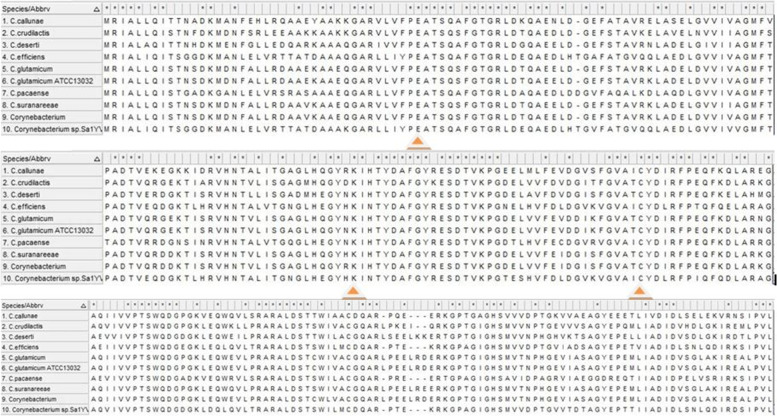
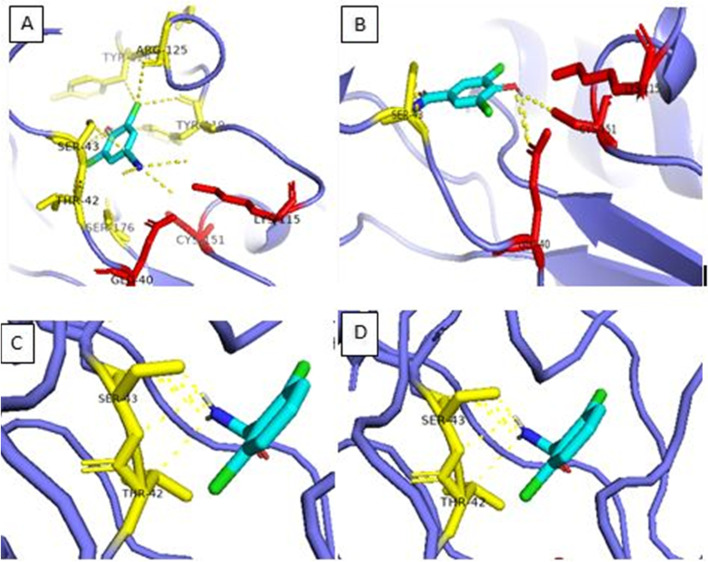
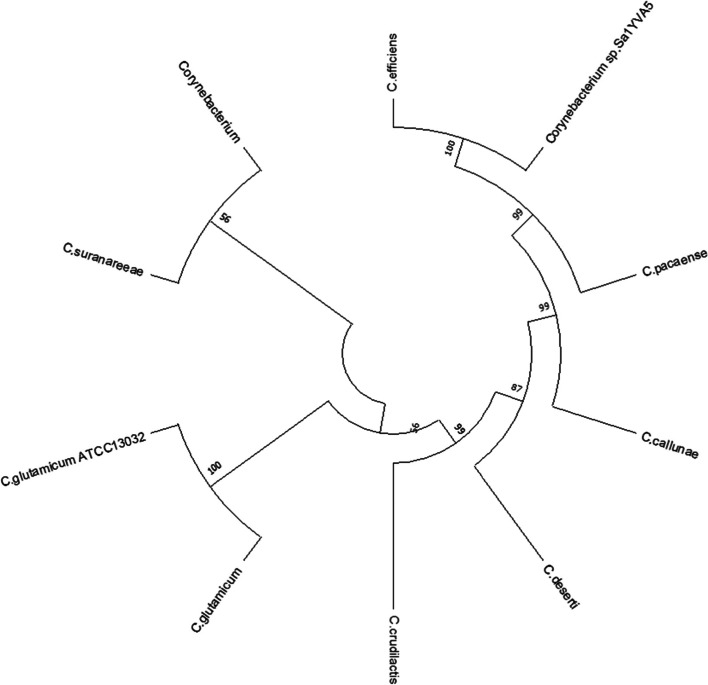
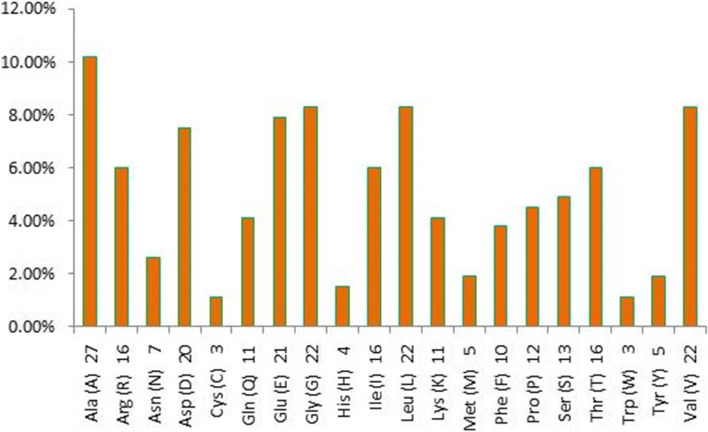
The bioinformatics analysis using different tools and software helped to confirm that the genome of C. glutamicum ATCC 13032 species have genes (cg 3093) codes for carbon-nitrogen hydrolase enzyme, which specifically act on non-peptide bond present in the nitrile compounds. The conserved domain analysis indicated that this protein sequence was nitrilase-3 and comes under the nitrilase superfamily. The multiple sequence alignment analysis confirmed that the conserved catalytic triad residues were 40E, 115K, and 151C, and the existence of nitrilase-3 protein in the genome of Corynebacterium sp. was evaluated by a phylogenetic tree. The analysis of physico-chemical properties revealed that alanine is the most abounded amino acid (10.20%) in the nitrilase-3 protein, and these properties influence the substrate specificity of aliphatic and aromatic nitrile compounds. The homology modelled protein showed better affinity towards nitrile herbicides such as 2,6-dichlorobenzamide (BAM) and 3,5-dichloro-4-hydroxy-benzamide (CIAM) with the affinity value of - 5.8 and - 5.7 kcal/mol respectively.
The in silico studies manifested that C. glutamicum ATCC 13032 is one of the promising strains for the bioremediation of nitrilated herbicides contaminated soil.
腈类化合物可天然产生或人工合成,在制药、农药、化工和聚合物等许多制造业中大量使用。然而,这些腈类化合物的广泛使用和积累已造成严重的环境污染。腈化除草剂就是这样一种会在土壤中长时间残留的有毒物质。因此,必须采取有效措施避免其对环境造成污染。多种腈转化细菌能够通过酶促过程将这些有毒物质转化为毒性较小的物质。在细菌类群中,放线菌科成员对这些污染物表现出良好的降解能力。土壤中革兰氏阳性工业微生物谷氨酸棒杆菌就是这样一个成员,但其腈降解途径尚未得到充分研究。为了了解利用谷氨酸棒杆菌降解此类腈化除草剂的效果,已开展了一项计算机模拟研究。从这个角度来看,这项工作聚焦于谷氨酸棒杆菌与腈化除草剂如二氯苯腈、溴苯腈和氯苯腈的结构分析和分子对接研究。
使用不同工具和软件进行的生物信息学分析有助于证实,谷氨酸棒杆菌ATCC 13032菌株的基因组中有编码碳氮水解酶的基因(cg3093),该酶特异性作用于腈类化合物中的非肽键。保守结构域分析表明,该蛋白质序列为腈水解酶 - 3,属于腈水解酶超家族。多序列比对分析证实,保守的催化三联体残基为40E、115K和151C,并通过系统发育树评估了谷氨酸棒杆菌基因组中腈水解酶 - 3蛋白的存在情况。理化性质分析表明,丙氨酸是腈水解酶 - 3蛋白中含量最丰富的氨基酸(10.2%),这些性质影响脂肪族和芳香族腈类化合物的底物特异性。同源建模蛋白对腈化除草剂如2,6 - 二氯苯甲酰胺(BAM)和3,5 - 二氯 - 4 - 羟基苯甲酰胺(CIAM)表现出更好的亲和力,亲和力值分别为 - 5.8和 - 5.7千卡/摩尔。
计算机模拟研究表明,谷氨酸棒杆菌ATCC 13032是用于生物修复腈化除草剂污染土壤的有潜力菌株之一。