Department of Pharmacy, Shanghai Jiao Tong University Affiliated Sixth People's Hospital, Shanghai, Shanghai, China.
Hospital, Shanghai University of Chinese MedicineDepartment of Endocrinology, Shanghai TCM-Integrated, Shanghai, Shanghai, China.
Oncoimmunology. 2022 Mar 25;11(1):2055703. doi: 10.1080/2162402X.2022.2055703. eCollection 2022.
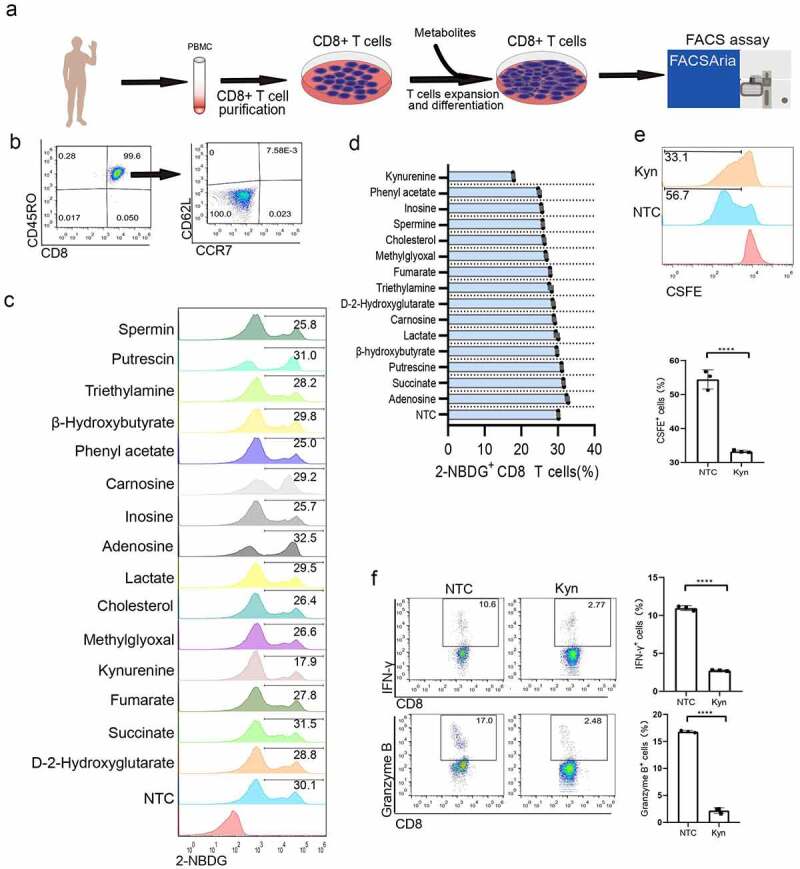
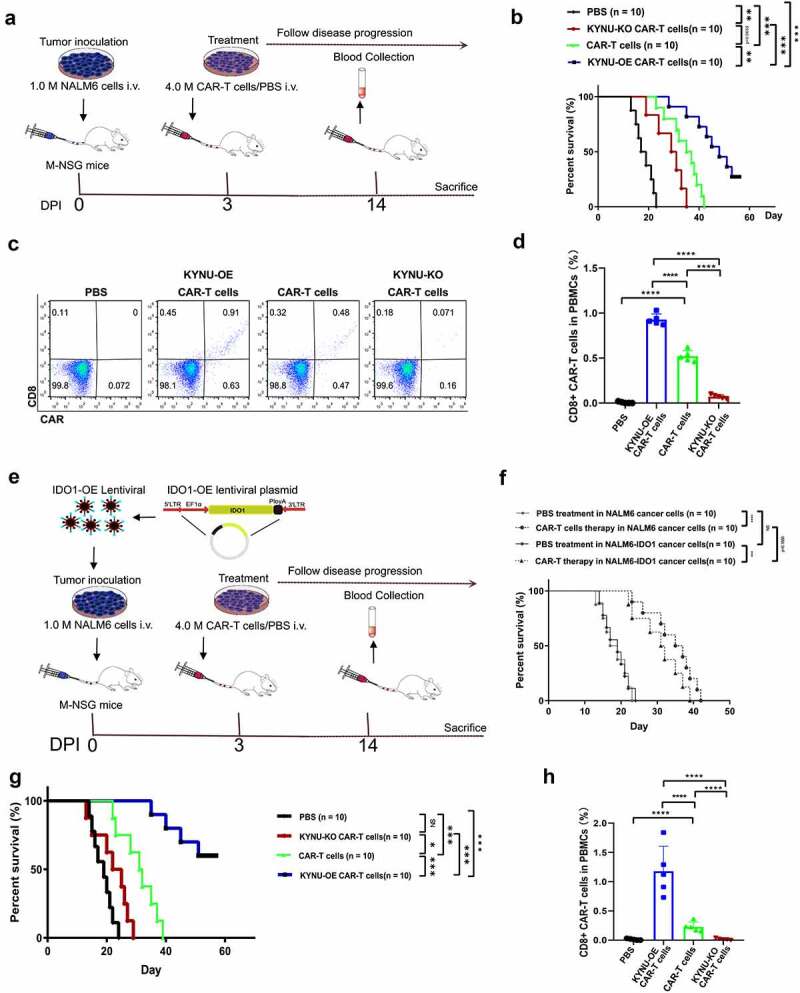
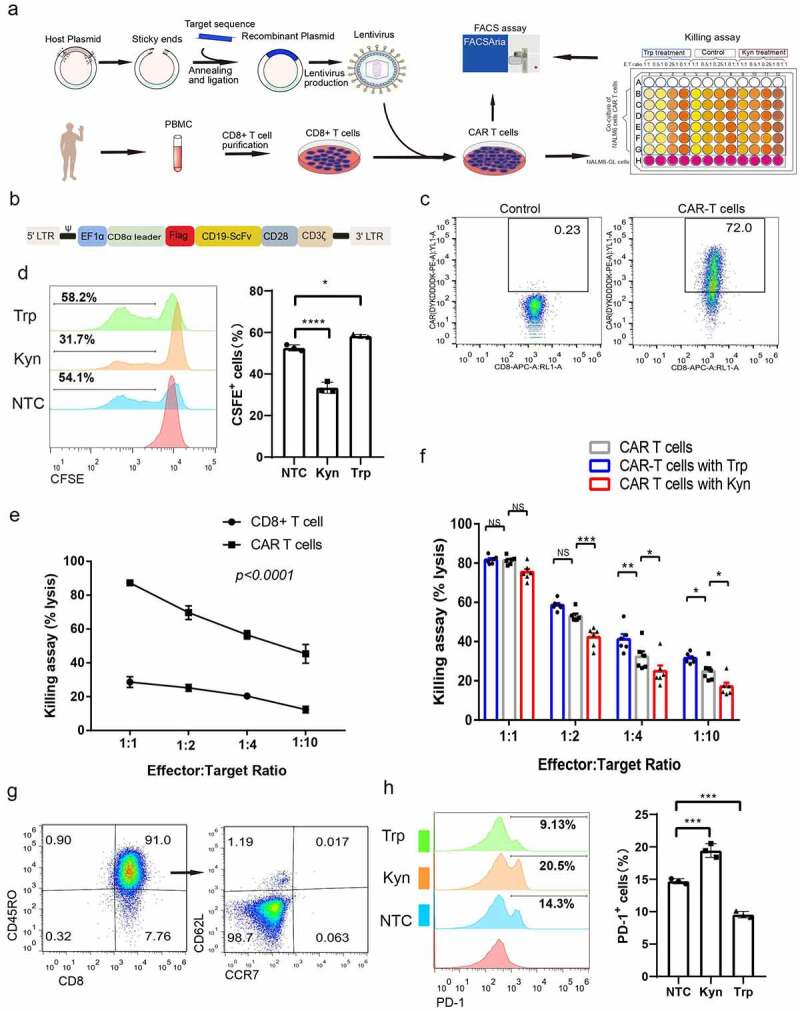
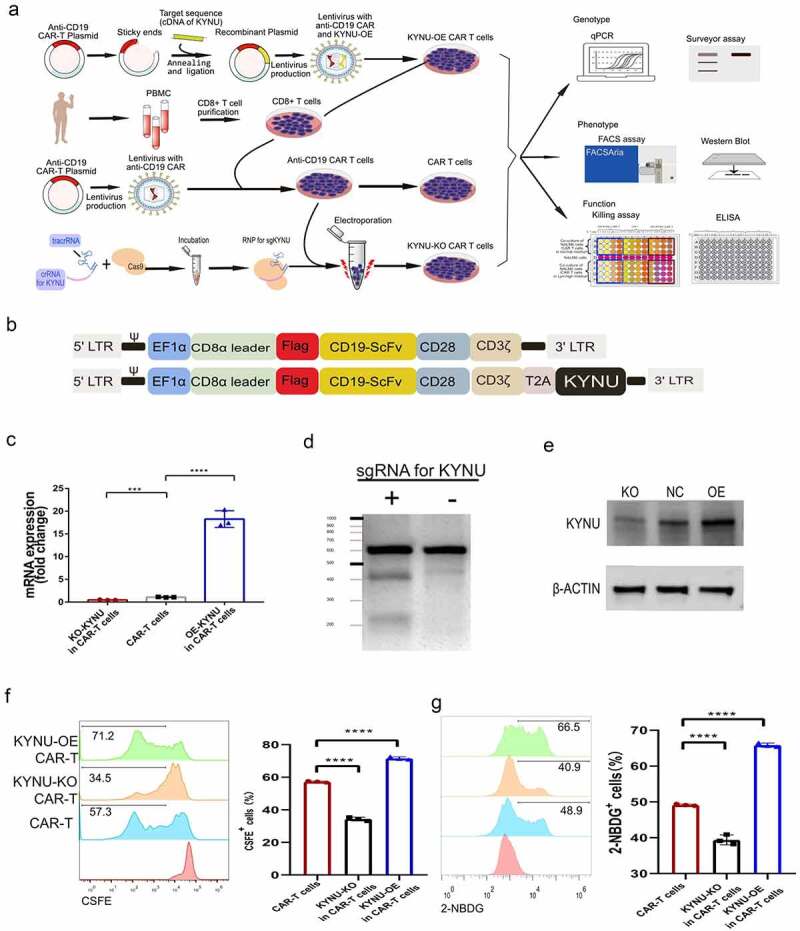
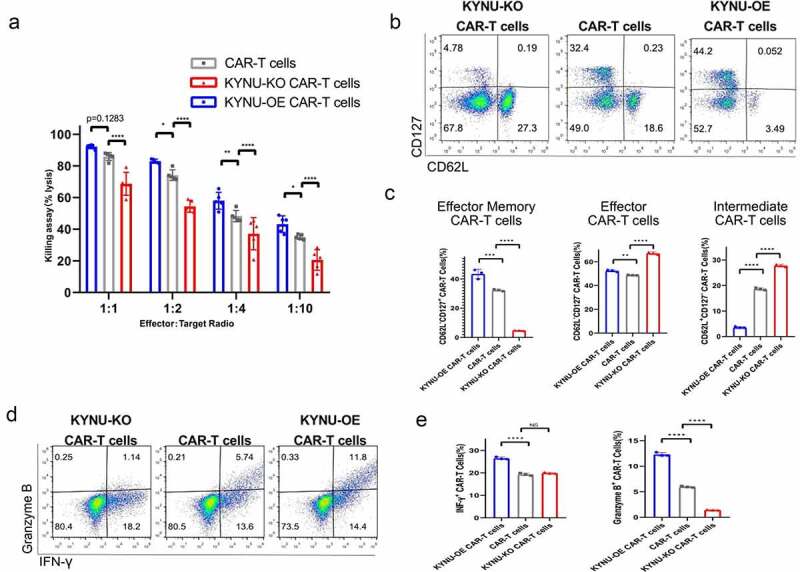
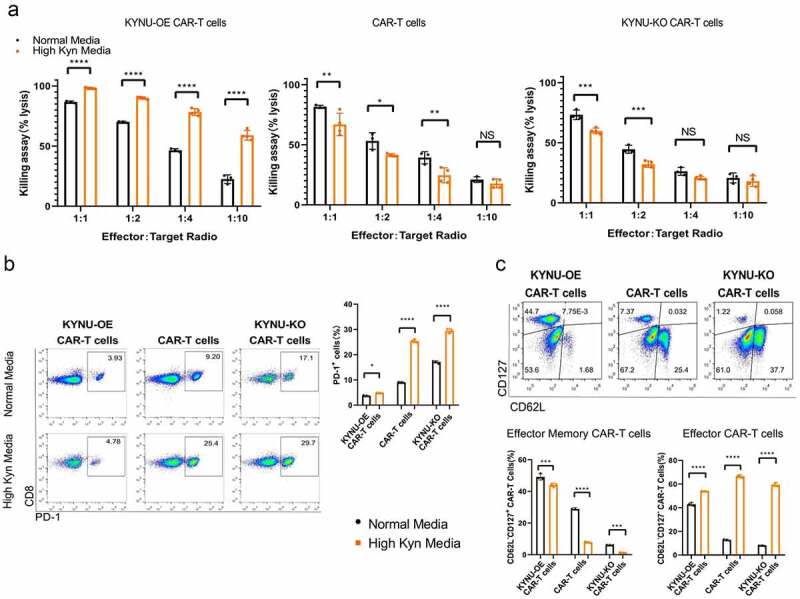
Accumulated oncometabolites in the tumor microenvironment (TME) suppresses the metabolism, expansion, and function of T cells. Immunosuppressive TME also impeded Chimeric Antigen Receptor (CAR)-T cells mediated cytotoxicity since CAR-T cells had to adapt the in vivo metabolic characteristics with high levels of oncometabolites. We screened oncometabolites for the inhibition of glucose uptake in CD8 + T cells and found Kynurenine (Kyn) showed the strongest inhibiting effect on glucose uptake. In vitro experiments showed that 120 μM Kyn treatment in CD8 + T cells resulted in inhibiting the expansion of CD8 + T cells, decreasing the production of granzyme B and interferon-γ. CAR-T cells mediated cytotoxicity was also impaired by the high Kyn treatment from killing assay. We then explored the anti-tumor effect of Kynureninase (KYNU) modified CAR-T cells through catabolism o oncometabolites Kyn. KYNU over-expression (OE) CAR-T cells showed a superior killing effect against cancer cells even in the immunosuppressive TME with high Kyn levels. In vivo experiments confirmed KYNU-OE CAR-T cells showed an excellent anti-tumor effect in a TME with high Kyn levels since it improved the survival of mice bearing NALM6 cancer cells and NALM6-IDO1 cancer cells. The KYNU-modified CAR-T cells displayed distinct phenotypes related to the expansion, function, and memory differentiation status of CAR-T cells. This study explores an immunotherapy strategy for patients with alterations in Kyn metabolism. KYNU-OE CAR-T cells take advantage of Kyn catabolism to improve anti-tumor activity in the metabolic immunosuppressive TME with high Kyn.
肿瘤微环境(TME)中积累的致癌代谢物抑制 T 细胞的代谢、扩增和功能。免疫抑制性 TME 也阻碍了嵌合抗原受体(CAR)-T 细胞介导的细胞毒性,因为 CAR-T 细胞必须适应高水平致癌代谢物的体内代谢特征。我们筛选了致癌代谢物对 CD8+T 细胞葡萄糖摄取的抑制作用,发现色氨酸(Kyn)对葡萄糖摄取的抑制作用最强。体外实验表明,CD8+T 细胞中 120μM Kyn 处理导致 CD8+T 细胞扩增受到抑制,颗粒酶 B 和干扰素-γ的产生减少。杀伤试验也表明,高浓度 Kyn 处理会损害 CAR-T 细胞介导的细胞毒性。然后,我们通过代谢致癌代谢物 Kyn 来探索 KYNU 修饰的 CAR-T 细胞的抗肿瘤作用。KYNU 过表达(OE)CAR-T 细胞对癌细胞具有更好的杀伤作用,即使在高 Kyn 水平的免疫抑制性 TME 中也是如此。体内实验证实,在高 Kyn 水平的 TME 中,KYNU-OE CAR-T 细胞表现出优异的抗肿瘤效果,因为它提高了携带 NALM6 癌细胞和 NALM6-IDO1 癌细胞的小鼠的存活率。KYNU 修饰的 CAR-T 细胞表现出与 CAR-T 细胞扩增、功能和记忆分化状态相关的明显表型。这项研究探索了一种针对 Kyn 代谢改变患者的免疫治疗策略。KYNU-OE CAR-T 细胞利用 Kyn 代谢来提高在高 Kyn 代谢免疫抑制性 TME 中的抗肿瘤活性。