Jiang Nan, Zhang Xinzhuo, Chen Qi, Kantawong Fahsai, Wan Shengli, Liu Jian, Li Hua, Zhou Jie, Lu Bin, Wu Jianming
School of Pharmacy, Southwest Medical University, Luzhou, China.
Foreign Language School, Southwest Medical University, Luzhou, China.
Front Oncol. 2022 Mar 10;12:823831. doi: 10.3389/fonc.2022.823831. eCollection 2022.
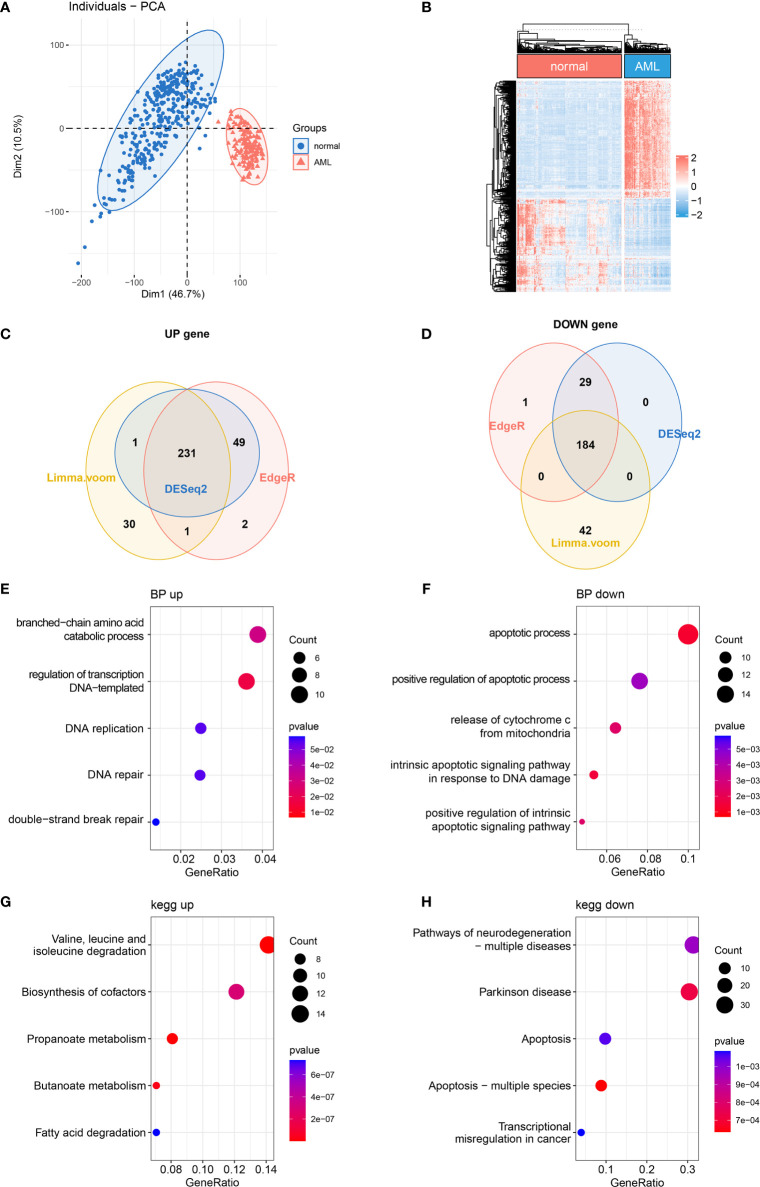
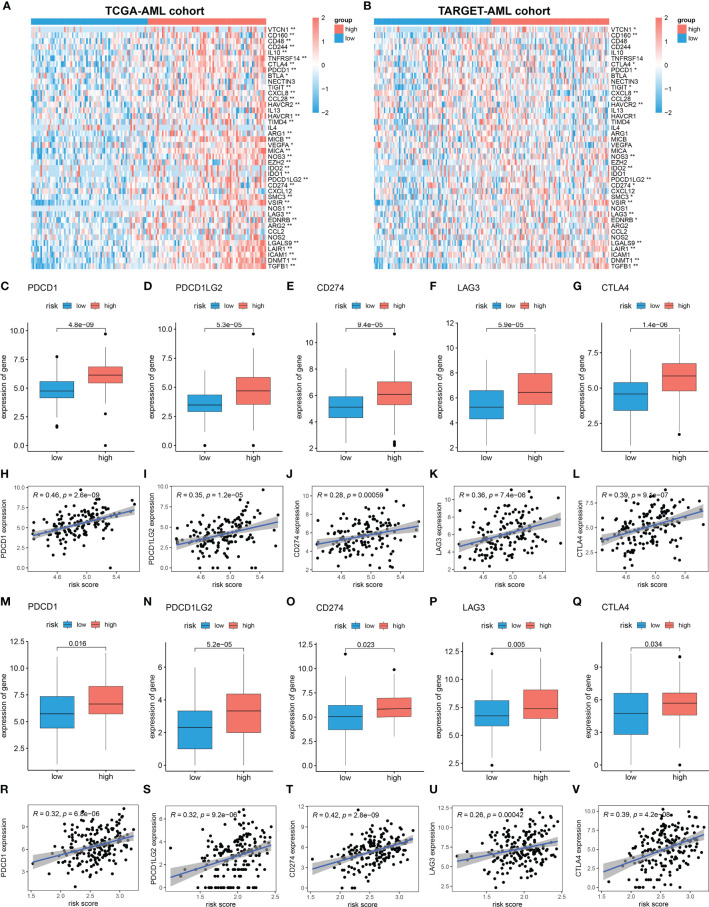
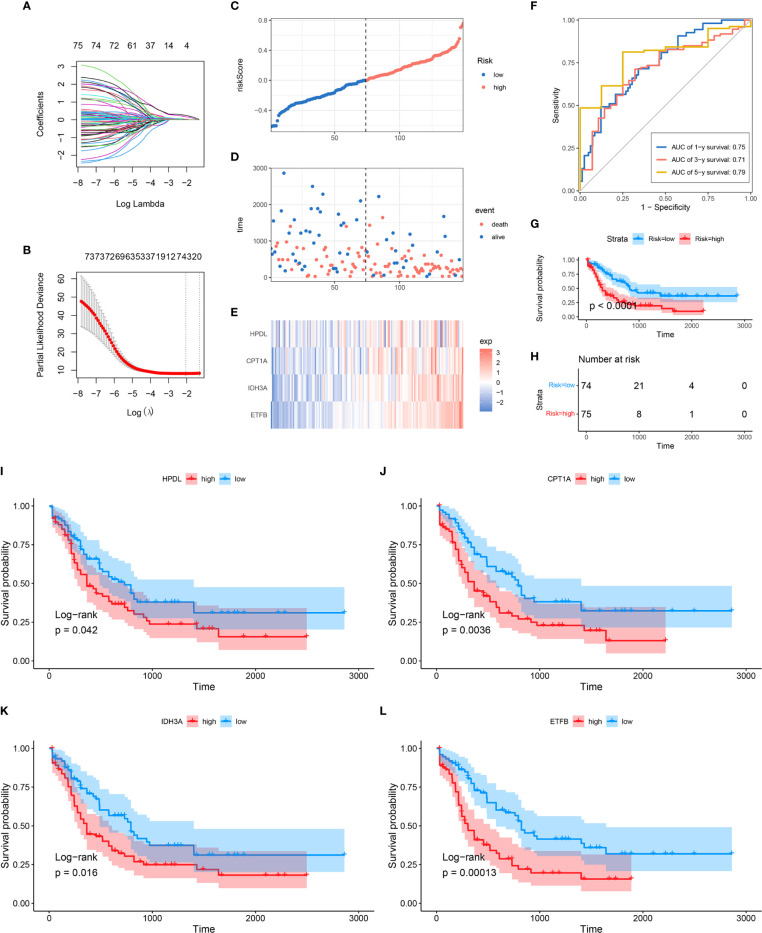
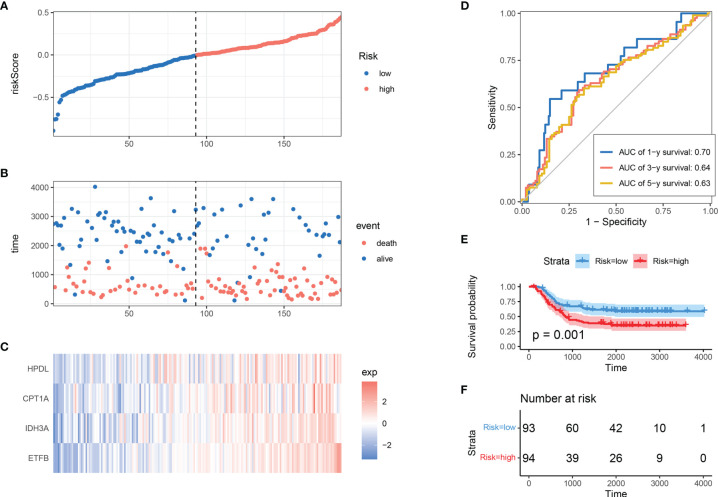
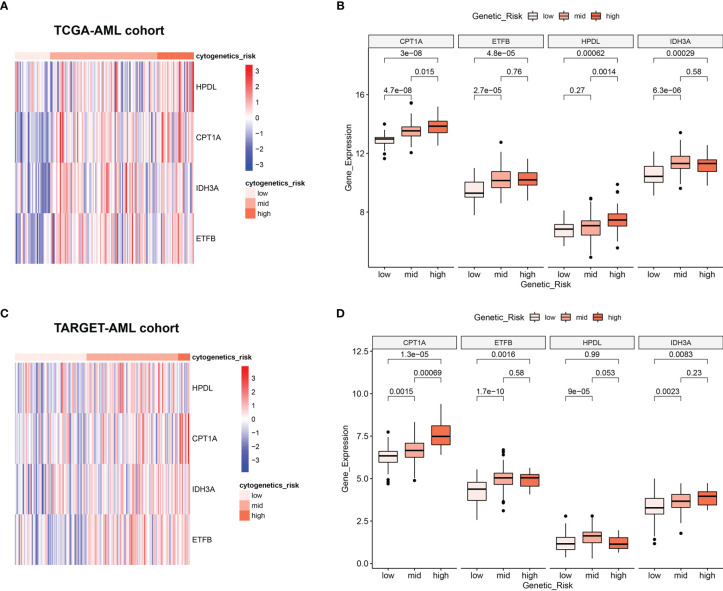
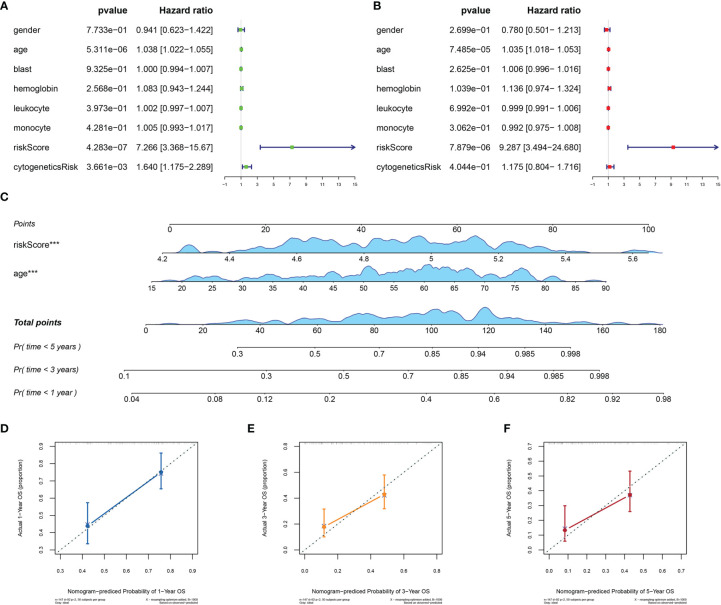
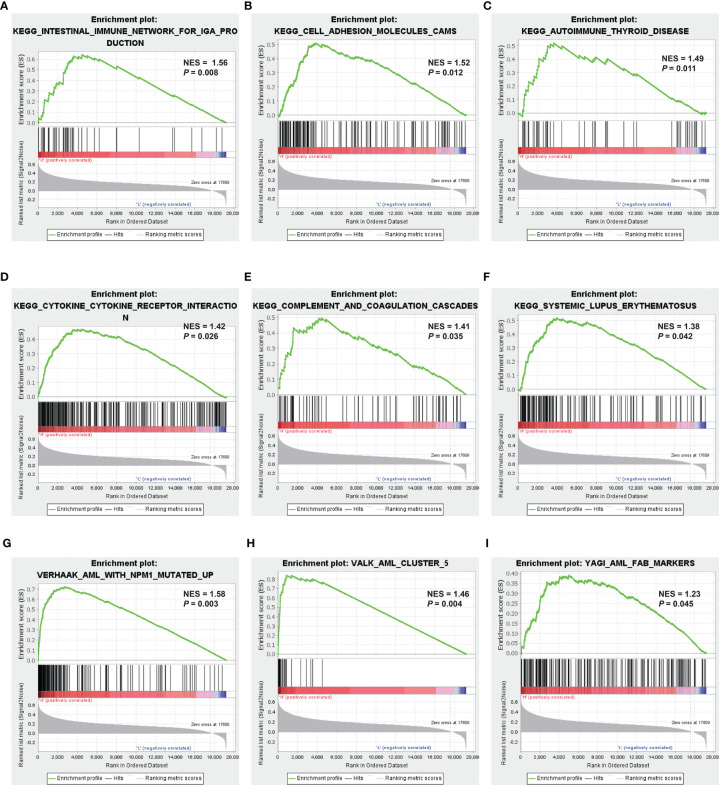
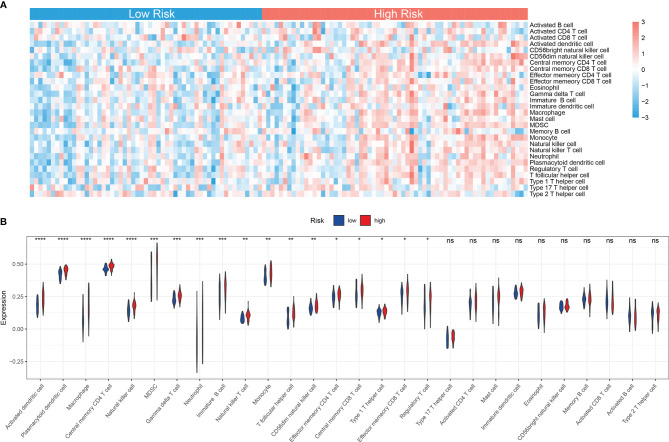
Mitochondria-related metabolic reprogramming plays a major role in the occurrence, development, drug resistance, and recurrence of acute myeloid leukemia (AML). However, the roles of mitochondria-related genes (MRGs) in the prognosis and immune microenvironment for AML patients remain largely unknown. In this study, by least absolute shrinkage and selection operator (LASSO) Cox regression analysis, 4 MRGs' (HPDL, CPT1A, IDH3A, and ETFB) signature was established that demonstrated good robustness in TARGET AML datasets. The univariate and multivariate Cox regression analyses both demonstrated that the MRG signature was a robust independent prognostic factor in overall survival prediction with high accuracy for AML patients. Based on the risk score calculated by the signature, samples were divided into high- and low-risk groups. Gene set enrichment analysis (GSEA) suggested that the MRG signature is involved in the immune-related pathways. immune infiltration analysis and immunosuppressive genes analysis, we found that MRG risk of AML patients was strikingly positively correlated with an immune cell infiltration and expression of critical immune checkpoints, indicating that the poor prognosis might be caused by immunosuppressive tumor microenvironment (TME). In summary, the signature based on MRGs could act as an independent risk factor for predicting the clinical prognosis of AML and could also reflect an association with the immunosuppressive microenvironment, providing a novel method for AML metabolic and immune therapy based on the regulation of mitochondrial function.
线粒体相关的代谢重编程在急性髓系白血病(AML)的发生、发展、耐药及复发中起主要作用。然而,线粒体相关基因(MRGs)在AML患者预后及免疫微环境中的作用仍 largely 未知。在本研究中,通过最小绝对收缩和选择算子(LASSO)Cox回归分析,建立了 4 个MRGs(HPDL、CPT1A、IDH3A和ETFB)的特征,该特征在TARGET AML数据集中显示出良好的稳健性。单变量和多变量Cox回归分析均表明,MRG特征是AML患者总生存预测中稳健的独立预后因素,具有较高的准确性。根据该特征计算的风险评分,将样本分为高风险组和低风险组。基因集富集分析(GSEA)表明,MRG特征参与免疫相关途径。通过免疫浸润分析和免疫抑制基因分析,我们发现AML患者的MRG风险与免疫细胞浸润及关键免疫检查点的表达显著正相关,表明预后不良可能是由免疫抑制性肿瘤微环境(TME)所致。总之,基于MRGs的特征可作为预测AML临床预后的独立危险因素,也可反映与免疫抑制微环境的关联,为基于线粒体功能调节的AML代谢和免疫治疗提供了一种新方法。