Tam Curtis, Khong Jeffrey, Tam Kevin, Vasilev Ruslan, Wu Wesley, Hazany Salar
Salar Hazany M.D. Inc, Beverly Hills, CA, USA.
Department of Dermatology, Veterans Affairs Medical Center, Seattle, WA, USA.
Clin Cosmet Investig Dermatol. 2022 Mar 14;15:455-469. doi: 10.2147/CCID.S350040. eCollection 2022.
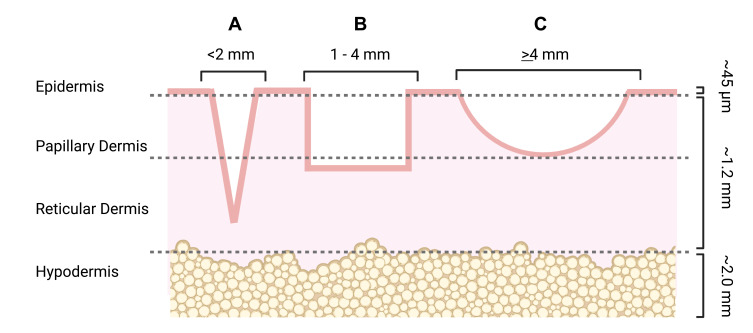
Scarring is a dire consequence of acne vulgaris. Particularly, atrophic acne scarring is highly prevalent among young adults, and its physical and psychological effects can persist throughout their lives if left untreated. This literature review will analyze various non-energy-based approaches to treating atrophic acne scarring, emphasizing recent advances within the last 5 to 10 years. To accomplish this, we performed a PubMed search for various acne scar treatments such as chemical peels, dermabrasion, microdermabrasion, subcision, microneedling, punch techniques, dermal fillers, and thread lifting. Our findings and analysis show that there is no panacean solution to treating atrophic acne scars, which explains the evolving trend towards developing unique combinatorial treatments. Although a fair comparison of each treatment approach is difficult to achieve due to the studies' varying sample sizes, strength of evidence, treatment execution, etc, there still remains a level of consensus on what treatments are well suited for particular scar types.
瘢痕形成是寻常痤疮的一个严重后果。特别是萎缩性痤疮瘢痕在年轻人中非常普遍,如果不加以治疗,其对身体和心理的影响可能会伴随他们一生。这篇文献综述将分析各种非能量型治疗萎缩性痤疮瘢痕的方法,重点关注过去5至10年的最新进展。为此,我们在PubMed上搜索了各种痤疮瘢痕治疗方法,如化学剥脱术、磨皮术、微晶磨皮术、皮下分离术、微针疗法、打孔技术、真皮填充剂和线雕术。我们的研究结果和分析表明,治疗萎缩性痤疮瘢痕没有万灵药,这也解释了独特联合治疗方法不断发展的趋势。尽管由于研究的样本量、证据强度、治疗实施等因素不同,很难对每种治疗方法进行公平比较,但对于哪些治疗方法适合特定类型的瘢痕仍存在一定程度的共识。