Lappi Otto
Cognitive Science/TRU, University of Helsinki, Helsinki, Finland.
Front Psychol. 2022 Mar 14;13:821440. doi: 10.3389/fpsyg.2022.821440. eCollection 2022.
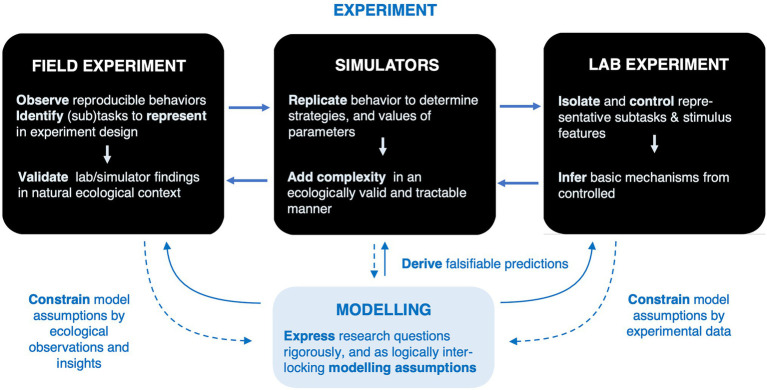
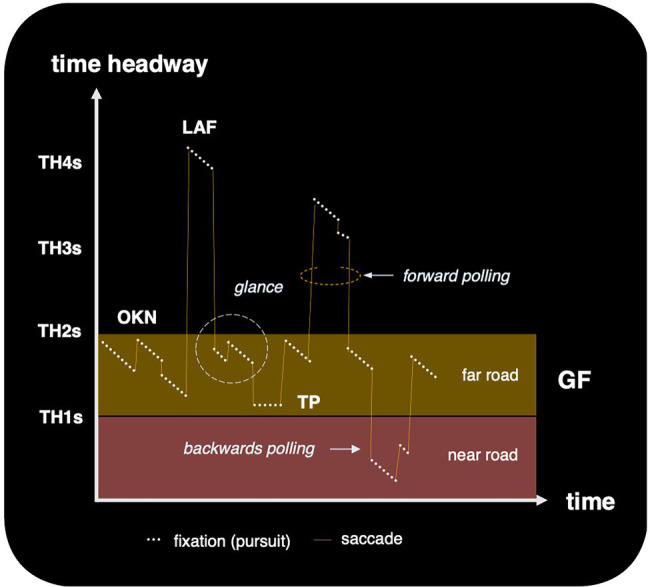
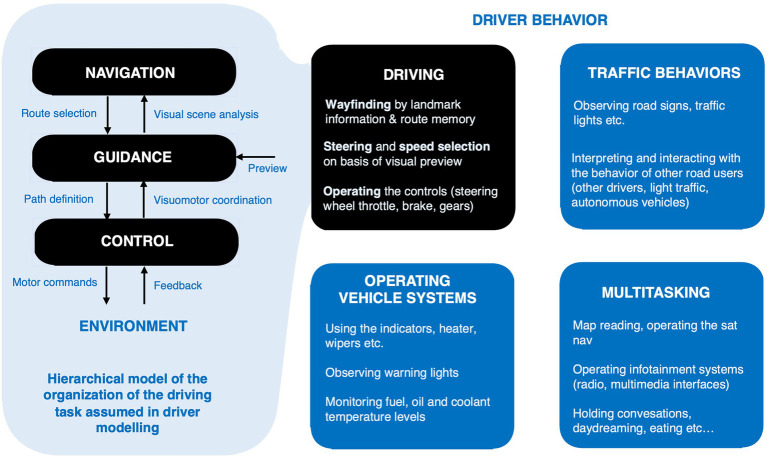
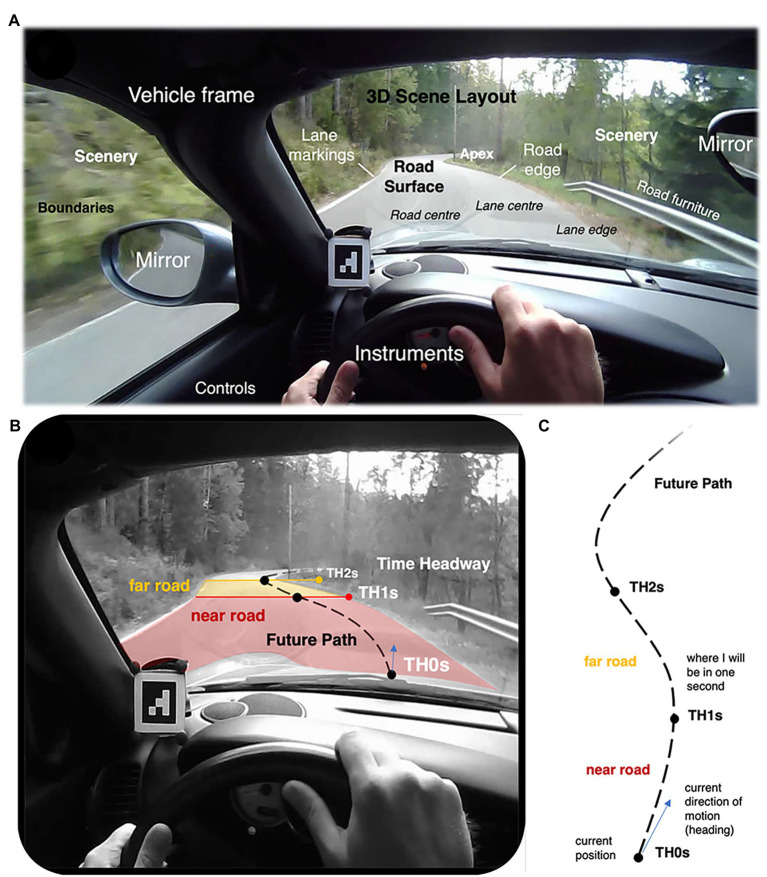
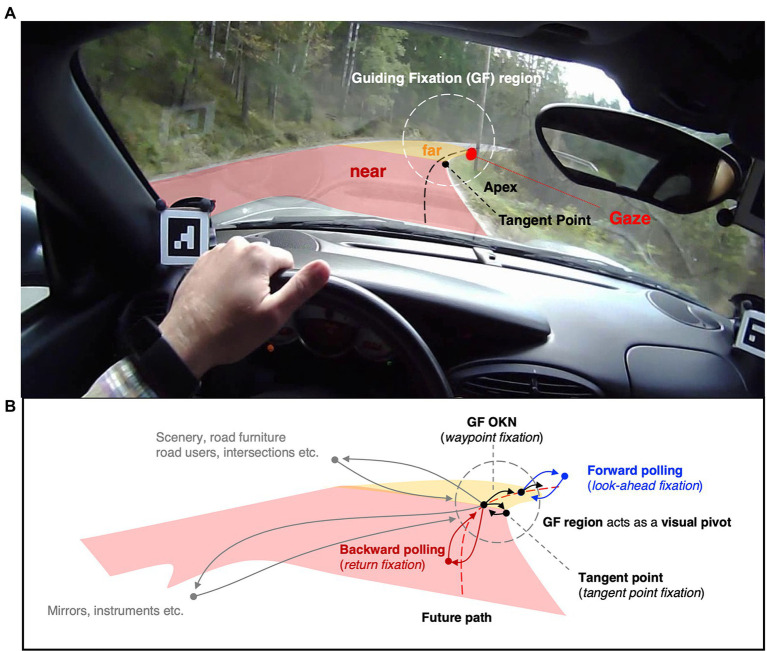
Human performance in natural environments is deeply impressive, and still much beyond current AI. Experimental techniques, such as eye tracking, may be useful to understand the cognitive basis of this performance, and "the human advantage." Driving is domain where these techniques may deployed, in tasks ranging from rigorously controlled laboratory settings through high-fidelity simulations to naturalistic experiments in the wild. This research has revealed robust patterns that can be reliably identified and replicated in the field and reproduced in the lab. The purpose of this review is to cover the basics of what is known about these gaze behaviors, and some of their implications for understanding visually guided steering. The phenomena reviewed will be of interest to those working on any domain where visual guidance and control with similar task demands is involved (e.g., many sports). The paper is intended to be accessible to the non-specialist, without oversimplifying the complexity of real-world visual behavior. The literature reviewed will provide an information base useful for researchers working on oculomotor behaviors and physiology in the lab who wish to extend their research into more naturalistic locomotor tasks, or researchers in more applied fields (sports, transportation) who wish to bring aspects of the real-world ecology under experimental scrutiny. Part of a Research Topic on Gaze Strategies in Closed Self-paced tasks, this aspect of the driving task is discussed. It is in particular emphasized why it is important to carefully separate the visual strategies driving (quite closed and self-paced) from visual behaviors relevant to other forms of driver behavior (an open-ended menagerie of behaviors). There is always a balance to strike between ecological complexity and experimental control. One way to reconcile these demands is to look for natural, real-world tasks and behavior that are rich enough to be interesting yet sufficiently constrained and well-understood to be replicated in simulators and the lab. This to driving as a model behavior and the way the connection between "lab" and "real world" can be spanned in this research is of interest to anyone keen to develop more ecologically representative designs for studying human gaze behavior.
人类在自然环境中的表现令人印象深刻,且仍远超出当前人工智能的水平。诸如眼动追踪等实验技术,可能有助于理解这种表现的认知基础以及“人类优势”。驾驶领域是可以应用这些技术的领域,涵盖从严格控制的实验室环境到高保真模拟,再到野外自然主义实验等各种任务。这项研究揭示了一些稳健的模式,这些模式能够在实地可靠地识别和复制,并在实验室中重现。本综述的目的是涵盖关于这些注视行为的已知基础知识,以及它们在理解视觉引导转向方面的一些意义。所综述的现象将对任何涉及具有类似任务需求的视觉引导和控制的领域(如许多体育运动)的研究人员具有吸引力。本文旨在让非专业人士也能理解,同时又不过度简化现实世界视觉行为的复杂性。所综述的文献将为那些在实验室中研究眼动行为和生理学,希望将研究扩展到更自然主义的运动任务的研究人员,或者希望对现实世界生态方面进行实验研究的更多应用领域(体育、交通)的研究人员,提供一个有用的信息基础。作为关于封闭的自定节奏任务中的注视策略研究主题的一部分,本文讨论了驾驶任务的这一方面。特别强调了为何必须仔细区分驾驶时的视觉策略(相当封闭且自定节奏)与与其他形式的驾驶员行为相关的视觉行为(一系列开放式行为)的重要性。在生态复杂性和实验控制之间始终需要找到平衡。调和这些需求的一种方法是寻找自然的、现实世界的任务和行为,这些任务和行为足够丰富有趣,同时又受到充分约束且易于理解,以便在模拟器和实验室中复制。这对于将驾驶作为一种模型行为以及在这项研究中跨越“实验室”和“现实世界”之间联系的方式,对于任何热衷于开发更具生态代表性的设计来研究人类注视行为的人来说都很有意义。