College of Animal Science and Technology, Yangzhou University, Yangzhou, China.
State Key Laboratory of Sheep Genetic Improvement and Healthy Production, Xinjiang Academy of Agricultural Reclamation Sciences, Shihezi, China.
Front Immunol. 2022 Mar 18;13:848248. doi: 10.3389/fimmu.2022.848248. eCollection 2022.
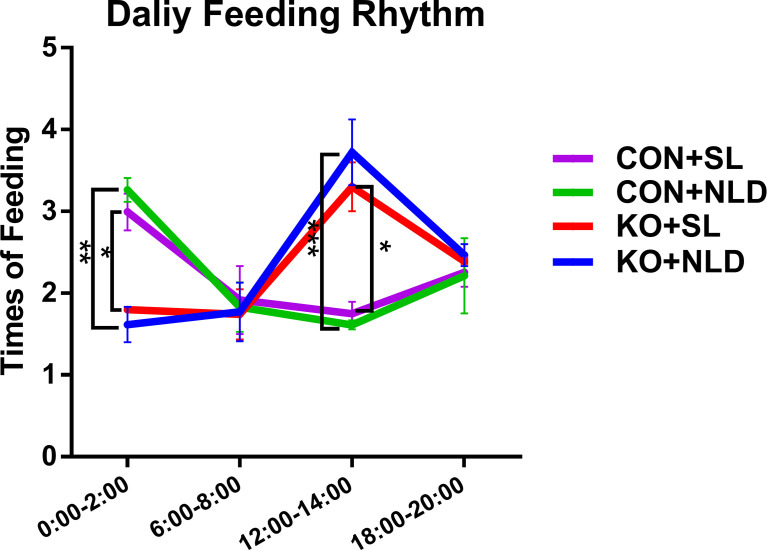
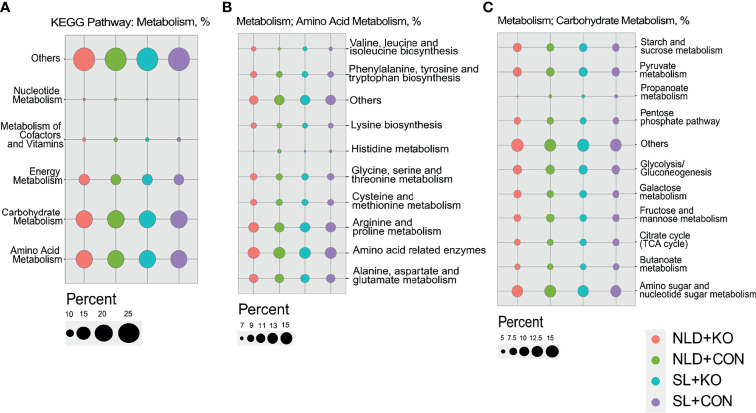
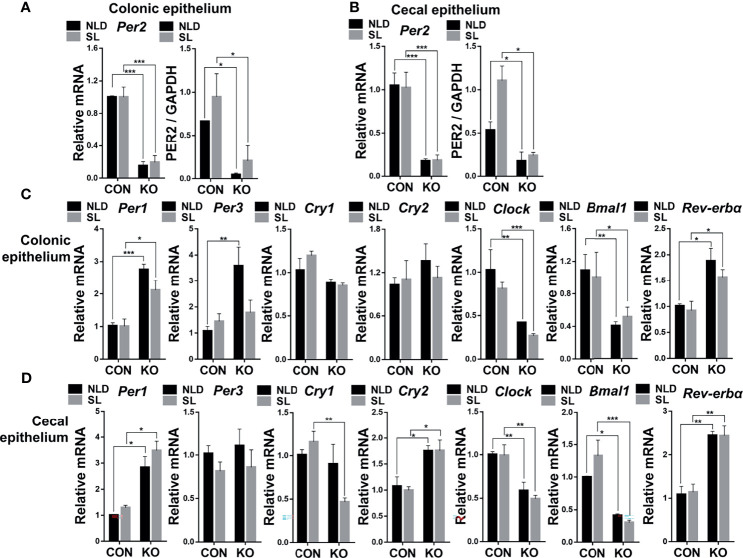
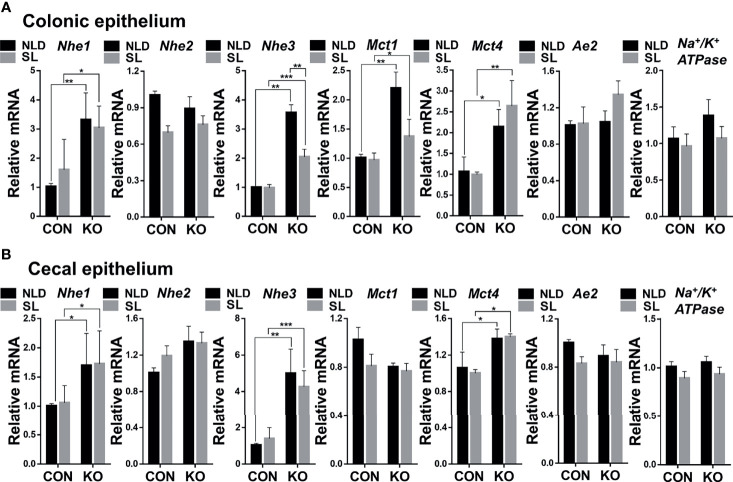
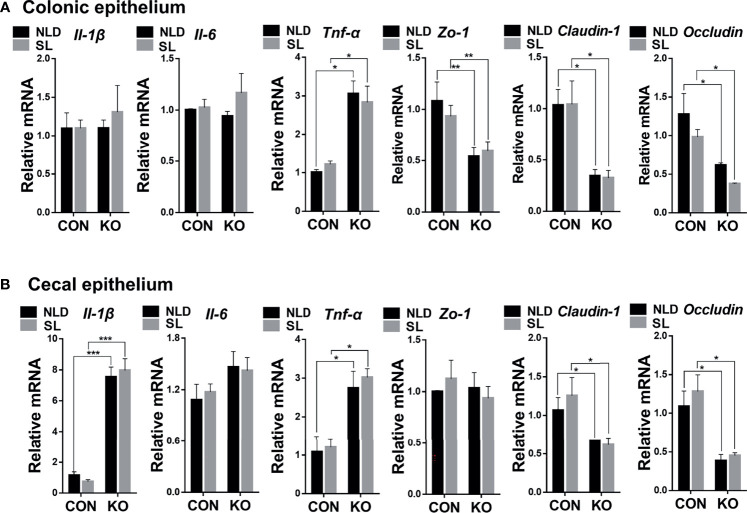
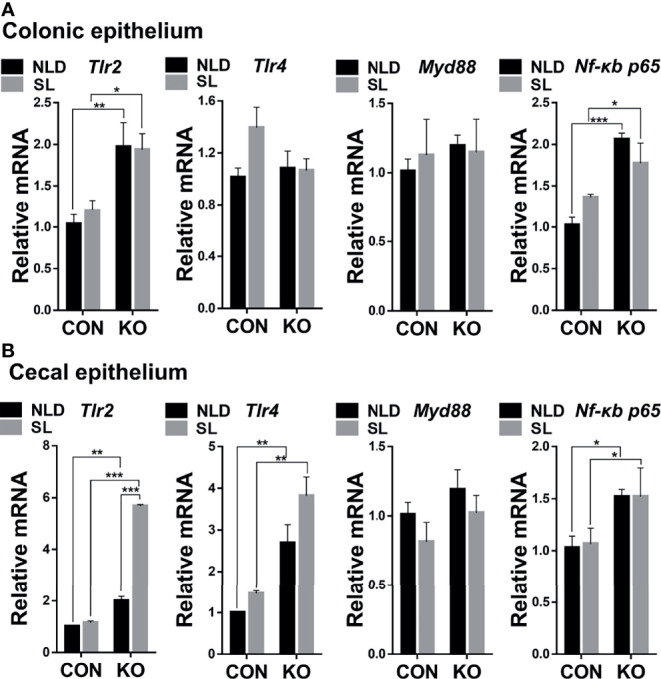
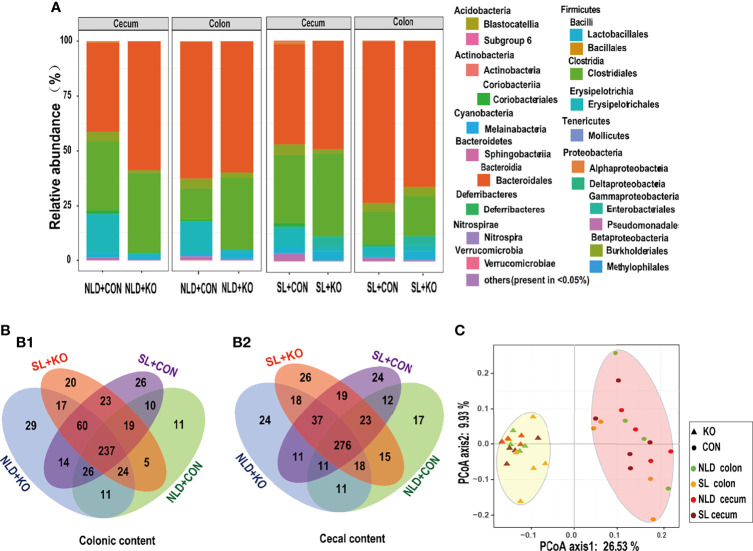
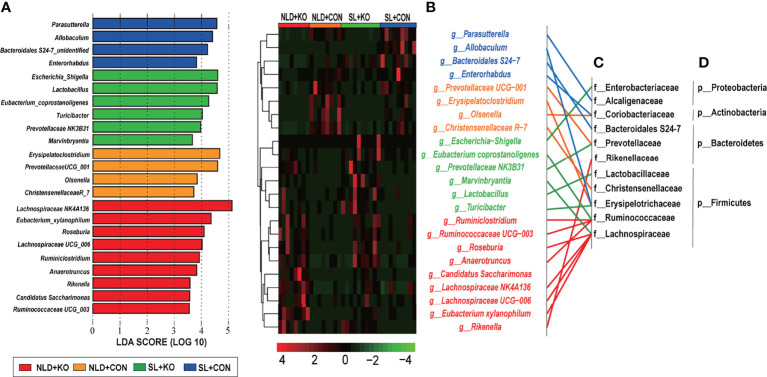
Regular environmental light-dark (LD) cycle-regulated period circadian clock 2 () gene expression is essential for circadian oscillation, nutrient metabolism, and intestinal microbiota balance. Herein, we combined environmental LD cycles with gene knockout to investigate how LD cycles mediate expression to regulate colonic and cecal inflammatory and barrier functions, microbiome, and short-chain fatty acids (SCFAs) in the circulation. Mice were divided into knockout (KO) and wild type (CON) under normal light-dark cycle (NLD) and short-light (SL) cycle for 2 weeks after 4 weeks of adaptation. The concentrations of SCFAs in the serum and large intestine, the colonic and cecal epithelial circadian rhythm, SCFAs transporter, inflammatory and barrier-related genes, and Illumina 16S rRNA sequencing were measured after euthanasia during 10:00-12:00. KO decreased the feeding frequency at 0:00-2:00 but increased at 12:00-14:00 both under NLD and SL. KO upregulated the expression of and in the colon and cecum, while it downregulated and . In terms of inflammatory and barrier functions, KO increased the expression of , , and in the colon and cecum, while it decreased and . KO decreased the concentrations of total SCFAs and acetate in the colon and cecum, but it increased butyrate, while it had no impact on SCFAs in the serum. KO increased the SCFAs transporter because of the upregulation of , , and . Sequencing data revealed that KO improved bacteria -diversity and increased Lachnospiraceae and Ruminococcaceae abundance, while it downregulated , , , and under NLD in KO mice. Most of the differential bacterial genus were enriched in amino acid and carbohydrate metabolism pathways. Overall, knockout altered circadian oscillation in the large intestine, KO improved intestinal microbiota diversity, the increase in Clostridiales abundance led to the reduction in SCFAs in the circulation, concentrations of total SCFAs and acetate decreased, while butyrate increased and SCFAs transport was enhanced. These alterations may potentially lead to inflammation of the large intestine. Short-light treatment had minor impact on intestinal microbiome and metabolism.
规律的环境明暗(LD)周期调节的生物钟 2 ()基因表达对于生物钟振荡、营养代谢和肠道微生物平衡至关重要。在这里,我们将环境 LD 周期与基因敲除相结合,研究 LD 周期如何调节表达,以调节结肠和盲肠的炎症和屏障功能、微生物组和循环中的短链脂肪酸(SCFAs)。在适应 4 周后,将小鼠分为正常明暗周期(NLD)和短光(SL)周期下的敲除(KO)和野生型(CON)2 周。处死期间,在 10:00-12:00 时测量血清和大肠中 SCFAs 的浓度、结肠和盲肠上皮的昼夜节律、SCFAs 转运蛋白、炎症和屏障相关基因以及 Illumina 16S rRNA 测序。在 NLD 和 SL 下,KO 均减少了 0:00-2:00 时的摄食频率,但增加了 12:00-14:00 时的摄食频率。KO 上调了结肠和盲肠中 ()和 ()的表达,而下调了 ()和 ()的表达。在炎症和屏障功能方面,KO 增加了结肠和盲肠中 ()、()和 ()的表达,而降低了 ()和 ()的表达。KO 降低了结肠和盲肠中总 SCFAs 和乙酸盐的浓度,但增加了丁酸盐,而对血清中的 SCFAs 没有影响。KO 通过上调 ()、()和 ()增加了 SCFAs 转运蛋白。测序数据显示,KO 在 KO 小鼠中改善了细菌多样性,增加了 Lachnospiraceae 和 Ruminococcaceae 的丰度,而在 NLD 下下调了 ()、()、()和 ()。大多数差异细菌属在氨基酸和碳水化合物代谢途径中富集。总的来说,基因敲除改变了大肠的昼夜振荡,KO 改善了肠道微生物组的多样性,梭菌目丰度的增加导致循环中 SCFAs 减少,总 SCFAs 和乙酸盐浓度降低,而丁酸盐增加,SCFAs 转运增强。这些变化可能导致大肠炎症。短光处理对肠道微生物组和代谢的影响较小。