Department of Biomedical Engineering, University of Michigan, Ann Arbor, MI 48109.
Biointerfaces Institute, University of Michigan, Ann Arbor, MI 48109.
Proc Natl Acad Sci U S A. 2022 Apr 12;119(15):e2111445119. doi: 10.1073/pnas.2111445119. Epub 2022 Apr 4.
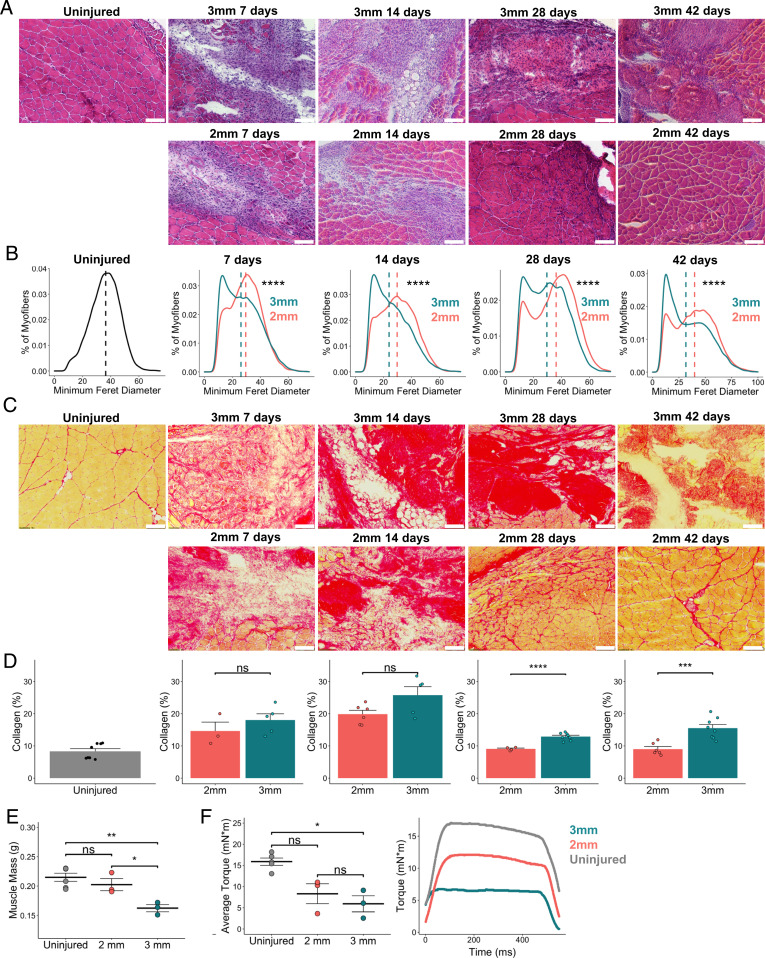
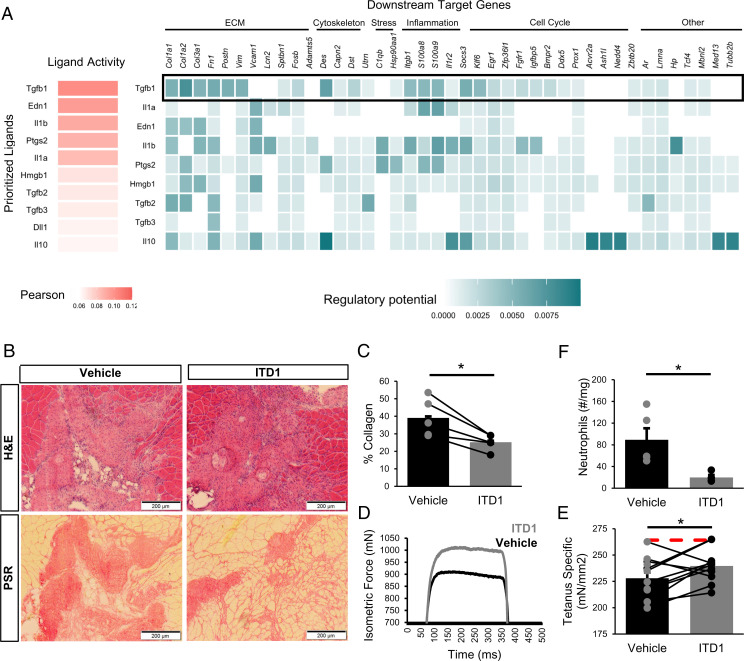
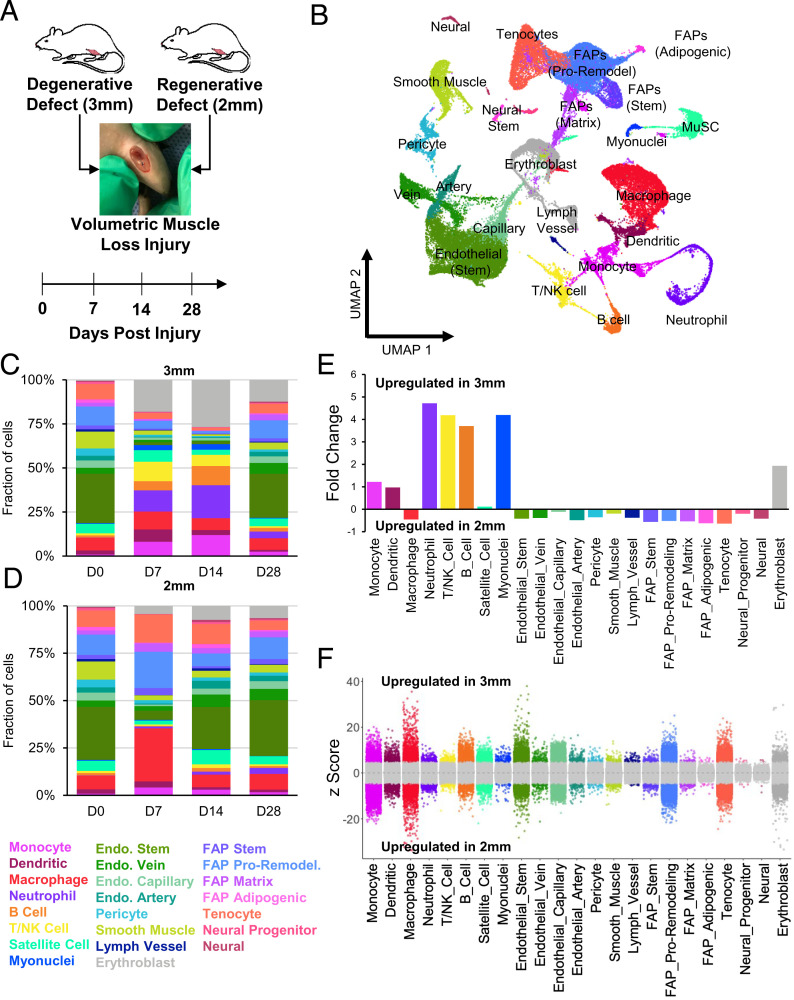
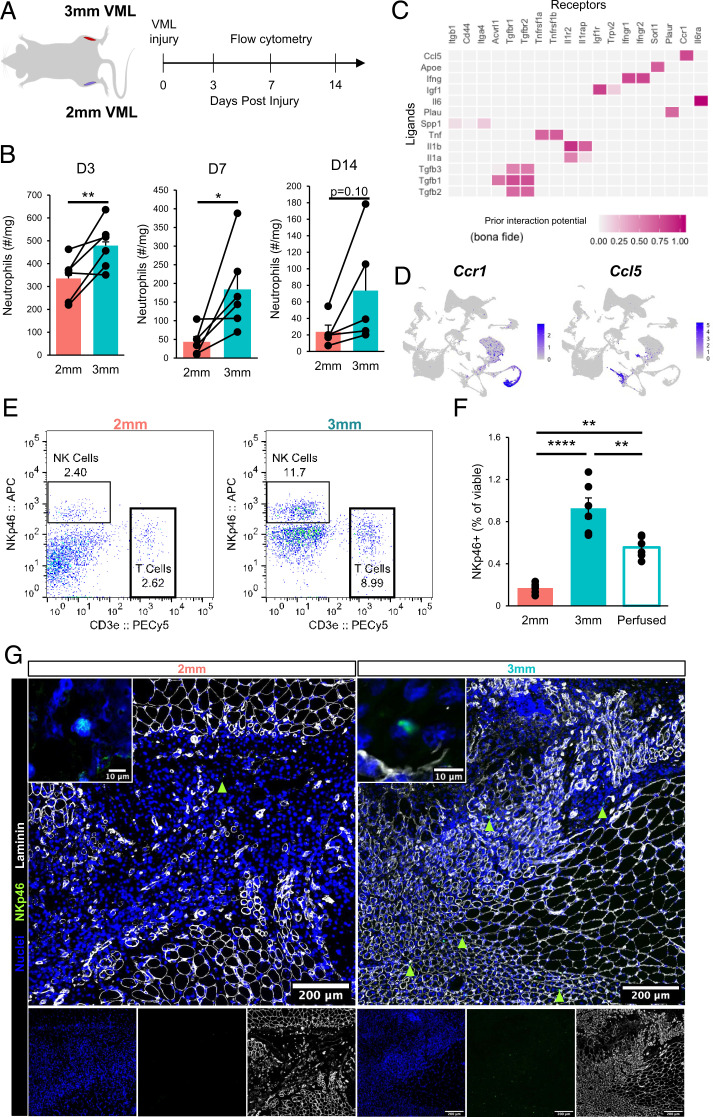
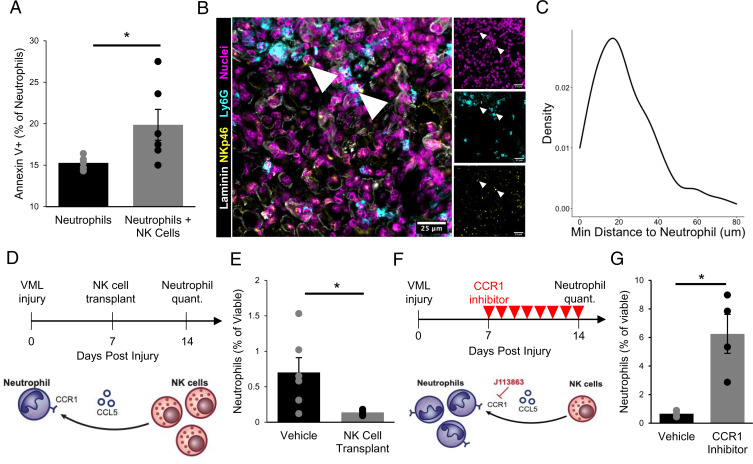
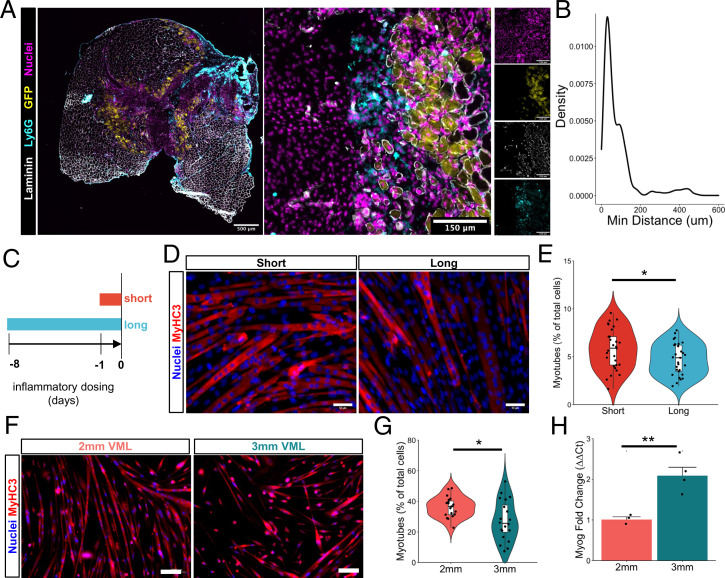
Volumetric muscle loss (VML) overwhelms the innate regenerative capacity of mammalian skeletal muscle (SkM), leading to numerous disabilities and reduced quality of life. Immune cells are critical responders to muscle injury and guide tissue resident stem cell– and progenitor-mediated myogenic repair. However, how immune cell infiltration and intercellular communication networks with muscle stem cells are altered following VML and drive pathological outcomes remains underexplored. Herein, we contrast the cellular and molecular mechanisms of VML injuries that result in the fibrotic degeneration or regeneration of SkM. Following degenerative VML injuries, we observed the heightened infiltration of natural killer (NK) cells as well as the persistence of neutrophils beyond 2 wk postinjury. Functional validation of NK cells revealed an antagonistic role in neutrophil accumulation in part via inducing apoptosis and CCR1-mediated chemotaxis. The persistent infiltration of neutrophils in degenerative VML injuries was found to contribute to impairments in muscle stem cell regenerative function, which was also attenuated by transforming growth factor beta 1 (TGFβ1). Blocking TGFβ signaling reduced neutrophil accumulation and fibrosis and improved muscle-specific force. Collectively, these results enhance our understanding of immune cell–stem cell cross talk that drives regenerative dysfunction and provide further insight into possible avenues for fibrotic therapy exploration.
体积性肌肉损失 (VML) 超过了哺乳动物骨骼肌 (SkM) 的固有再生能力,导致许多残疾和生活质量下降。免疫细胞是肌肉损伤的关键反应者,并指导组织驻留的干细胞和祖细胞介导的肌生成修复。然而,免疫细胞浸润和与肌肉干细胞的细胞间通讯网络如何在 VML 后发生变化并导致病理性结果仍未得到充分探索。在这里,我们对比了导致 SkM 纤维化退化或再生的 VML 损伤的细胞和分子机制。在退行性 VML 损伤后,我们观察到自然杀伤 (NK) 细胞的浸润增加,以及中性粒细胞在损伤后 2 周以上的持续存在。NK 细胞的功能验证显示,它们通过诱导细胞凋亡和 CCR1 介导的趋化作用,在中性粒细胞积聚中发挥拮抗作用。在退行性 VML 损伤中持续存在的中性粒细胞被发现会损害肌肉干细胞的再生功能,而转化生长因子 β1 (TGFβ1) 可减轻这种损害。阻断 TGFβ 信号通路可减少中性粒细胞的积累和纤维化,并提高肌肉特异性力量。总之,这些结果增强了我们对免疫细胞-干细胞相互作用的理解,这种相互作用驱动了再生功能障碍,并为纤维化治疗的探索提供了进一步的思路。