Molecular Medicine Unit, Faculty of Medicine University of Kelaniya, Colombo, Sri Lanka.
Department of Biomedical Sciences, Faculty of Health Sciences, CINEC Campus, Malabe, Sri Lanka.
PLoS One. 2022 Apr 4;17(4):e0265244. doi: 10.1371/journal.pone.0265244. eCollection 2022.
The Sterile Insect Technique (SIT) is presently being tested to control dengue in several countries. SIT aims to cause the decline of the target insect population through the release of a sufficient number of sterilized male insects. This induces sterility in the female population, as females that mate with sterilized males produce no offspring. Male insects are sterilized through the use of ionizing irradiation. This study aimed to evaluate variable parameters that may affect irradiation in mosquito pupae.
An Ae. aegypti colony was maintained under standard laboratory conditions. Male and female Ae. aegypti pupae were separated using a Fay and Morlan glass sorter and exposed to different doses of gamma radiation (40, 50, 60, 70 and 80 Gy) using a Co60 source. The effects of radiation on survival, flight ability and the reproductive capacity of Ae. aegypti were evaluated under laboratory conditions. In addition, mating competitiveness was evaluated for irradiated male Ae. aegypti mosquitoes to be used for future SIT programmes in Sri Lanka.
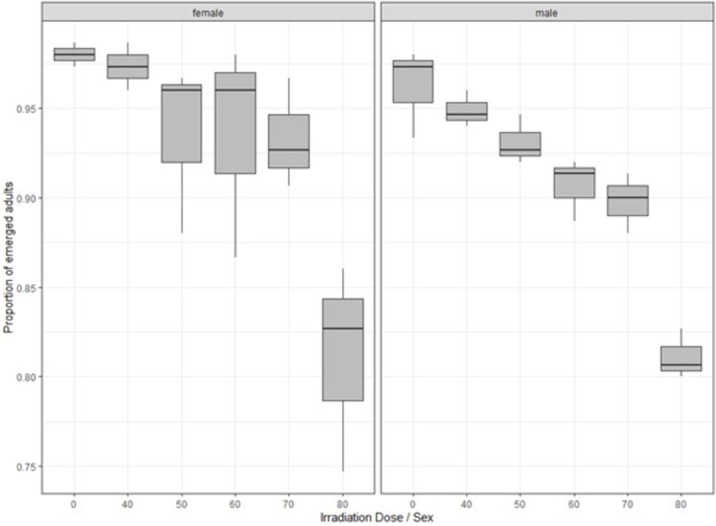
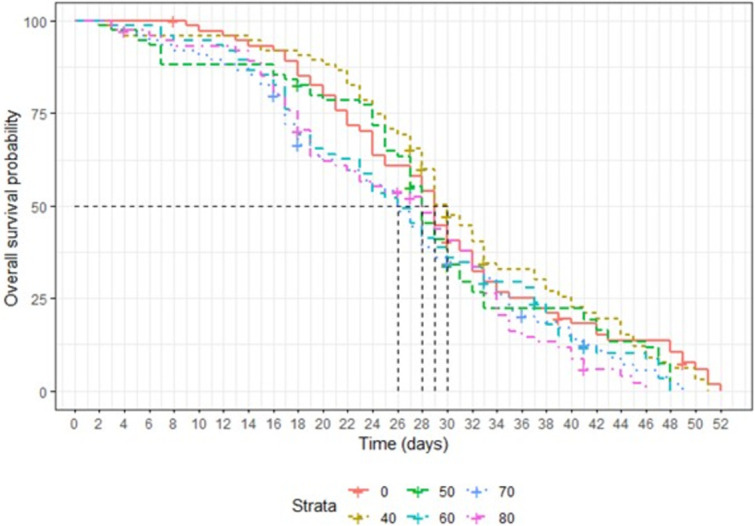
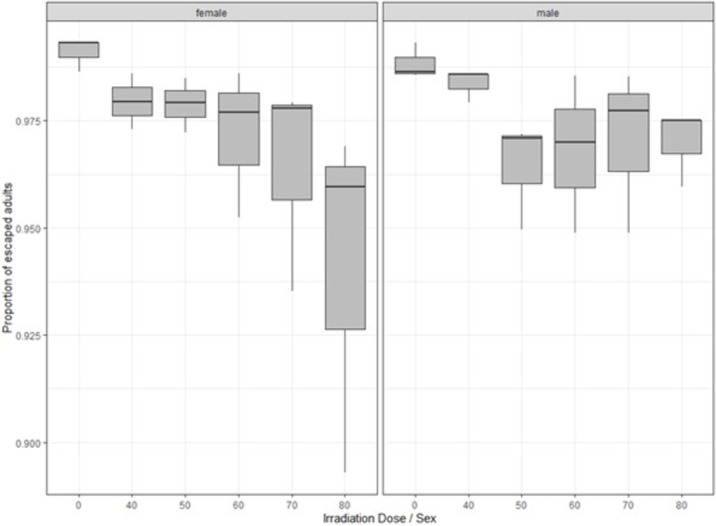
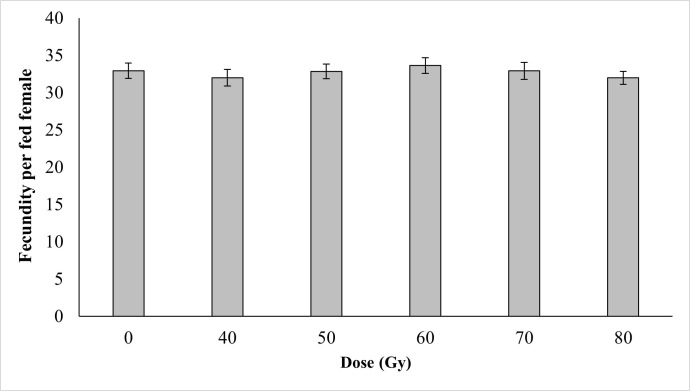
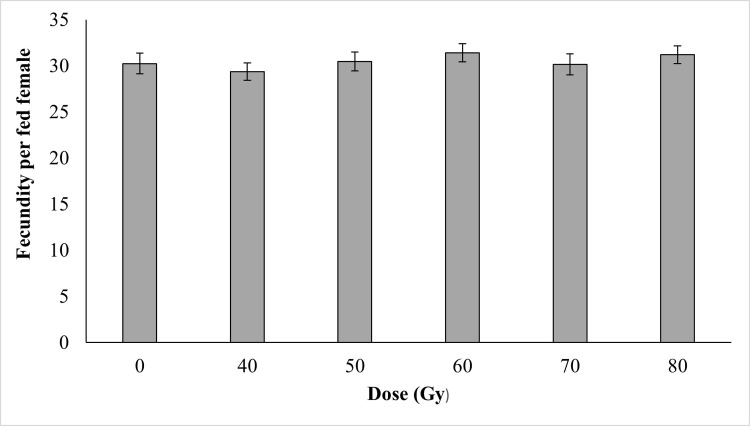
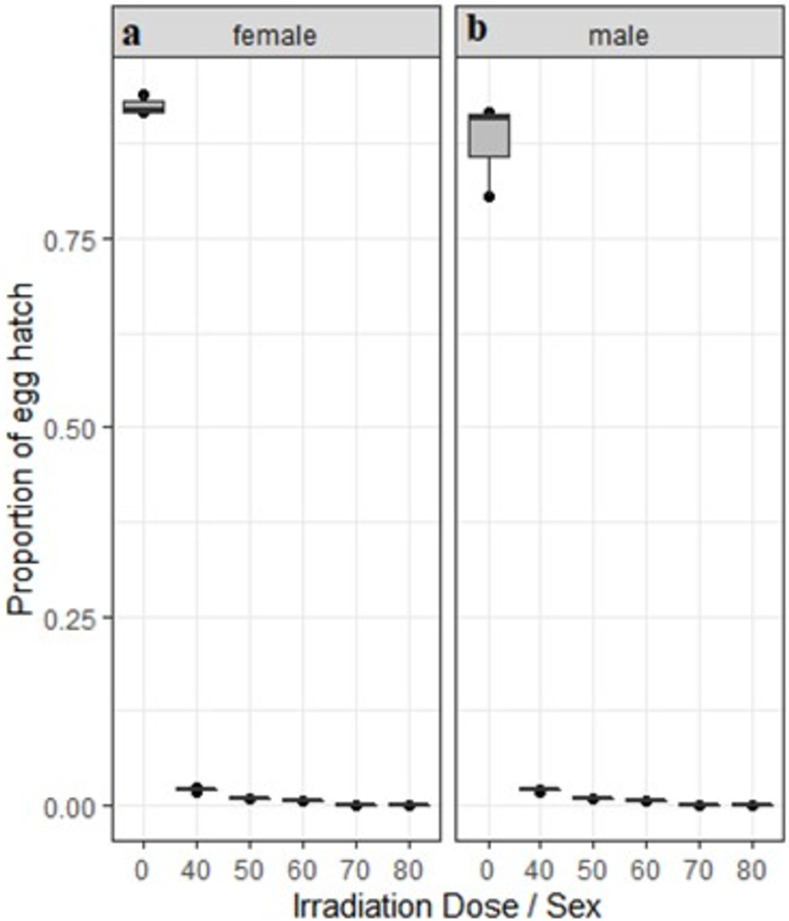
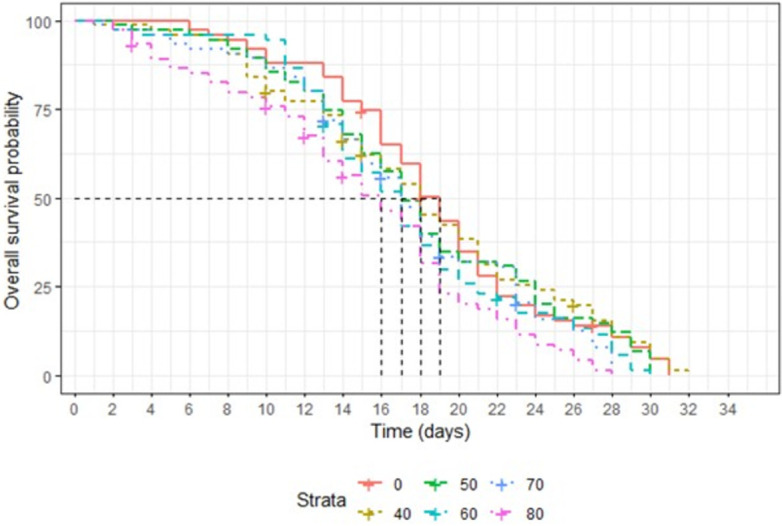
Survival of irradiated pupae was reduced by irradiation in a dose-dependent manner but it was invariably greater than 90% in control, 40, 50, 60, 70 Gy in both male and female Ae. aegypti. Irradiation didn't show any significant adverse effects on flight ability of male and female mosquitoes, which consistently exceeded 90%. A similar number of eggs per female was observed between the non-irradiated groups and the irradiated groups for both irradiated males and females. Egg hatch rates were significantly lower when an irradiation dose above 50 Gy was used as compared to 40 Gy in both males and females. Irradiation at higher doses significantly reduced male and female survival when compared to the non-irradiated Ae. aegypti mosquitoes. Competitiveness index (C) scores of sterile and non-sterile males compared with non-irradiated male mosquitoes under laboratory and semi-field conditions were 0.56 and 0.51 respectively at 50 Gy.
Based on the results obtained from the current study, a 50 Gy dose was selected as the optimal radiation dose for the production of sterile Ae. aegypti males for future SIT-based dengue control programmes aiming at the suppression of Ae. aegypti populations in Sri Lanka.
无菌昆虫技术(SIT)目前正在多个国家进行登革热控制测试。SIT 的目的是通过释放足够数量的绝育雄性昆虫来导致目标昆虫种群的减少。这会导致雌性种群不育,因为与绝育雄性交配的雌性不会产生后代。雄性昆虫通过使用电离辐射来绝育。本研究旨在评估可能影响蚊子蛹照射的变量参数。
维持埃及伊蚊(Aedes aegypti)种群在标准实验室条件下。使用 Fay 和 Morlan 玻璃分选器分离雄性和雌性埃及伊蚊蛹,并使用 Co60 源暴露于不同剂量的伽马辐射(40、50、60、70 和 80Gy)。在实验室条件下评估辐射对埃及伊蚊生存、飞行能力和繁殖能力的影响。此外,还评估了用于斯里兰卡未来 SIT 计划的辐照雄性埃及伊蚊的交配竞争力。
辐照蛹的存活率随辐照剂量呈剂量依赖性降低,但在控制组、40、50、60、70Gy 下,雄性和雌性埃及伊蚊的存活率始终高于 90%。辐照对雄性和雌性蚊子的飞行能力没有显示出任何显著的不良影响,飞行能力始终超过 90%。非辐照组和辐照组的雌性埃及伊蚊的产卵量相似。与 40Gy 相比,当使用 50Gy 以上的照射剂量时,雄蚊和雌蚊的卵孵化率显著降低。与非辐照的埃及伊蚊相比,在更高剂量下照射会显著降低雄蚊和雌蚊的存活率。在实验室和半野外条件下,50Gy 下无菌和非无菌雄蚊与非辐照雄蚊的竞争力指数(C)得分分别为 0.56 和 0.51。
根据本研究的结果,选择 50Gy 剂量作为生产无菌埃及伊蚊雄蚊的最佳辐射剂量,用于未来以 SIT 为基础的登革热控制计划,旨在抑制斯里兰卡的埃及伊蚊种群。