Cintra Emílio R, Hayasaki Tacio G, Sousa-Junior Ailton A, Silva Artur C G, Valadares Marize C, Bakuzis Andris F, Mendanha Sebastião A, Lima Eliana M
FarmaTec-Laboratory of Pharmaceutical Technology, School of Pharmacy, Federal University of Goias, Goiania, Brazil.
Toxin-Laboratory of Education and Research in In Vitro Toxicology, School of Pharmacy, Federal University of Goias, Goiania, Brazil.
Front Pharmacol. 2022 Mar 21;13:854430. doi: 10.3389/fphar.2022.854430. eCollection 2022.
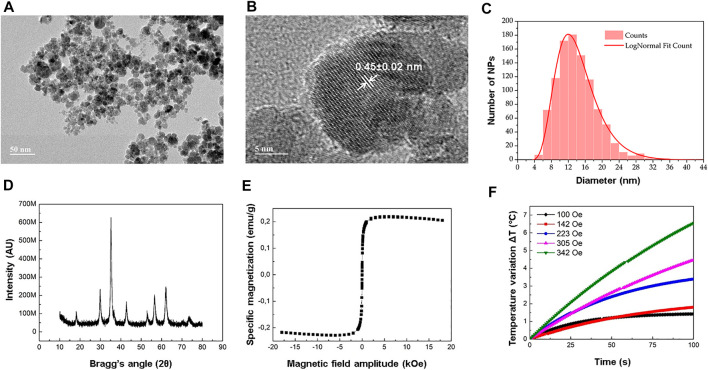
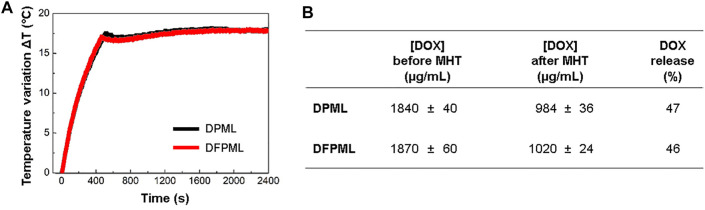
Doxorubicin (DOX) is a chemotherapeutic agent commonly used for the treatment of solid tumors. However, the cardiotoxicity associated with its prolonged use prevents further adherence and therapeutic efficacy. By encapsulating DOX within a PEGylated liposome, Doxil considerably decreased DOX cardiotoxicity. By using thermally sensitive lysolipids in its bilayer composition, ThermoDox implemented a heat-induced controlled release of DOX. However, both ThermoDox and Doxil rely on their passive retention in tumors, depending on their half-lives in blood. Moreover, ThermoDox ordinarily depend on invasive radiofrequency-generating metallic probes for local heating. In this study, we prepare, characterize, and evaluate the antitumoral capabilities of DOX-loaded folate-targeted PEGylated magnetoliposomes (DFPML). Unlike ThermoDox, DOX delivery via DFPML is mediated by the heat released through dynamic hysteresis losses from magnetothermal converting systems composed by MnFeO nanoparticles (NPs) under AC magnetic field excitation-a non-invasive technique designated magnetic hyperthermia (MHT). Moreover, DFPML dismisses the use of thermally sensitive lysolipids, allowing the use of simpler and cheaper alternative lipids. MnFeO NPs and DFPML are fully characterized in terms of their size, morphology, polydispersion, magnetic, and magnetothermal properties. About 50% of the DOX load is released from DFPML after 30 min under MHT conditions. Being folate-targeted, DFPML antitumoral activity is higher (IC ≈ 1 μg/ml) for folate receptor-overexpressing B16F10 murine melanoma cells, compared to MCF7 human breast adenocarcinoma cells (IC ≈ 4 μg/ml). Taken together, our results indicate that DFPML are strong candidates for folate-targeted anticancer therapies based on DOX controlled release.
阿霉素(DOX)是一种常用于治疗实体瘤的化疗药物。然而,长期使用所带来的心脏毒性限制了其进一步应用及治疗效果。通过将DOX包裹于聚乙二醇化脂质体中,多柔比星脂质体(Doxil)显著降低了DOX的心脏毒性。通过在其双层结构中使用热敏性溶血脂质,热敏感阿霉素脂质体(ThermoDox)实现了DOX的热诱导控释。然而,ThermoDox和Doxil都依赖于它们在肿瘤中的被动滞留,这取决于它们在血液中的半衰期。此外,ThermoDox通常依赖侵入性的产生射频的金属探针进行局部加热。在本研究中,我们制备、表征并评估了载有DOX的叶酸靶向聚乙二醇化磁性脂质体(DFPML)的抗肿瘤能力。与ThermoDox不同,通过DFPML递送DOX是由在交流磁场激发下由锰铁氧体纳米颗粒(NPs)组成的磁热转换系统的动态磁滞损耗所释放的热量介导的——这是一种称为磁热疗(MHT)的非侵入性技术。此外,DFPML不再使用热敏性溶血脂质,从而可以使用更简单、更便宜的替代脂质。对锰铁氧体纳米颗粒和DFPML的大小、形态、多分散性、磁性和磁热性质进行了全面表征。在MHT条件下30分钟后,约50%的DOX负载量从DFPML中释放出来。由于具有叶酸靶向性,与MCF7人乳腺腺癌细胞(IC≈4μg/ml)相比,DFPML对叶酸受体过表达的B16F10小鼠黑色素瘤细胞的抗肿瘤活性更高(IC≈1μg/ml)。综上所述,我们的结果表明,DFPML是基于DOX控释的叶酸靶向抗癌治疗的有力候选者。