Farooq Umar, Sahibzada Muhammad Umar Khayam, Khan Taous, Ullah Rahim, Shahid Muhammad, Khusro Ameer, Seidel Veronique, Abdellattif Magda H, Emran Talha Bin
Department of Pharmacy, COMSATS University Islamabad Abbottabad Campus, Abbottabad, Pakistan.
Department of Pharmacy, Sarhad University of Science & Information Technology, Peshawar 25100, Khyber Pakhtunkhwa, Pakistan.
Evid Based Complement Alternat Med. 2022 Mar 28;2022:9419918. doi: 10.1155/2022/9419918. eCollection 2022.
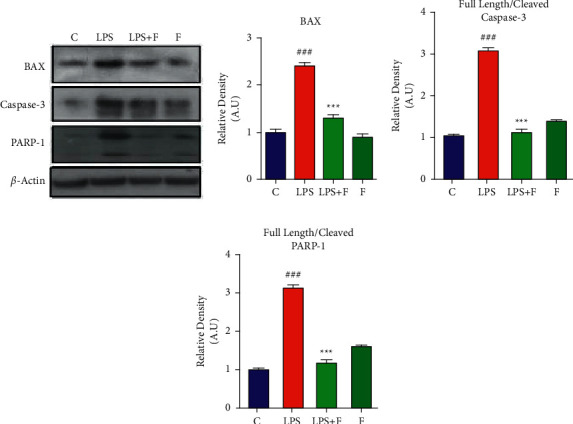
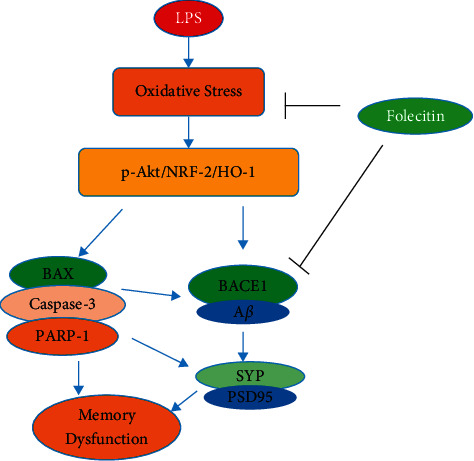
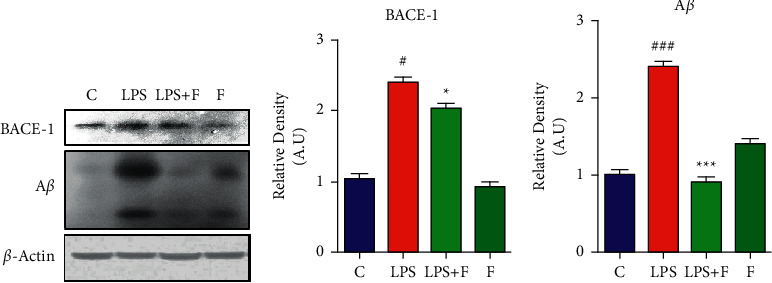
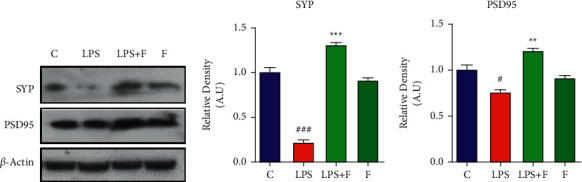
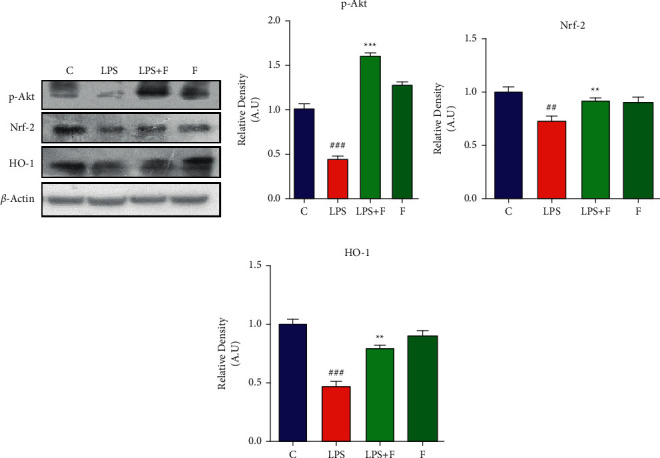
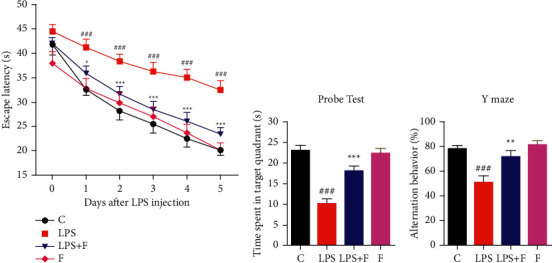
Neurodegenerative diseases, especially Alzheimer's disease (AD), are characterised with neuronal synapse and memory dysfunction, and thus, there is an urgent need to find novel therapeutic medicines that can target different pathways to restore the deficits. In this investigation, we assessed the medicinal potency of folecitin (a flavonoid isolated from Wall.) against lipopolysaccharide (LPS)-induced amyloidogenic amyloid beta (A) production pathway-mediated memory impairment in mice. The LPS was administered intraperitonially (i.p.) 250 g/kg/day for 3 consecutive weeks, followed by the coadministration of folecitin (30 mg/kg/day) with LPS for the last two weeks (2 and 3 week). The expression of various proteins involved in synapse, neuronal death, and A generation was evaluated using the Western blot approach. Results indicated that folecitin significantly decreased LPS-induced apoptotic proteins; expressed BAX, PARP-1, and caspase-3 proteins; and inhibited BACE1 that cleaves transmembrane amyloid precursor protein and the amyloidogenic A production pathway. Folecitin restored both preneural and postneuronal synapse, accompanied by the improvement in memory impairment. Moreover, folecitin significantly activated endogenous antioxidant proteins Nrf-2 and HO-1 by stimulating the phosphorylation of Akt proteins. These findings indicate that folecitin might be a promising target for developing novel medication to treat neurodegenerative disorders caused by neurotoxins.
神经退行性疾病,尤其是阿尔茨海默病(AD),其特征在于神经元突触和记忆功能障碍,因此,迫切需要找到能够针对不同途径来恢复缺陷的新型治疗药物。在本研究中,我们评估了叶酸素(一种从[植物名称未完整给出]中分离出的黄酮类化合物)对脂多糖(LPS)诱导的淀粉样蛋白生成途径介导的小鼠记忆损伤的药用效力。连续3周腹腔注射(i.p.)LPS,剂量为250 μg/kg/天,随后在最后两周(第2周和第3周)将叶酸素(30 mg/kg/天)与LPS联合给药。使用蛋白质免疫印迹法评估参与突触、神经元死亡和Aβ生成的各种蛋白质的表达。结果表明,叶酸素显著降低了LPS诱导的凋亡蛋白;表达的BAX、PARP - 1和caspase - 3蛋白;并抑制了切割跨膜淀粉样前体蛋白的BACE1和淀粉样蛋白生成途径。叶酸素恢复了神经前和神经后突触,同时改善了记忆损伤。此外,叶酸素通过刺激Akt蛋白的磷酸化显著激活了内源性抗氧化蛋白Nrf - 2和HO - 1。这些发现表明,叶酸素可能是开发新型药物治疗由神经毒素引起的神经退行性疾病的一个有前景的靶点。