College of Agronomy, Liaocheng Universitygrid.411351.3, Liaocheng, China.
State Key Laboratory of Veterinary Biotechnology, Harbin Veterinary Research Institutegrid.38587.31, Chinese Academy of Agricultural Sciences, Harbin, China.
Microbiol Spectr. 2022 Apr 27;10(2):e0080722. doi: 10.1128/spectrum.00807-22. Epub 2022 Apr 7.
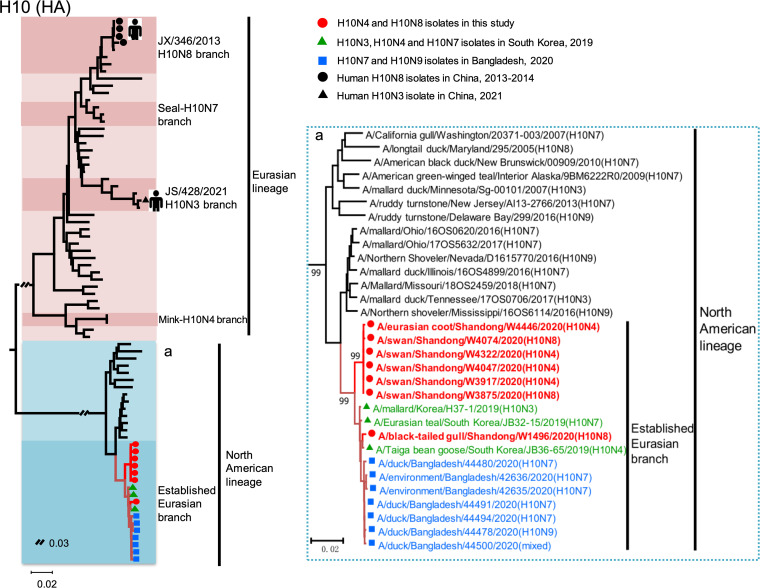
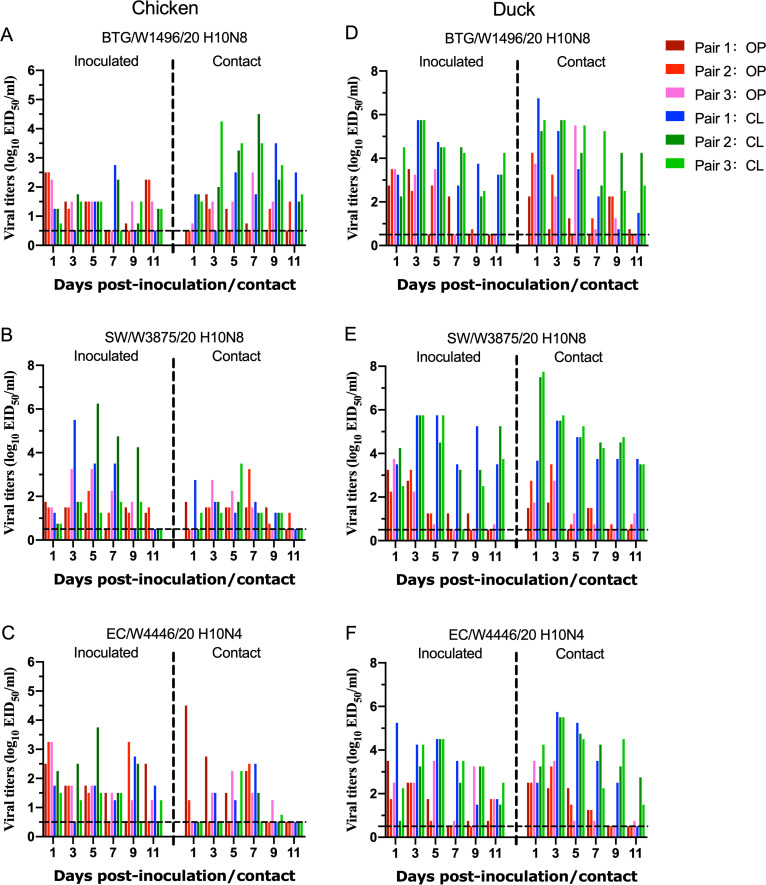
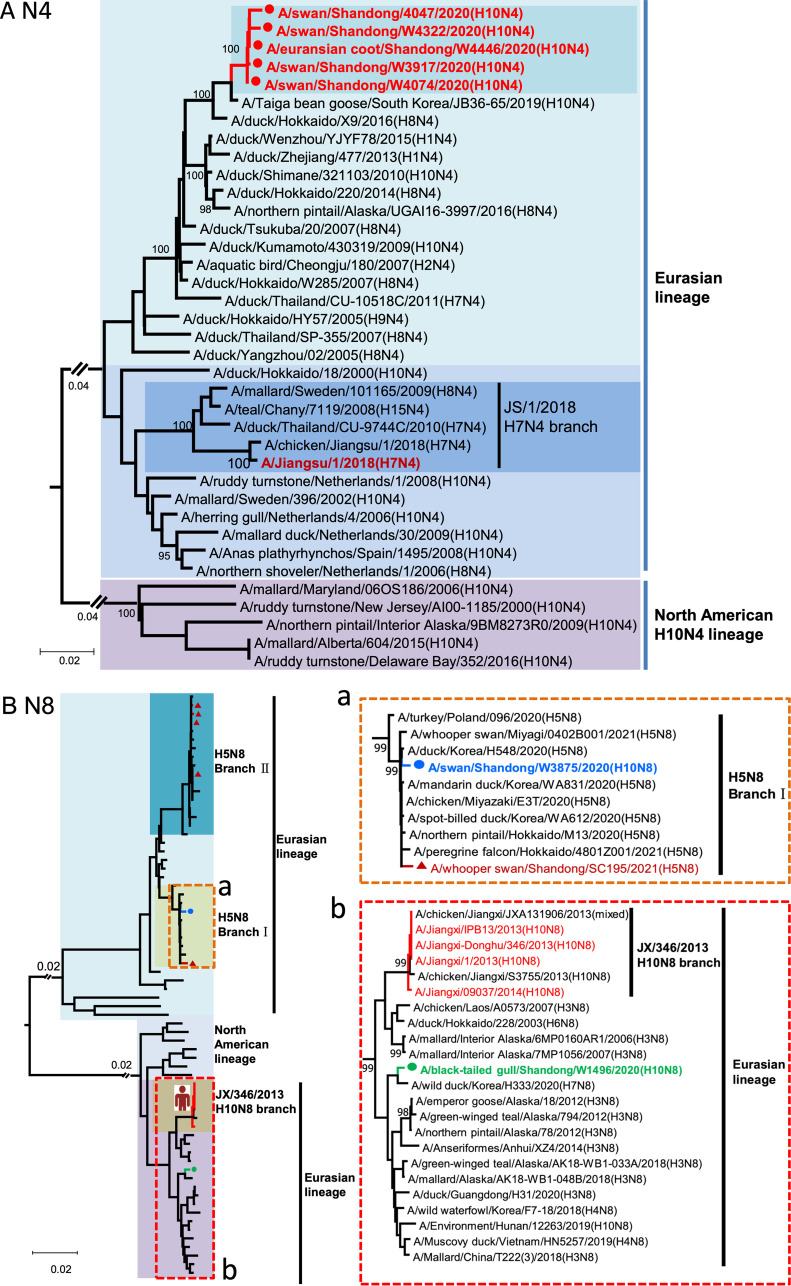
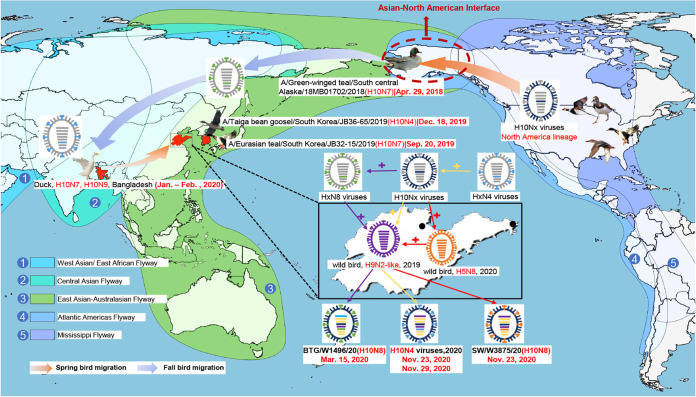
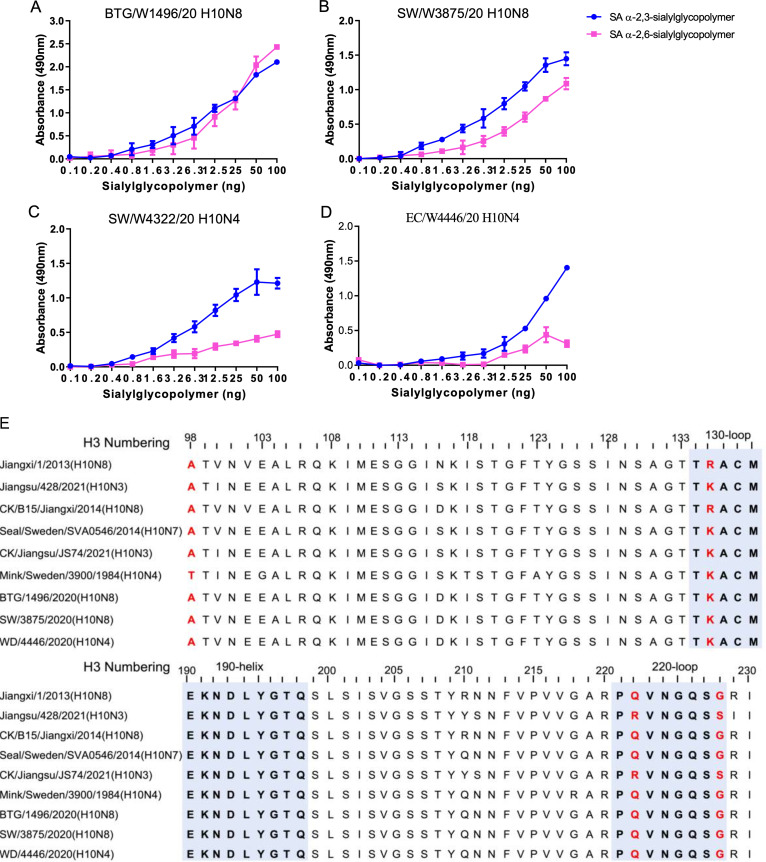
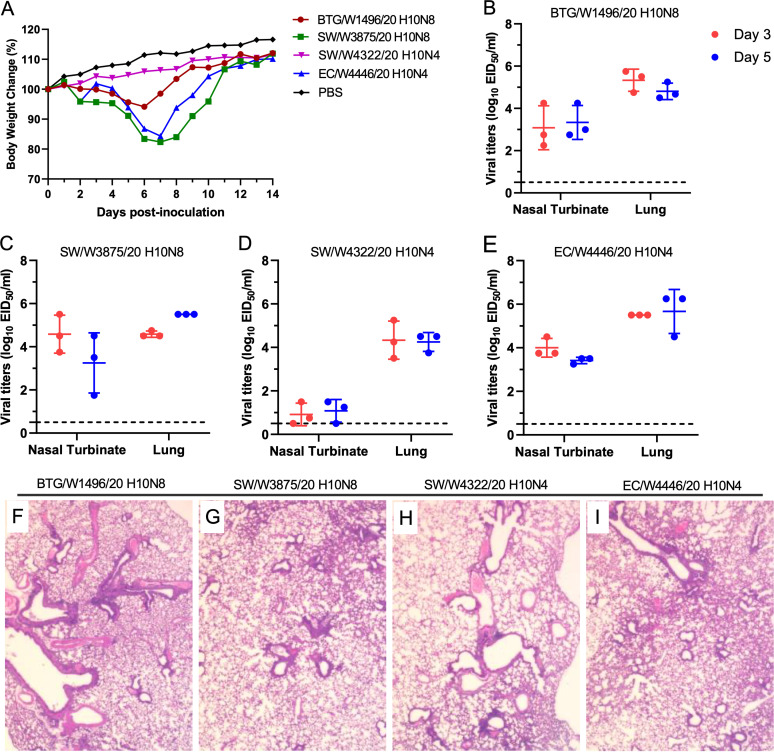
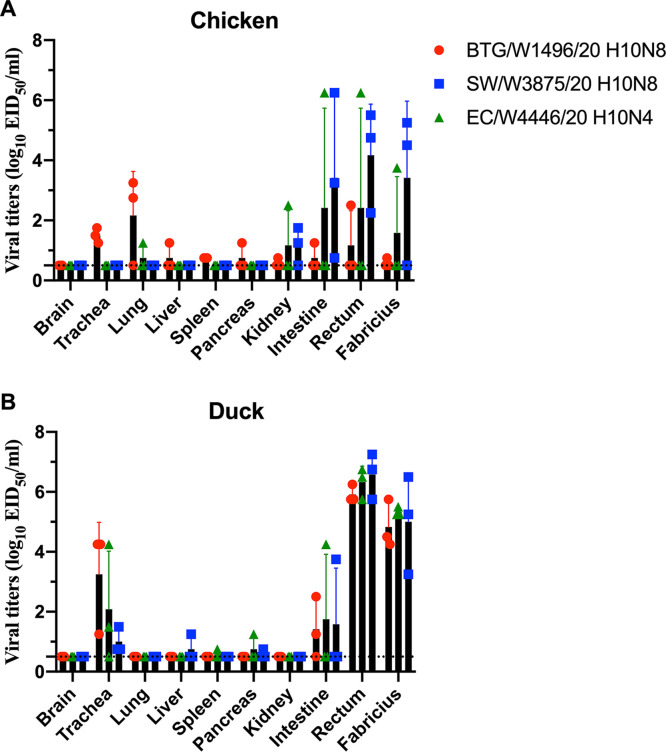
H10Nx influenza viruses have caused increasing public concern due to their occasional infection of humans. However, the genesis and biological characteristics of H10 viruses in migratory wild birds are largely unknown. In this study, we conducted active surveillance to monitor circulation of avian influenza viruses in eastern China and isolated five H10N4 and two H10N8 viruses from migratory birds in 2020. Genetic analysis indicated that the hemagglutinin (HA) genes of the seven H10 viruses were clustered into the North American lineage and established as a novel Eurasian branch in wild birds in South Korea, Bangladesh, and China. The neuraminidase (NA) genes of the H10N4 and H10N8 viruses originated from the circulating HxN4 and H5N8 viruses in migratory birds in Eurasia. We further revealed that some of the novel H10N4 and H10N8 viruses acquired the ability to bind human-like receptors. Animal studies indicated that these H10 viruses can replicate in mice, chickens, and ducks. Importantly, we found that the H10N4 and H10N8 viruses can transmit efficiently among chickens and ducks but induce lower HA inhibition (HI) antibody titers in ducks. These findings emphasized that annual surveillance in migratory waterfowl should be strengthened to monitor the introduction of wild-bird H10N4 and H10N8 reassortants into poultry. The emerging avian influenza reassortants and mutants in birds pose an increasing threat to poultry and public health. H10 avian influenza viruses are widely prevalent in wild birds, poultry, seals, and minks and pose an increasing threat to human health. The occasional human infections with H10N8 and H10N3 viruses in China have significantly increased public concern about the potential pandemic risk posed by H10 viruses. In this study, we found that the North American H10 viruses have been successfully introduced to Asia by migratory birds and further reassorted with other subtypes to generate novel H10N4 and H10N8 viruses in eastern China. These emerging H10 reassortants have a high potential to threaten the poultry industry and human health due to their efficient replication and transmission in chickens, ducks, and mice.
H10Nx 流感病毒偶尔感染人类,引起了公众的日益关注。然而,迁徙野鸟中 H10 病毒的起源和生物学特性在很大程度上尚不清楚。在本研究中,我们通过主动监测,监测了中国东部地区禽流感病毒的流行情况,并从 2020 年迁徙鸟类中分离到五株 H10N4 和两株 H10N8 病毒。遗传分析表明,七种 H10 病毒的血凝素(HA)基因聚类为北美谱系,并在韩国、孟加拉国和中国的野鸟中建立了一个新的欧亚分支。H10N4 和 H10N8 病毒的神经氨酸酶(NA)基因源自欧亚大陆迁徙鸟类中流行的 HxN4 和 H5N8 病毒。我们进一步揭示,一些新型 H10N4 和 H10N8 病毒获得了结合人源样受体的能力。动物研究表明,这些 H10 病毒可以在小鼠、鸡和鸭中复制。重要的是,我们发现 H10N4 和 H10N8 病毒可以在鸡和鸭之间有效地传播,但在鸭中诱导的血凝抑制(HI)抗体滴度较低。这些发现强调,应加强对迁徙水禽的年度监测,以监测野鸟 H10N4 和 H10N8 重配体向家禽的引入。鸟类中出现的禽流感重配体和突变体对家禽和公共卫生构成的威胁越来越大。H10 禽流感病毒广泛存在于野鸟、家禽、海豹和水貂中,对人类健康构成的威胁越来越大。中国偶尔出现的人感染 H10N8 和 H10N3 病毒,引起了公众对 H10 病毒潜在大流行风险的极大关注。在本研究中,我们发现,北美 H10 病毒已通过迁徙鸟类成功传入亚洲,并进一步与其他亚型重配,在中国东部产生新型 H10N4 和 H10N8 病毒。这些新出现的 H10 重配体由于在鸡、鸭和小鼠中高效复制和传播,对家禽业和人类健康具有很高的威胁。