State Key Laboratory of Toxicology and Medical Countermeasures, Beijing Institute of Pharmacology and Toxicology, Beijing 100850, PR China.
State Key Laboratory of Toxicology and Medical Countermeasures, Beijing Institute of Pharmacology and Toxicology, Beijing 100850, PR China; School of Pharmacy, Guangxi Medical University, Nanning 530021, PR China.
Int J Pharm. 2022 May 10;619:121719. doi: 10.1016/j.ijpharm.2022.121719. Epub 2022 Apr 4.
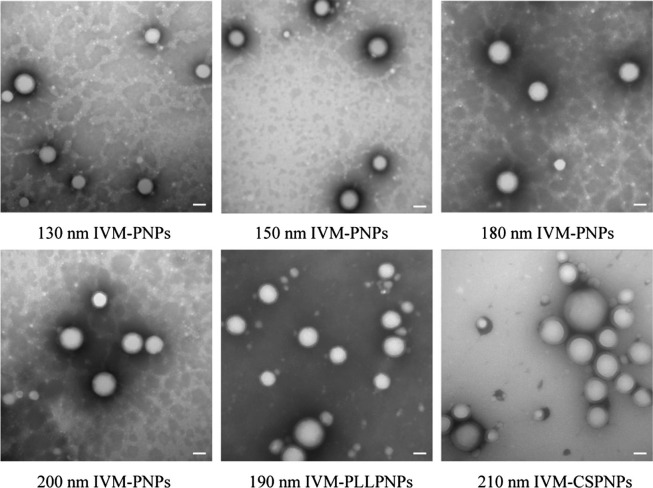
Recent studies have demonstrated that ivermectin (IVM) exhibits antiviral activity against severe acute respiratory syndrome coronavirus 2 (SARS-CoV-2), the causative virus of coronavirus disease 2019 (COVID-19). However, the repurposing of IVM for the treatment of COVID-19 has presented challenges primarily due to the low IVM plasma concentration after oral administration, which was well below IC. Here, a red blood cell (RBC)-hitchhiking strategy was used for the targeted delivery of IVM-loaded nanoparticles (NPs) to the lung. IVM-loaded poly (lactic-co-glycolic acid) (PLGA) NPs (IVM-PNPs) and chitosan-coating IVM-PNPs (IVM-CSPNPs) were prepared and adsorbed onto RBCs. Both RBC-hitchhiked IVM-PNPs and IVM-CSPNPs could significantly enhance IVM delivery to lungs, improve IVM accumulation in lung tissue, inhibit the inflammatory responses and finally significantly alleviate the progression of acute lung injury. Specifically, the redistribution and circulation effects were related to the properties of NPs. RBC-hitchhiked cationic IVM-CSPNPs showed a longer circulation time, slower accumulation and elimination rates, and higher anti-inflammatory activities than RBC-hitchhiked anionic IVM-PNPs. Therefore, RBC-hitchhiking provides an alternative strategy to improve IVM pharmacokinetics and bioavailability for repurposing of IVM to treat COVID-19. Furthermore, according to different redistribution effects of different NPs, RBC-hitchhiked NPs may achieve various accumulation rates and circulation times for different requirements of drug delivery.
最近的研究表明,伊维菌素(IVM)对严重急性呼吸综合征冠状病毒 2(SARS-CoV-2)具有抗病毒活性,SARS-CoV-2 是导致 2019 年冠状病毒病(COVID-19)的病毒。然而,由于口服后 IVM 的血浆浓度低,远低于 IC,因此将 IVM 重新用于治疗 COVID-19 存在挑战。在这里,使用红细胞(RBC)搭便车策略将负载 IVM 的纳米颗粒(NPs)靶向递送到肺部。制备了负载 IVM 的聚(乳酸-共-乙醇酸)(PLGA)纳米颗粒(IVM-PNPs)和壳聚糖包覆的 IVM-PNPs(IVM-CSPNPs),并吸附到 RBC 上。负载 IVM 的 RBC 搭便车的 PNPs 和 IVM-CSPNPs 均能显著增强 IVM 向肺部的递送,增加 IVM 在肺组织中的积累,抑制炎症反应,最终显著缓解急性肺损伤的进展。具体而言,再分配和循环作用与 NPs 的性质有关。与负载 IVM 的阴离子型 PNPs 相比,负载 IVM 的阳离子型 IVM-CSPNPs 具有更长的循环时间、较慢的积累和消除率以及更高的抗炎活性。因此,红细胞搭便车为提高 IVM 的药代动力学和生物利用度提供了一种替代策略,以重新利用 IVM 治疗 COVID-19。此外,根据不同 NPs 的再分配效果,RBC 搭便车的 NPs 可能会达到不同的积累率和循环时间,以满足不同的药物输送要求。