Key Laboratory of Ecology of Rare and Endangered Species and Environmental Protection (Guangxi Normal University), Ministry of Education, Guilin, Guangxi, China.
Guangxi Key Laboratory of Rare and Endangered Animal Ecology, Guangxi Normal University, Guilin, Guangxi, China.
PeerJ. 2022 Apr 5;10:e13245. doi: 10.7717/peerj.13245. eCollection 2022.
Gut microbiota play a critical role in nutrition absorption and environmental adaptation and can affect the biological characteristics of host animals. The invasive golden apple snail () and native Chinese mud snail () are two sympatric freshwater snails with similar ecological niche in southern China. However, gut microbiota comparison of interspecies remains unclear. Comparing the difference of gut microbiota between the invasive snail and native snail could provide new insight into the invasion mechanism of at the microbial level.
Gut samples from 20 golden apple snails and 20 Chinese mud snails from wild freshwater habitats were collected and isolated. The 16S rRNA gene V3-V4 region of the gut microbiota was analyzed using high throughput Illumina sequencing.
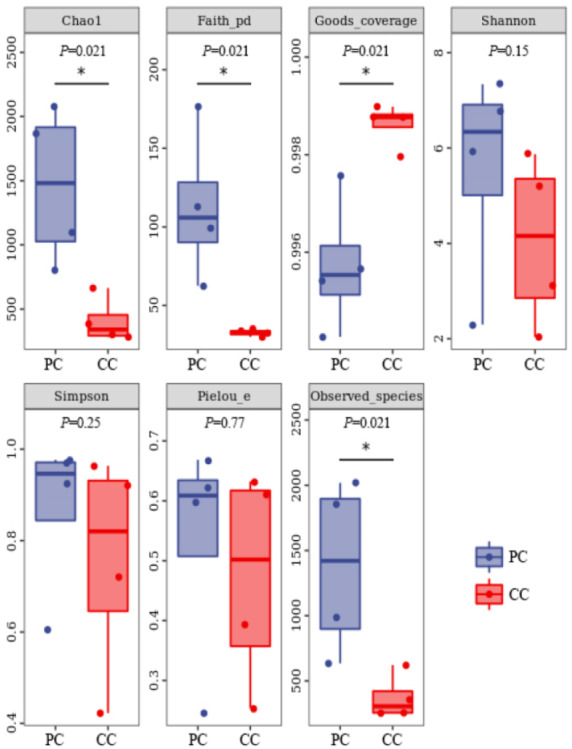
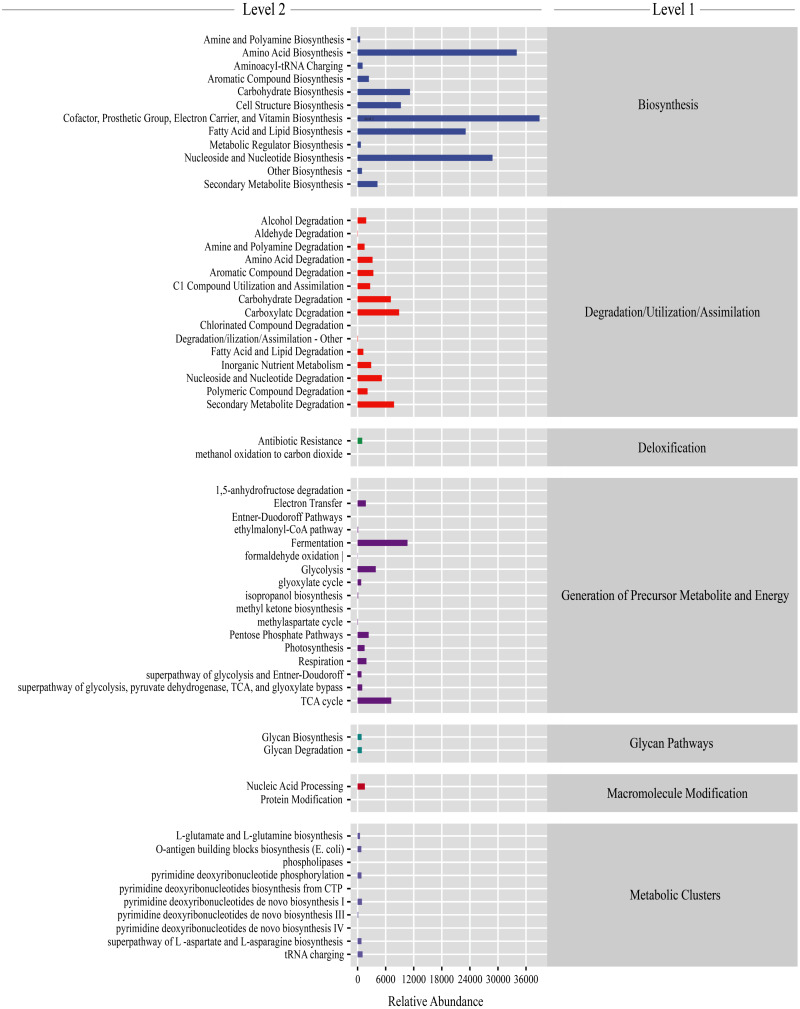
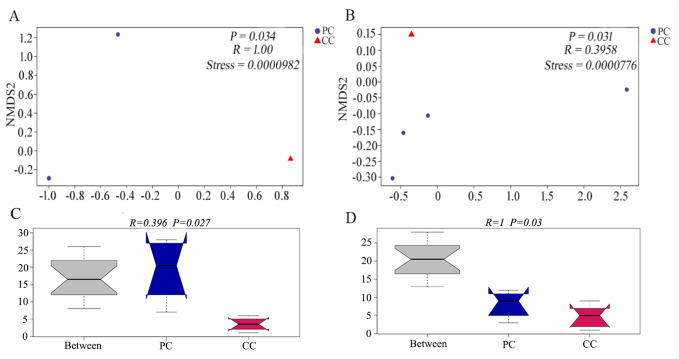
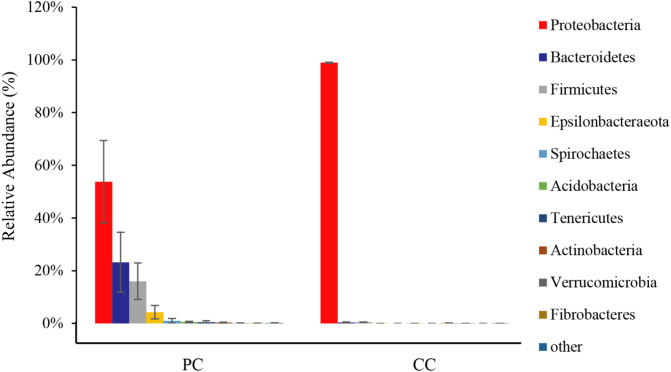
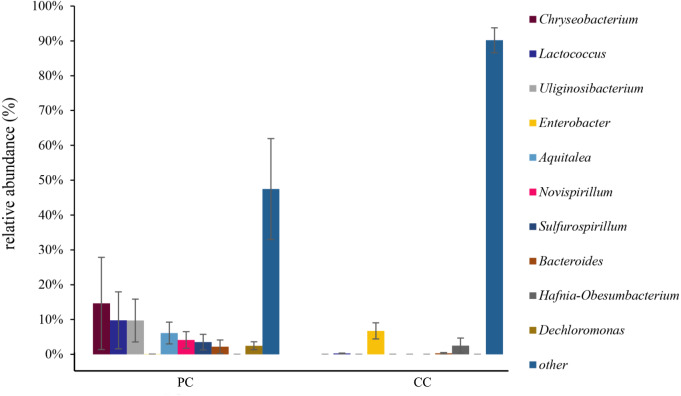
The gut microbiota dominantly composed of Proteobacteria, Bacteroidetes, Firmicutes and Epsilonbacteraeota at phylum level in golden apple snail. Only Proteobacteria was the dominant phylum in Chinese mud snail. Alpha diversity analysis (Shannon and Simpson indices) showed there were no significant differences in gut microbial diversity, but relative abundances of the two groups differed significantly ( < 0.05). Beta diversity analysis (Bray Curtis and weighted UniFrac distance) showed marked differences in the gut microbiota structure ( < 0.05). Unique or high abundance microbial taxa were more abundant in the invasive snail compared to the native form. Functional prediction analysis indicated that the relative abundances of functions differed significantly regarding cofactor prosthetic group electron carrier and vitamin biosynthesis, amino acid biosynthesis, and nucleoside and nucleotide biosynthesis ( < 0.05). These results suggest an enhanced potential to adapt to new habitats in the invasive snail.
肠道微生物在营养吸收和环境适应中起着关键作用,它们可以影响宿主动物的生物学特性。入侵的金苹果螺(Pomacea canaliculata)和本地的中国圆田螺(Cipangopaludina chinensis)是中国南方两种具有相似生态位的共生淡水螺。然而,种间肠道微生物的比较仍不清楚。比较入侵螺和本地螺的肠道微生物差异,可以从微生物水平上为 的入侵机制提供新的见解。
从野外淡水栖息地采集了 20 只金苹果螺和 20 只中国圆田螺的肠道样本并进行分离。使用高通量 Illumina 测序分析肠道微生物的 16S rRNA 基因 V3-V4 区。
在金苹果螺的肠道中,微生物主要由变形菌门(Proteobacteria)、拟杆菌门(Bacteroidetes)、厚壁菌门(Firmicutes)和 Epsilonbacteraeota 组成。而在中国圆田螺中,仅变形菌门是优势门。α多样性分析(香农和辛普森指数)表明肠道微生物多样性没有显著差异,但两组的相对丰度差异显著(<0.05)。β多样性分析(Bray Curtis 和加权 UniFrac 距离)表明肠道微生物结构存在明显差异(<0.05)。与本地种相比,入侵种的特有或高丰度微生物类群更为丰富。功能预测分析表明,辅酶 prosthetic group electron carrier 和维生素生物合成、氨基酸生物合成以及核苷和核苷酸生物合成等功能的相对丰度差异显著(<0.05)。这些结果表明,入侵螺具有更强的适应新栖息地的潜力。