Becker Anne A M J, Hill K C, Butaye Patrick
Department of Biomedical Sciences, Ross University School of Veterinary Medicine, Basseterre, Saint Kitts and Nevis.
One Health Center for Zoonoses and Tropical Veterinary Medicine, Ross University School of Veterinary Medicine, Basseterre, Saint Kitts and Nevis.
Microorganisms. 2021 Feb 24;9(3):465. doi: 10.3390/microorganisms9030465.
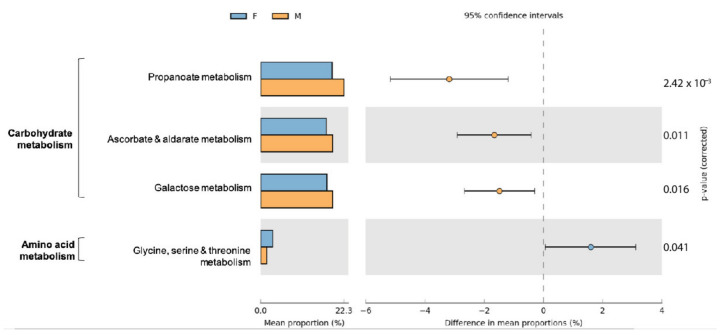
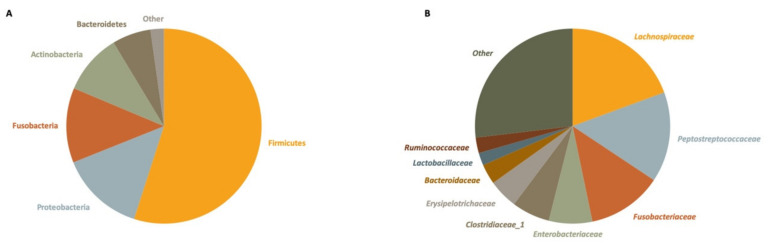
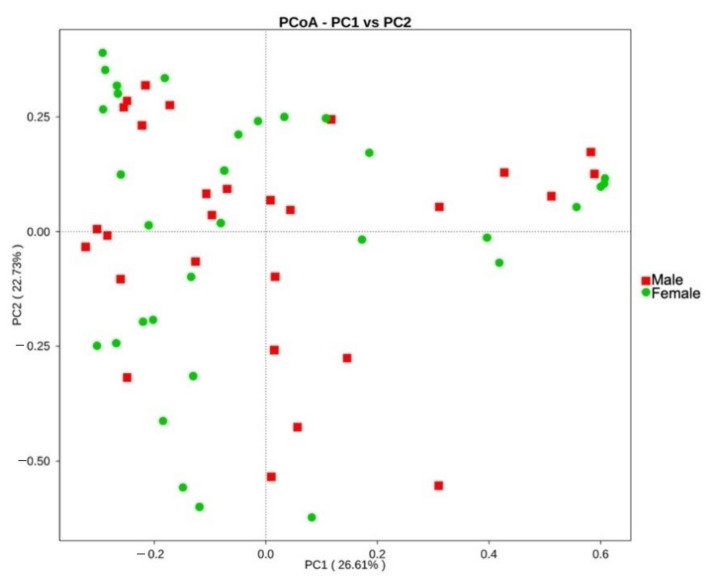
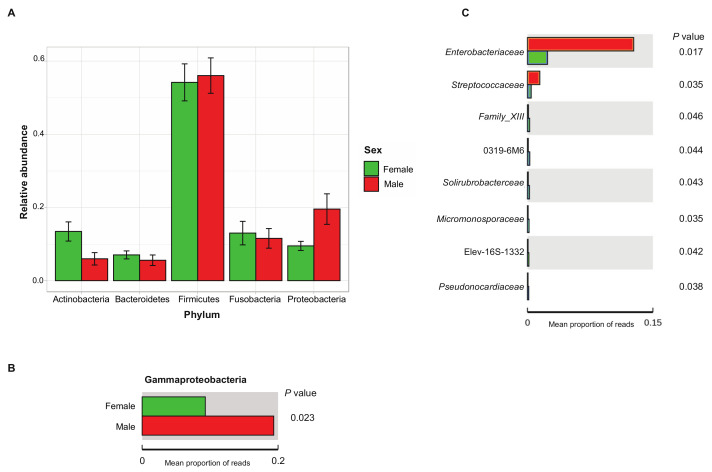
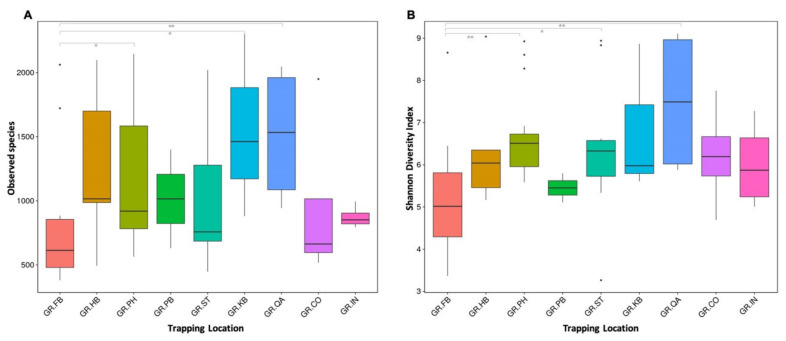
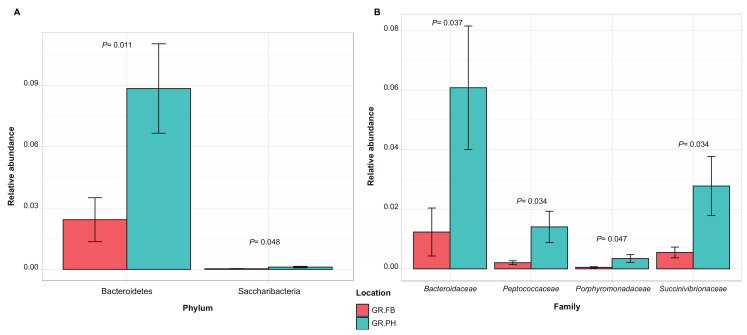
Small Indian mongooses () are among the most pervasive predators to disrupt the native ecology on Caribbean islands and are strongly entrenched in their areas of introduction. Few studies, however, have considered the microbial ecology of such biological invasions. In this study, we investigated the gut microbiota of invasive small Indian mongooses in terms of taxonomic diversity and functional potential. To this end, we collected fecal samples from 60 free-roaming mongooses trapped in different vegetation zones on the island Saint Kitts. The core gut microbiome, assessed by 16S rRNA amplicon gene sequencing on the Ion S5 XL platform, reflects a carnivore-like signature with a dominant abundance of Firmicutes (54.96%), followed by Proteobacteria (13.98%) and Fusobacteria (12.39%), and a relatively minor contribution of Actinobacteria (10.4%) and Bacteroidetes (6.40%). Mongooses trapped at coastal sites exhibited a higher relative abundance of spp. whereas those trapped in scrubland areas were enriched in Bacteroidetes, but there was no site-specific difference in predicted metabolic properties. Between males and females, beta-diversity was not significantly different and no sex-specific strategies for energy production were observed. However, the relative abundance of Gammaproteobacteria, and more specifically, , was significantly higher in males. This first description of the microbial profile of small Indian mongooses provides new insights into their bioecology and can serve as a springboard to further elucidating this invasive predator's impact throughout the Caribbean.
印度小獴是扰乱加勒比海岛屿本土生态的最具侵入性的食肉动物之一,并且在其引入地区深深扎根。然而,很少有研究考虑过此类生物入侵的微生物生态学。在本研究中,我们从分类多样性和功能潜力方面调查了入侵的印度小獴的肠道微生物群。为此,我们从圣基茨岛上不同植被区捕获的60只自由活动的獴身上采集了粪便样本。通过在Ion S5 XL平台上进行16S rRNA扩增子基因测序评估的核心肠道微生物群,反映出类似食肉动物的特征,厚壁菌门占主导地位(54.96%),其次是变形菌门(13.98%)和梭杆菌门(12.39%),放线菌门(10.4%)和拟杆菌门(6.40%)的贡献相对较小。在沿海地区捕获的獴中, 属的相对丰度较高,而在灌丛地区捕获的獴中拟杆菌门更为丰富,但在预测的代谢特性方面没有特定地点的差异。在雄性和雌性之间,β多样性没有显著差异,也没有观察到性别特异性的能量产生策略。然而,γ-变形菌纲,更具体地说是 属,在雄性中的相对丰度显著更高。对印度小獴微生物特征的首次描述为它们的生物生态学提供了新的见解,并可作为进一步阐明这种入侵食肉动物在整个加勒比地区影响的跳板。