Department of Microbiology, Faculty of Naval Medicine, Naval Medical University, Shanghai, China.
Spine Center, Department of Orthopedics, Shanghai Changzheng Hospital Affiliated to Naval Medical University, Shanghai, China.
Front Cell Infect Microbiol. 2022 Mar 24;12:851917. doi: 10.3389/fcimb.2022.851917. eCollection 2022.
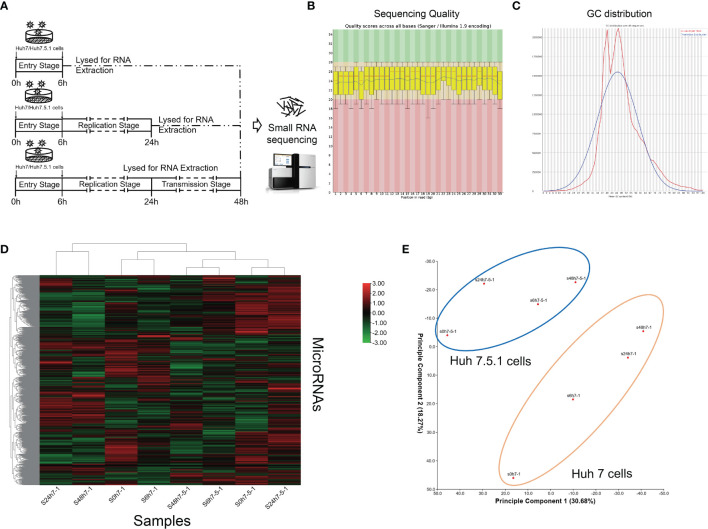
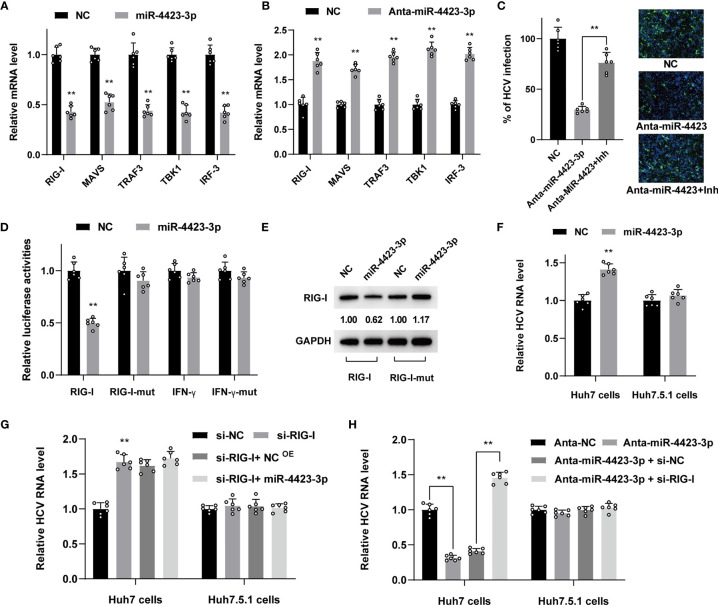
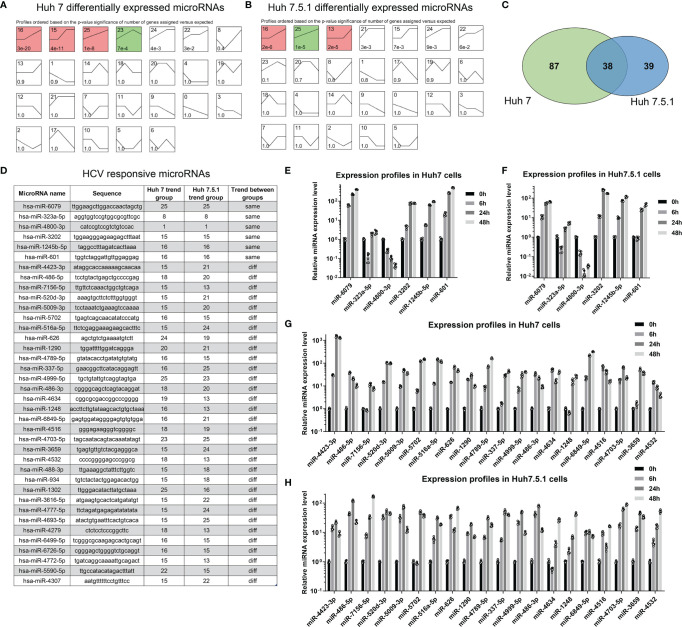
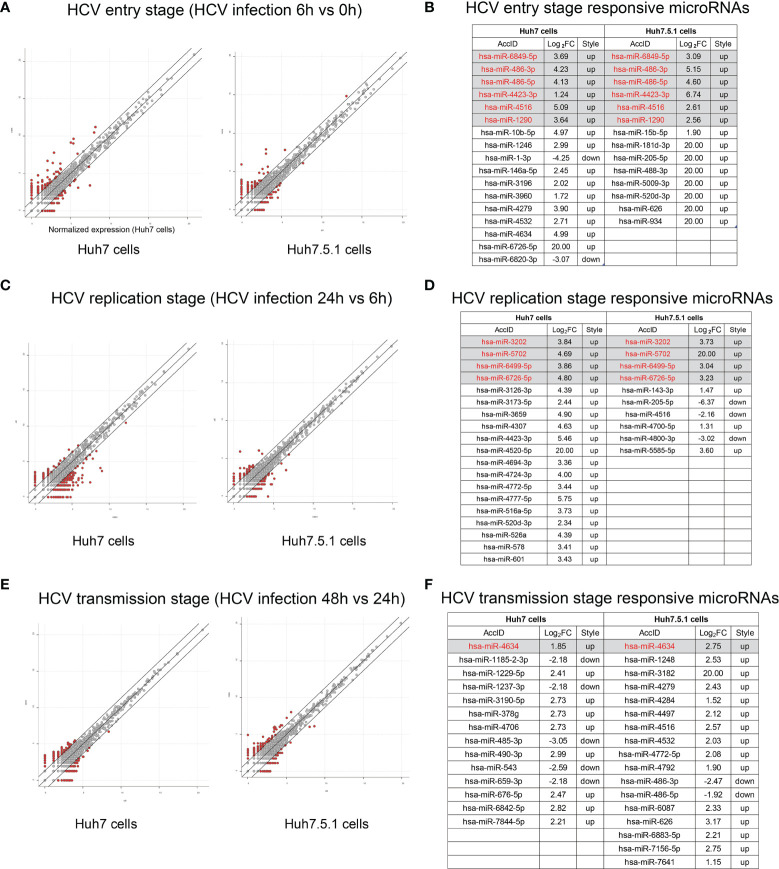
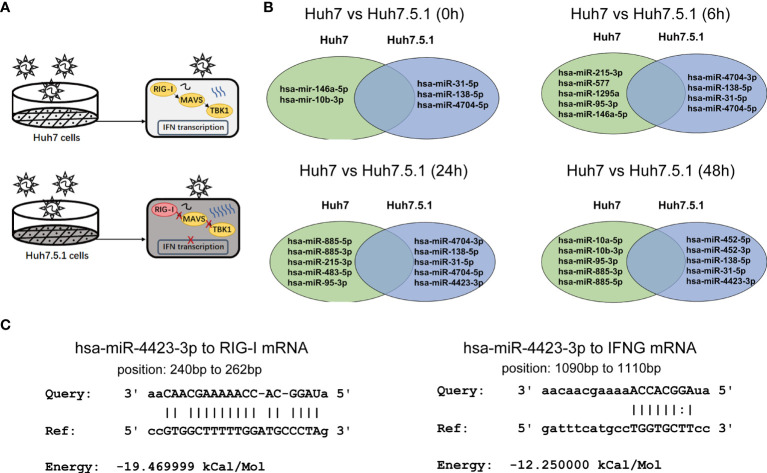
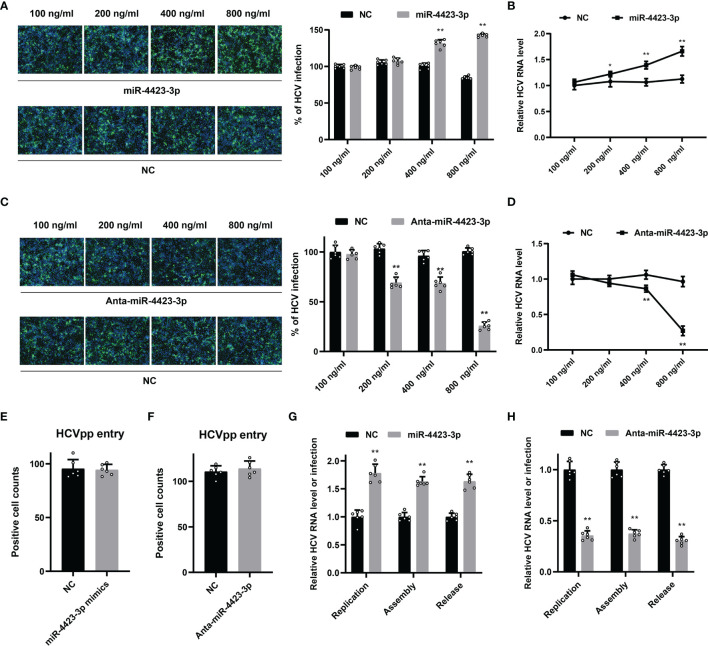
Hepatitis C virus (HCV) infection is one of the main causes of chronic liver diseases, the disorders of which involve multiple pathological processes and elements including host factors such as non-coding small RNAs. Although several genes have been reported to be correlated with HCV infection, the potential regulatory network has not been deciphered clearly. By small RNA sequencing, we clarified the expression profile of microRNAs (miRNAs) in HCV-infected Huh7 and Huh7.5.1 cells and identified 6 dysregulated miRNAs with the same expression trend and 32 dysregulated miRNAs with different expression trends during different stages of HCV life cycle. By looking into each infection stage, we found that 6 miRNAs were entry stage specific, 4 miRNAs were replication stage specific, and 1 miRNA was related to the transmission stage. Moreover, due to the fact that Huh7.5.1 cells have a retinoic acid-inducible gene 1 (RIG-I) mutation which causes reduced production of interferons (IFNs), we here focused on the miRNAs of different trends to decipher the RIG-I/IFN specific miRNAs. Among them, miR-4423-3p showed a significant promotive effect on HCV infection by suppressing RIG-I/IFN pathway through direct binding to RIG-I mRNA. Together, the results displayed novel insights into the miRNA regulatory networks in HCV infection and progression, thus providing a prosperous perspective into the establishment of novel therapeutic and diagnostic targets of the disease.
丙型肝炎病毒 (HCV) 感染是慢性肝脏疾病的主要原因之一,这些疾病涉及多种病理过程和因素,包括非编码小 RNA 等宿主因素。尽管已经报道了几种与 HCV 感染相关的基因,但潜在的调控网络尚未被清晰解析。通过小 RNA 测序,我们阐明了 HCV 感染的 Huh7 和 Huh7.5.1 细胞中 microRNAs (miRNAs) 的表达谱,并确定了 6 个具有相同表达趋势的失调 miRNA 和 32 个具有不同表达趋势的失调 miRNA,这些 miRNA 在 HCV 生命周期的不同阶段。通过研究每个感染阶段,我们发现 6 个 miRNA 是进入阶段特异性的,4 个 miRNA 是复制阶段特异性的,1 个 miRNA 与传播阶段相关。此外,由于 Huh7.5.1 细胞存在视黄酸诱导基因 1 (RIG-I) 突变,导致干扰素 (IFNs) 的产生减少,因此我们在此重点研究了不同趋势的 miRNAs,以解析 RIG-I/IFN 特异性 miRNAs。其中,miR-4423-3p 通过直接结合 RIG-I mRNA 抑制 RIG-I/IFN 通路,对 HCV 感染表现出显著的促进作用。总之,这些结果为 HCV 感染和进展中的 miRNA 调控网络提供了新的见解,为该疾病的新型治疗和诊断靶点的建立提供了广阔的前景。