Chi Dongxuan, Chen Ying, Xiang Chengang, Yao Weijian, Wang Hui, Zheng Xizi, Xu Damin, Li Nan, Xie Min, Wang Suxia, Liu Gang, Li Shuangling, Yang Li
Department of Critical Care Medicine, Peking University First Hospital, Beijing, China.
Renal Division, Peking University First Hospital, Beijing, China.
Front Med (Lausanne). 2022 Mar 24;9:829606. doi: 10.3389/fmed.2022.829606. eCollection 2022.
Sepsis is characterized by organ dysfunction resulting from a patient's dysregulated response to infection. Sepsis-associated acute kidney injury (S-AKI) is the most frequent complication contributing to the morbidity and mortality of sepsis. The prevention and treatment of S-AKI remains a significant challenge worldwide. In the recent years, human amnion epithelial cells (hAECs) have drawn much attention in regenerative medicine, yet the therapeutic efficiency of hAECs in S-AKI has not been evaluated.
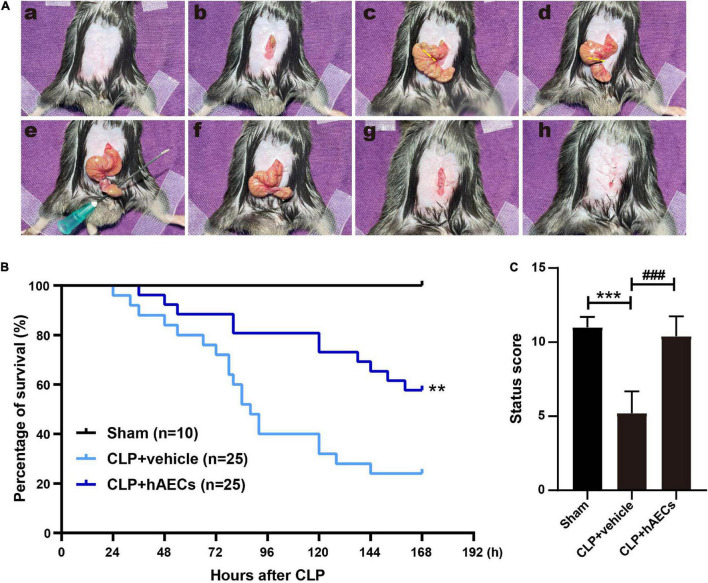
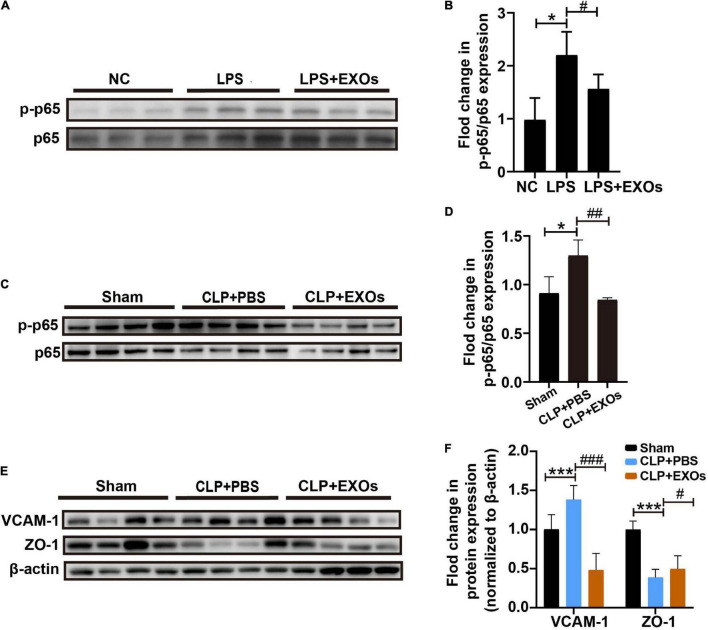
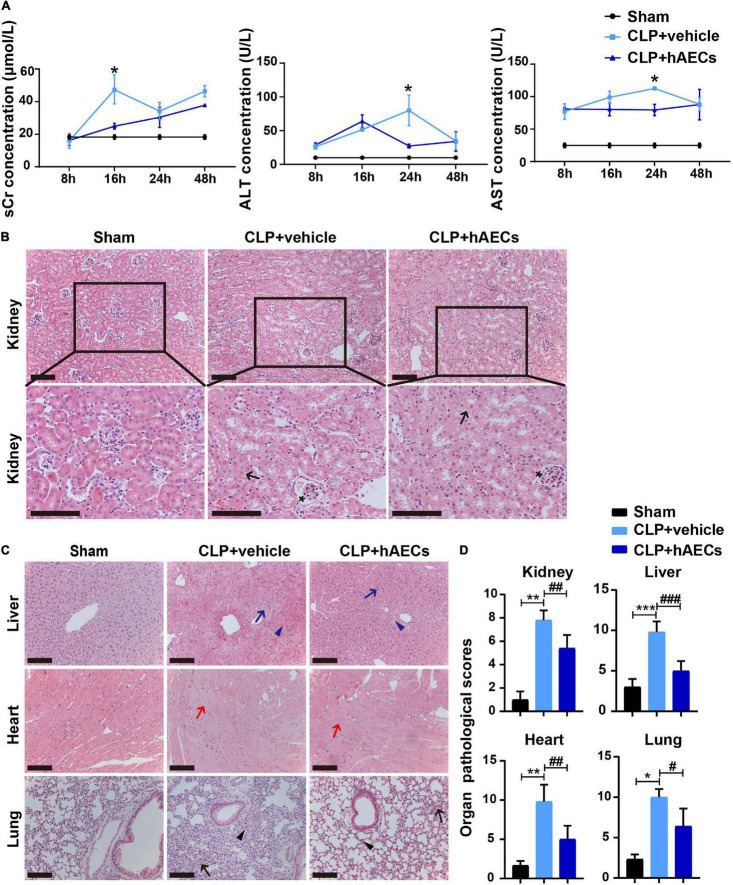
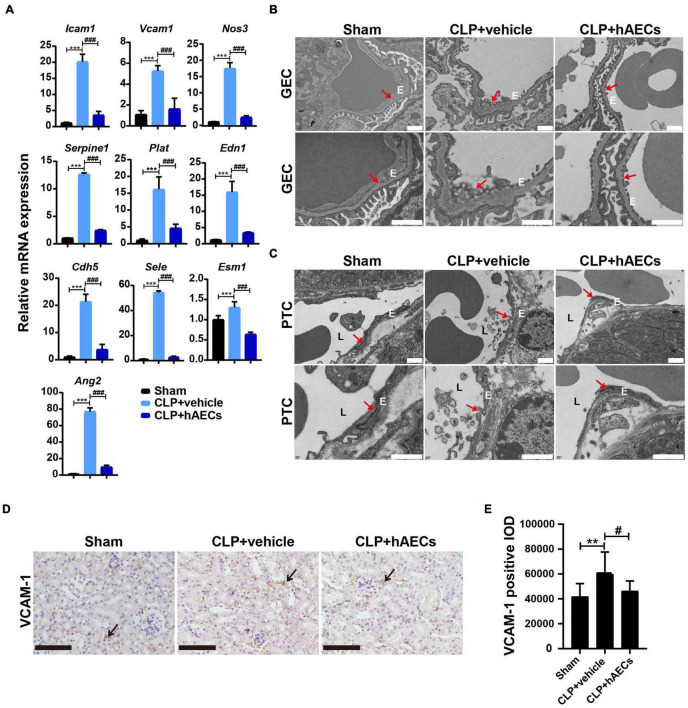
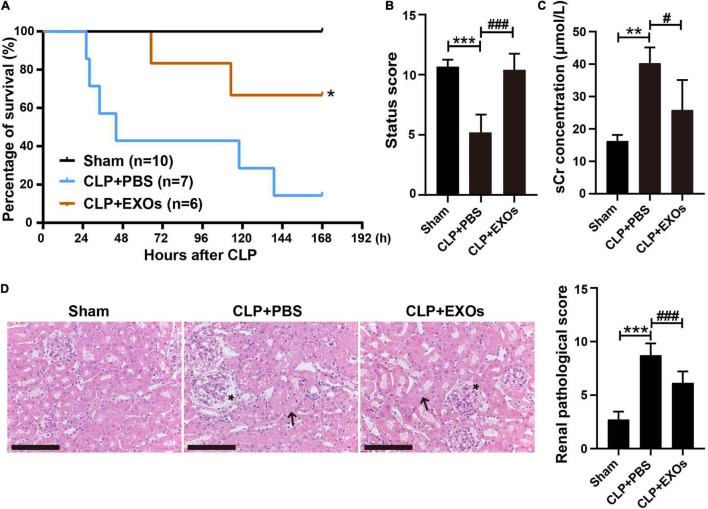
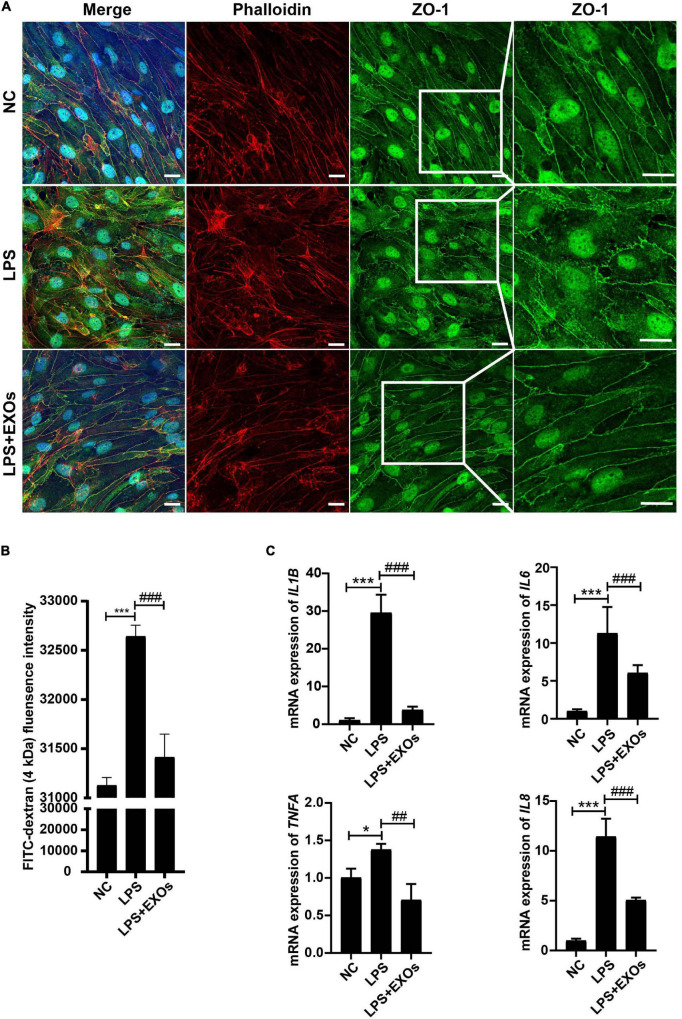
Septic mice were induced by cecal ligation and puncture (CLP) operation. hAECs and their derived exosomes (EXOs) were injected into the mice tail vein right after CLP surgery. The 7-day survival rate was observed. Serum creatinine level was measured and H&E staining of tissue sections were performed 16 h after CLP. Transmission electron microscopy was used to examine the renal endothelial integrity in CLP mice. Human umbilical vein endothelial cells (HUVECs) were treated with lipopolysaccharide (LPS) and EXOs. Zonula occludens-1 (ZO-1) localization was observed by immunofluorescence staining. Expression of phosphor-p65 (p-p65), p65, vascular cell adhesion molecule-1 (VCAM-1), and ZO-1 in the kidney were determined by Western blot.
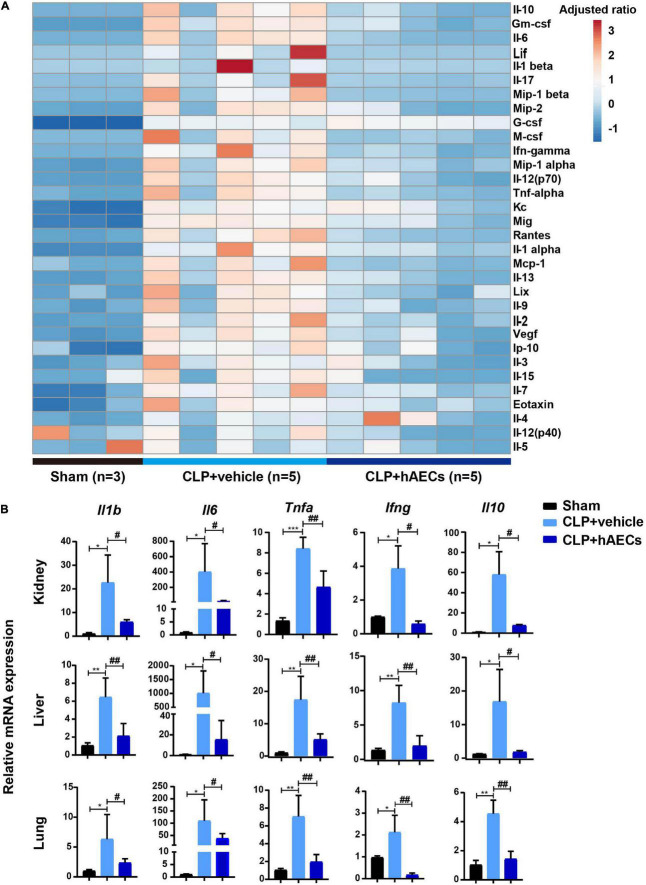
hAECs decreased the mortality of CLP mice, ameliorated septic injury in the kidney, and improved kidney function. More precisely, hAECs suppressed systemic inflammation and maintained the renal endothelial integrity in septic animals. EXOs from hAECs exhibited similar renal protective effects as their parental cells. EXOs maintained endothelial cell adhesion junction and inhibited endothelial cell hyperactivation . Mechanistically, EXOs suppressed proinflammatory nuclear factor kappa B (NF-κB) pathway activation in LPS-treated HUVECs and in CLP mice kidneys.
Our results indicate that hAECs and their derived EXOs may ameliorate S-AKI the prevention of endothelial dysfunction in the early stage of sepsis in mice. Stem cell or exosome-based therapy targeting endothelial disorders may be a promising alternative for treatment of S-AKI.
脓毒症的特征是患者对感染的反应失调导致器官功能障碍。脓毒症相关的急性肾损伤(S-AKI)是导致脓毒症发病率和死亡率的最常见并发症。S-AKI的预防和治疗在全球范围内仍然是一项重大挑战。近年来,人羊膜上皮细胞(hAECs)在再生医学中备受关注,但hAECs在S-AKI中的治疗效果尚未得到评估。
通过盲肠结扎和穿刺(CLP)手术诱导脓毒症小鼠。CLP手术后立即将hAECs及其衍生的外泌体(EXOs)注入小鼠尾静脉。观察7天生存率。测量血清肌酐水平,并在CLP术后16小时对组织切片进行苏木精-伊红(H&E)染色。使用透射电子显微镜检查CLP小鼠的肾内皮完整性。用人脐静脉内皮细胞(HUVECs)进行脂多糖(LPS)和EXOs处理。通过免疫荧光染色观察紧密连接蛋白-1(ZO-1)的定位。通过蛋白质免疫印迹法测定肾脏中磷酸化-p65(p-p65)、p65、血管细胞黏附分子-1(VCAM-1)和ZO-1的表达。
hAECs降低了CLP小鼠的死亡率,改善了肾脏的脓毒症损伤,并改善了肾功能。更确切地说,hAECs抑制了全身炎症反应,并维持了脓毒症动物的肾内皮完整性。hAECs衍生的EXOs表现出与其亲本细胞相似的肾脏保护作用。EXOs维持了内皮细胞黏附连接,并抑制了内皮细胞过度激活。从机制上讲,EXOs抑制了LPS处理的HUVECs和CLP小鼠肾脏中促炎核因子κB(NF-κB)通路的激活。
我们的结果表明,hAECs及其衍生的EXOs可能改善S-AKI,预防小鼠脓毒症早期的内皮功能障碍。针对内皮紊乱的基于干细胞或外泌体的治疗可能是治疗S-AKI的一种有前景的替代方法。