Department of Laboratory Medicine, The People's Hospital of Jiangmen, Jiangmen, China.
Department of Endocrinology, The People's Hospital of Jiangmen, Jiangmen, China.
J Clin Lab Anal. 2022 May;36(5):e24430. doi: 10.1002/jcla.24430. Epub 2022 Apr 11.
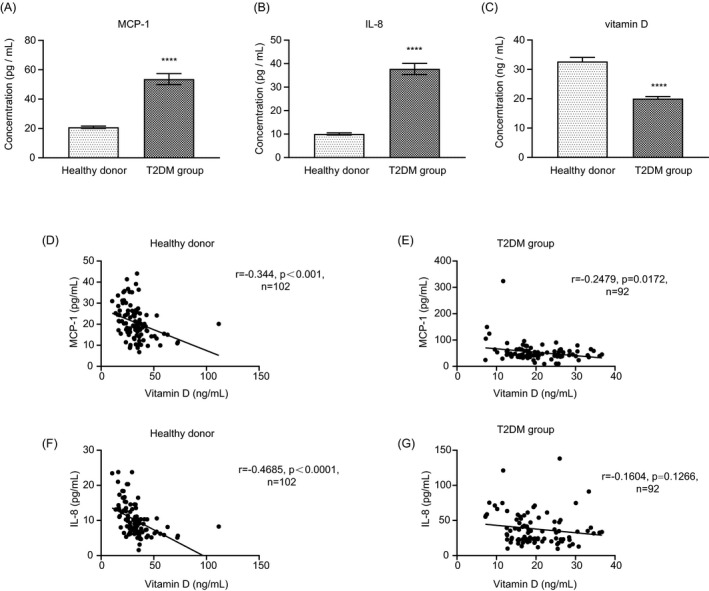
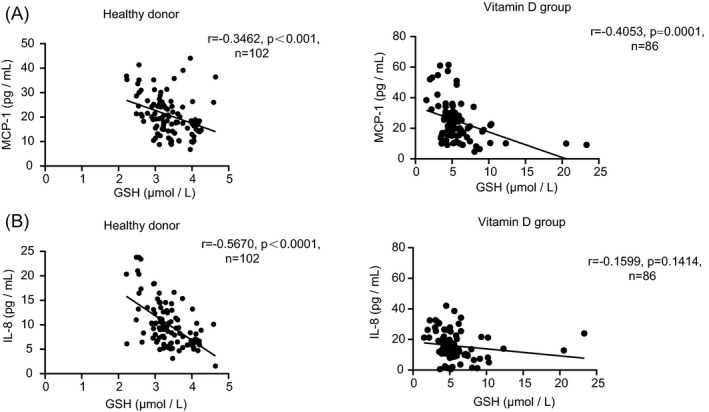
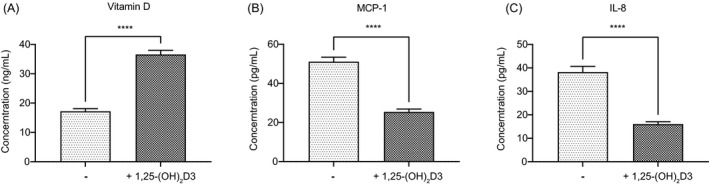
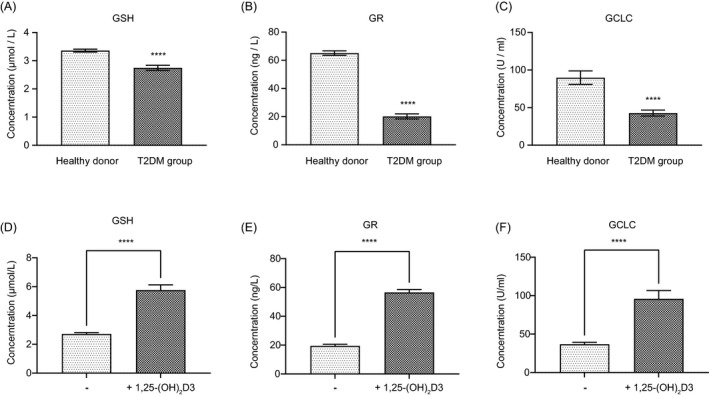
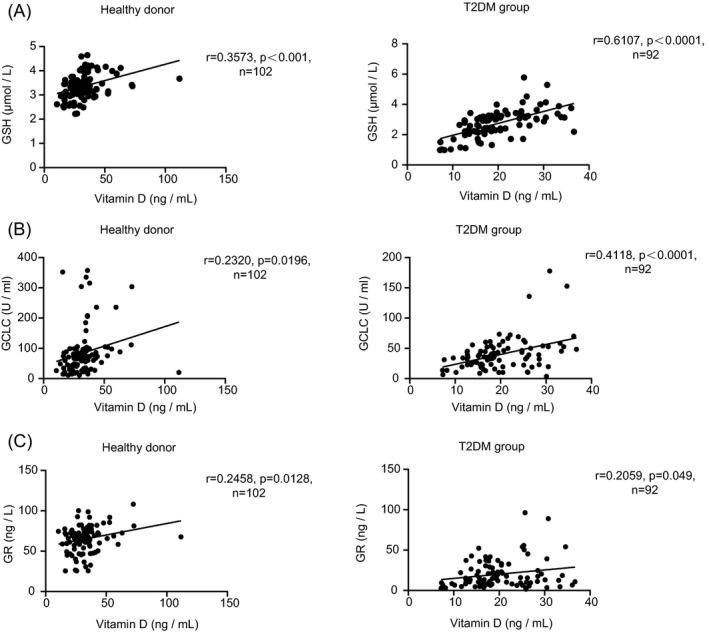
The type 2 diabetes mellitus (T2DM) is an urgent global health problem. T2DM patients are in a state of high oxidative stress and inflammation. Vitamin D and glutathione (GSH) play crucial roles in antioxidation and anti-inflammation. However, T2DM patients have lower vitamin D and GSH levels than healthy persons. A randomized controlled trial was conducted to see the effect of the vitamin D supplementation on oxidative stress and inflammatory factors in T2DM patients. In this study, a total of 178 T2DM patients were randomly enrolled, 92 patients received regular treatment (T2DM group) and 86 patients in Vitamin D group received extra vitamin D 400 IU per day in addition to regular treatment. Serum vitamin D, GSH, GSH metabolic enzyme GCLC and GR, inflammatory factor MCP-1, and IL-8 levels were investigated. We found that the T2DM group has significantly higher concentrations of MCP-1 and IL-8 than those in the healthy donor group. After vitamin D supplementation for 90 days, T2DM patients had a 2-fold increase of GSH levels, from 2.72 ± 0.84 to 5.76 ± 3.19 μmol/ml, the concentration of MCP-1 decreased from 51.11 ± 20.86 to 25.42 ± 13.06 pg/ml, and IL-8 also decreased from 38.21 ± 21.76 to 16.05 ± 8.99 pg/ml. In conclusion, our study demonstrated that vitamin D could regulate the production of GSH, thereby reducing the serum levels of MCP-1 and IL-8, alleviating oxidative stress and inflammation, providing evidence of the necessity and feasibility of adjuvant vitamin D treatment among patients with T2DM. On the other hand, vitamin D and GSH levels have important diagnostic and prognostic values in T2DM patients.
2 型糖尿病(T2DM)是一个紧迫的全球健康问题。T2DM 患者处于高度氧化应激和炎症状态。维生素 D 和谷胱甘肽(GSH)在抗氧化和抗炎中发挥关键作用。然而,T2DM 患者的维生素 D 和 GSH 水平低于健康人。一项随机对照试验旨在观察维生素 D 补充对 T2DM 患者氧化应激和炎症因子的影响。在这项研究中,共纳入 178 例 T2DM 患者,92 例患者接受常规治疗(T2DM 组),86 例患者在常规治疗的基础上加用维生素 D400IU/天(维生素 D 组)。检测血清维生素 D、GSH、GSH 代谢酶 GCLC 和 GR、炎症因子 MCP-1 和 IL-8 水平。我们发现 T2DM 组的 MCP-1 和 IL-8 浓度明显高于健康供体组。维生素 D 补充 90 天后,T2DM 患者的 GSH 水平从 2.72±0.84μmol/ml 增加到 5.76±3.19μmol/ml,MCP-1 浓度从 51.11±20.86pg/ml 降低到 25.42±13.06pg/ml,IL-8 也从 38.21±21.76pg/ml 降低到 16.05±8.99pg/ml。综上所述,本研究表明维生素 D 可调节 GSH 的产生,从而降低 MCP-1 和 IL-8 的血清水平,缓解氧化应激和炎症,为 T2DM 患者辅助维生素 D 治疗的必要性和可行性提供了依据。另一方面,维生素 D 和 GSH 水平对 T2DM 患者具有重要的诊断和预后价值。