Matuz-Mares Deyamira, Riveros-Rosas Héctor, Vilchis-Landeros María Magdalena, Vázquez-Meza Héctor
Departamento de Bioquímica, Facultad de Medicina, Universidad Nacional Autónoma de México, Avenida Universidad 3000, Cd. Universitaria, Coyoacán, Ciudad de México 04510, Mexico.
Antioxidants (Basel). 2021 Jul 29;10(8):1220. doi: 10.3390/antiox10081220.
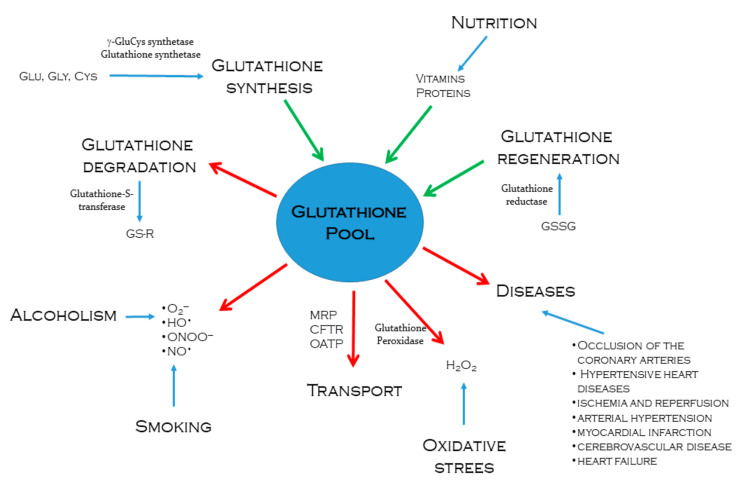
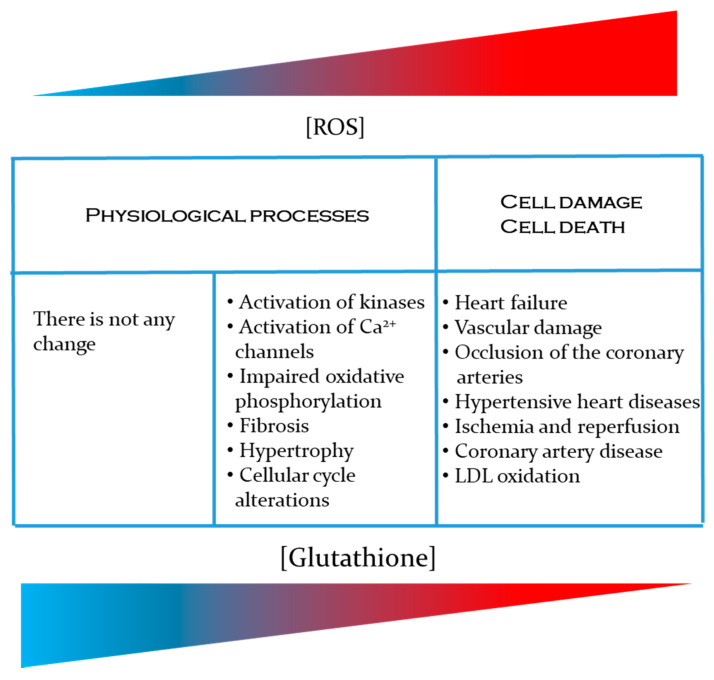
Cardiovascular diseases (CVD) (such as occlusion of the coronary arteries, hypertensive heart diseases and strokes) are diseases that generate thousands of patients with a high mortality rate worldwide. Many of these cardiovascular pathologies, during their development, generate a state of oxidative stress that leads to a deterioration in the patient's conditions associated with the generation of reactive oxygen species (ROS) and reactive nitrogen species (RNS). Within these reactive species we find superoxide anion (O), hydroxyl radical (OH), nitric oxide (NO), as well as other species of non-free radicals such as hydrogen peroxide (HO), hypochlorous acid (HClO) and peroxynitrite (ONOO). A molecule that actively participates in counteracting the oxidizing effect of reactive species is reduced glutathione (GSH), a tripeptide that is present in all tissues and that its synthesis and/or regeneration is very important to be able to respond to the increase in oxidizing agents. In this review, we will address the role of glutathione, its synthesis in both the heart and the liver, and its importance in preventing or reducing deleterious ROS effects in cardiovascular diseases.
心血管疾病(CVD)(如冠状动脉阻塞、高血压性心脏病和中风)是在全球范围内导致数千患者死亡的疾病。许多这类心血管疾病在发展过程中会产生氧化应激状态,导致与活性氧(ROS)和活性氮(RNS)生成相关的患者病情恶化。在这些活性物质中,我们发现超氧阴离子(O)、羟基自由基(OH)、一氧化氮(NO),以及其他非自由基物质,如过氧化氢(HO)、次氯酸(HClO)和过氧亚硝酸盐(ONOO)。一种积极参与对抗活性物质氧化作用的分子是还原型谷胱甘肽(GSH),它是一种存在于所有组织中的三肽,其合成和/或再生对于应对氧化剂的增加非常重要。在这篇综述中,我们将探讨谷胱甘肽的作用、它在心脏和肝脏中的合成,以及它在预防或减少心血管疾病中有害的ROS效应方面的重要性。