Department of General Biochemistry, Faculty of Biology and Environmental Protection, University of Lodz, Pomorska 141/143, 90-236 Lodz, Poland.
Nutrients. 2022 Mar 24;14(7):1350. doi: 10.3390/nu14071350.
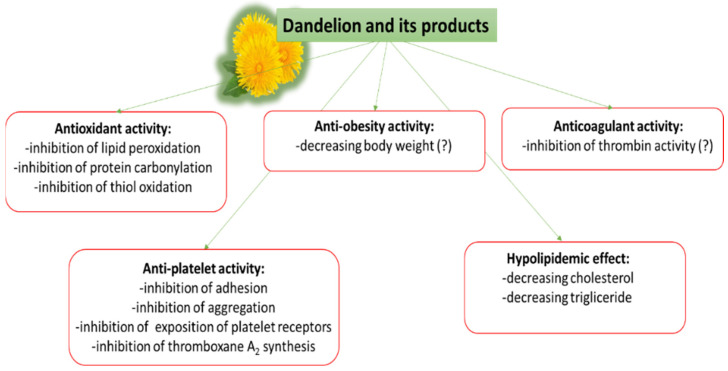
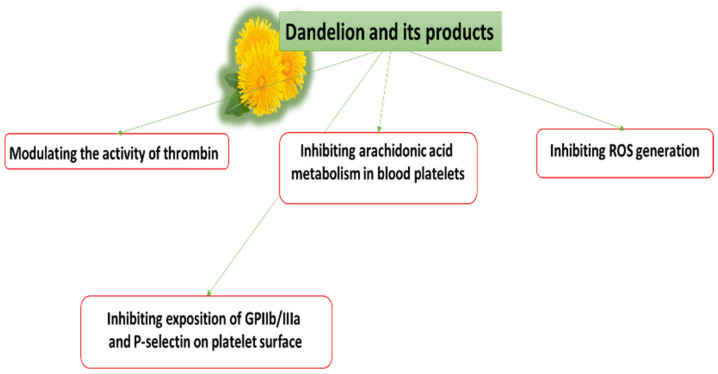
Cardiovascular diseases (CVDs) have been the leading cause of death for over 20 years. The main causative factors are believed to be high cholesterol, obesity, smoking, diabetes, and a lack of physical activity. One of the most commonly used treatments is a combination of anticoagulant and antithrombotic therapy; however, it often causes unwanted side effects. The European Society of Cardiology, therefore, recommends a prophylactic strategy, including a varied diet rich in fruits, vegetables, and medicinal plants; all of which are sources of natural compounds with antiplatelet, anticoagulant, or antioxidant activities, such as phenolic compounds. One such plant with multidirectional health-promoting effects and a rich source of secondary metabolites, including phenolic compounds, is dandelion (). The present mini-review presents the current state of knowledge concerning the effects of dandelion consumption on the cardiovascular system and CVDs based on various in vitro and in vivo trials; it discusses the value of dandelion as a food product, as well as extracts and pure compounds, such as chicoric acid, which can be obtained from the various plant organs. The paper also sheds new light on the mechanisms involved in this activity and describes the cardioprotective potential of dandelion products and preparations.
心血管疾病 (CVDs) 已经超过 20 年成为主要死因。主要致病因素被认为是高胆固醇、肥胖、吸烟、糖尿病和缺乏身体活动。最常用的治疗方法之一是抗凝和抗血栓治疗的联合应用;然而,它常常会引起不良反应。因此,欧洲心脏病学会推荐了一种预防策略,包括富含水果、蔬菜和药用植物的多样化饮食;所有这些都是具有抗血小板、抗凝或抗氧化作用的天然化合物的来源,如酚类化合物。蒲公英()是一种具有多向健康促进作用和丰富次生代谢产物(包括酚类化合物)来源的植物。本综述介绍了基于各种体外和体内试验的蒲公英消费对心血管系统和 CVD 的影响的最新知识;它讨论了蒲公英作为食品的价值,以及可以从各种植物器官中获得的提取物和纯化合物,如 chicoric 酸。本文还阐明了这一活性涉及的机制,并描述了蒲公英产品和制剂的心脏保护潜力。