Rico-Chávez Amanda Kim, Franco Jesus Alejandro, Fernandez-Jaramillo Arturo Alfonso, Contreras-Medina Luis Miguel, Guevara-González Ramón Gerardo, Hernandez-Escobedo Quetzalcoatl
Unidad de Ingeniería en Biosistemas, Facultad de Ingeniería Campus Amazcala, Universidad Autónoma de Querétaro, Carretera Chichimequillas, s/n km 1, El Marqués CP 76265, Mexico.
Escuela Nacional de Estudios Superiores Unidad Juriquilla, UNAM, Querétaro CP 76230, Mexico.
Plants (Basel). 2022 Apr 2;11(7):970. doi: 10.3390/plants11070970.
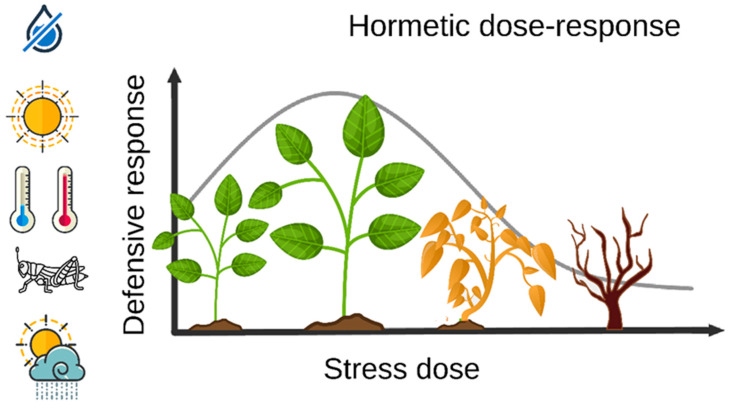
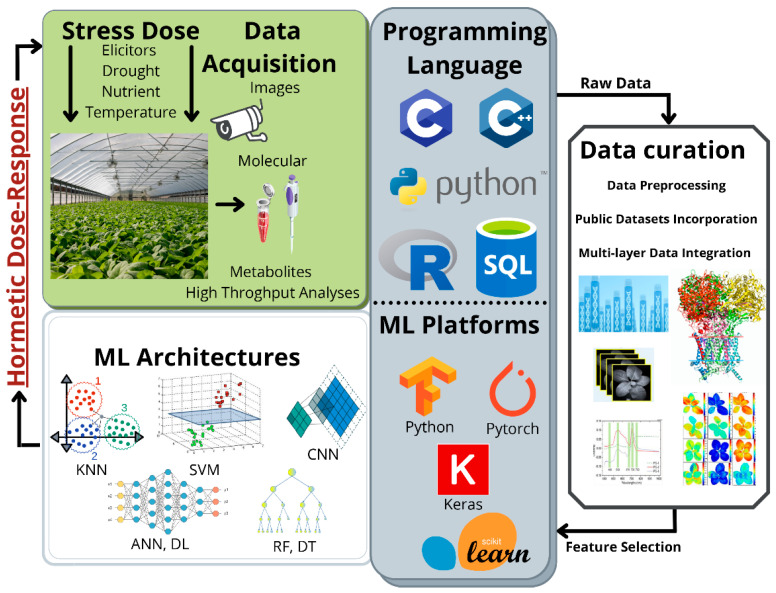
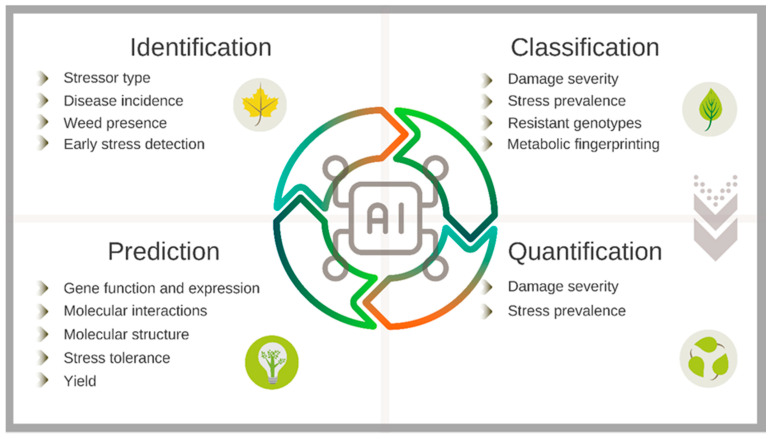
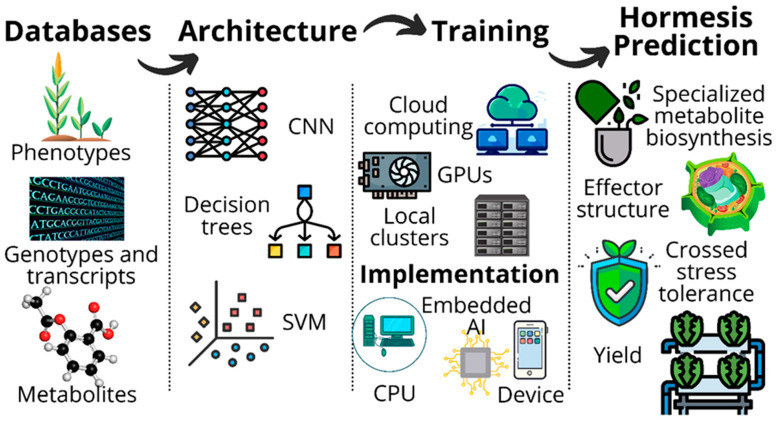
Plant stress is one of the most significant factors affecting plant fitness and, consequently, food production. However, plant stress may also be profitable since it behaves hormetically; at low doses, it stimulates positive traits in crops, such as the synthesis of specialized metabolites and additional stress tolerance. The controlled exposure of crops to low doses of stressors is therefore called hormesis management, and it is a promising method to increase crop productivity and quality. Nevertheless, hormesis management has severe limitations derived from the complexity of plant physiological responses to stress. Many technological advances assist plant stress science in overcoming such limitations, which results in extensive datasets originating from the multiple layers of the plant defensive response. For that reason, artificial intelligence tools, particularly Machine Learning (ML) and Deep Learning (DL), have become crucial for processing and interpreting data to accurately model plant stress responses such as genomic variation, gene and protein expression, and metabolite biosynthesis. In this review, we discuss the most recent ML and DL applications in plant stress science, focusing on their potential for improving the development of hormesis management protocols.
植物胁迫是影响植物健康进而影响粮食生产的最重要因素之一。然而,植物胁迫也可能带来益处,因为它具有 hormetic 效应;在低剂量下,它能刺激作物产生积极特性,如合成特殊代谢产物以及增强额外的胁迫耐受性。因此,将作物可控地暴露于低剂量胁迫源被称为兴奋效应管理,这是一种提高作物产量和品质的有前景的方法。然而,兴奋效应管理存在严重局限性,这源于植物对胁迫的生理反应的复杂性。许多技术进步有助于植物胁迫科学克服这些局限性,从而产生了源自植物防御反应多个层面的大量数据集。因此,人工智能工具,特别是机器学习(ML)和深度学习(DL),对于处理和解释数据以准确模拟植物胁迫反应(如基因组变异、基因和蛋白质表达以及代谢产物生物合成)变得至关重要。在本综述中,我们讨论了机器学习和深度学习在植物胁迫科学中的最新应用,重点关注它们在改进兴奋效应管理方案开发方面的潜力。