Laboratory for Plant Molecular Biology, Institute of Molecular Genetics and Genetic Engineering, University of Belgrade, Vojvode Stepe 444a, 11042 Belgrade, Serbia.
Department of Life Science, Institute for Multidisciplinary Research, University of Belgrade, Kneza Višeslava 1, 11000 Belgrade, Serbia.
Int J Mol Sci. 2022 Mar 24;23(7):3547. doi: 10.3390/ijms23073547.
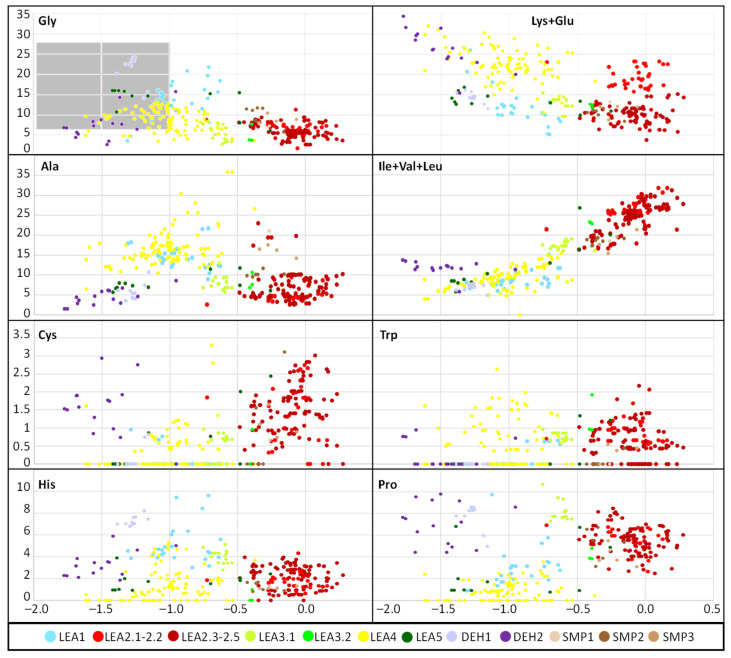
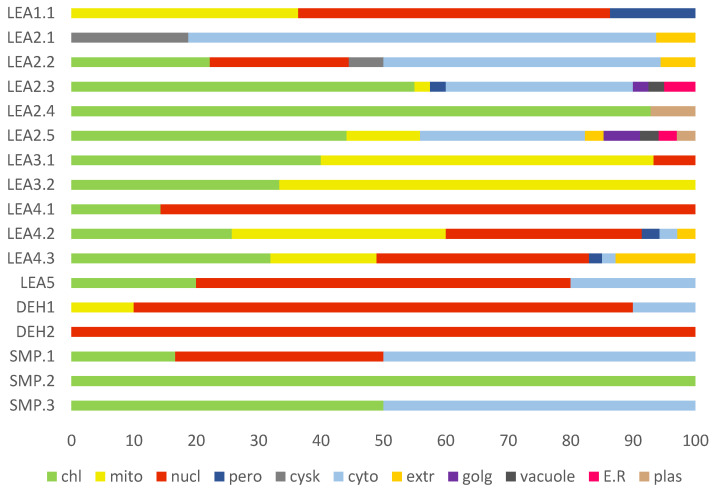
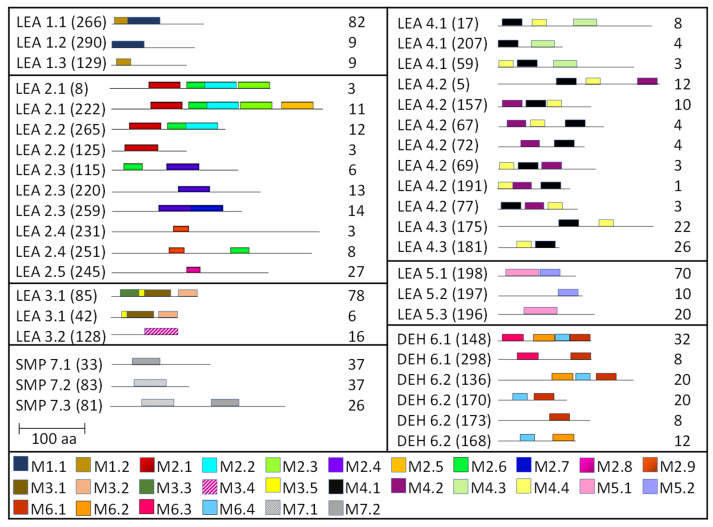
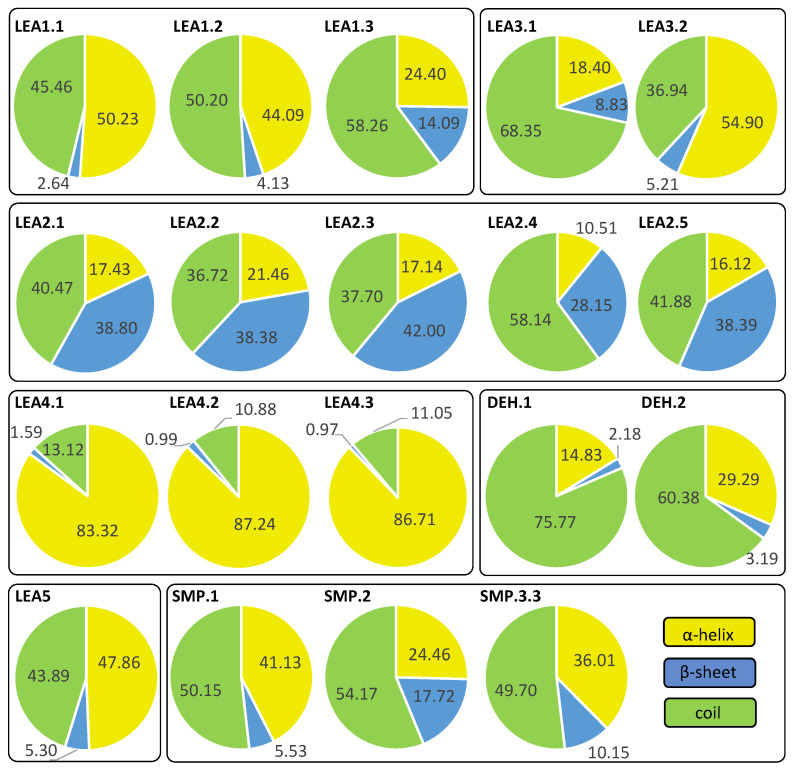
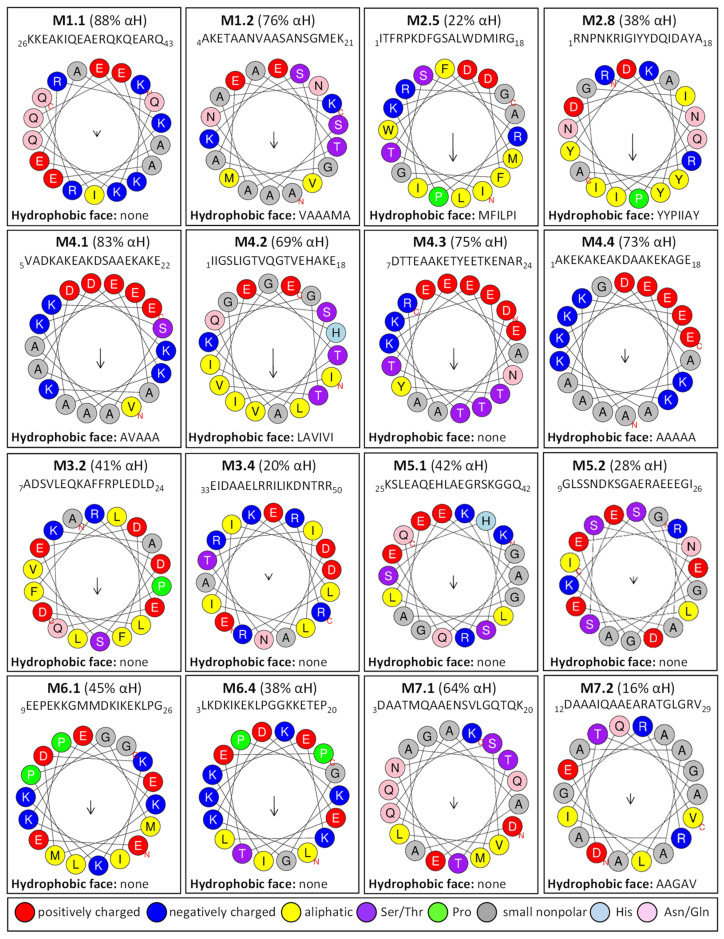
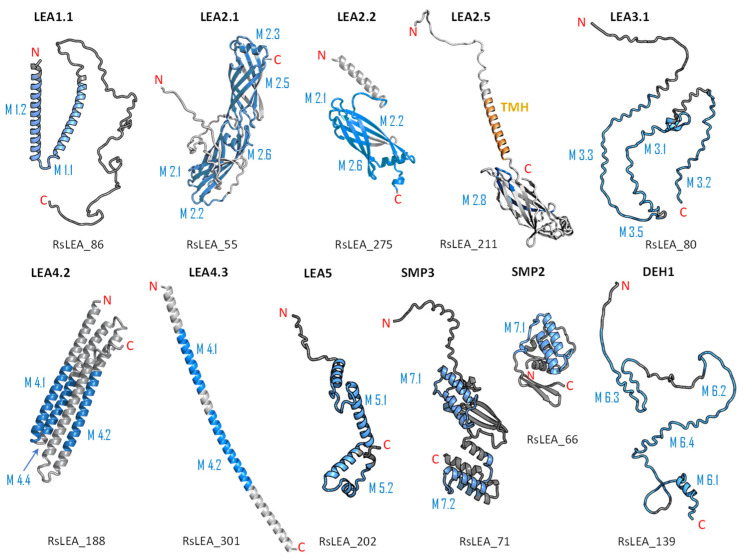
Panc. is an ancient resurrection plant able to survive a long desiccation period and recover metabolic functions upon watering. The accumulation of protective late embryogenesis abundant proteins (LEAPs) is a desiccation tolerance hallmark. To propose their role in desiccation tolerance, we structurally characterised LEAPs and evaluated LEA gene expression levels in hydrated and desiccated leaves. By integrating de novo transcriptomics and homologues LEAP domains, 318 LEAPs were identified and classified according to their conserved motifs and phylogeny. The in silico analysis revealed that hydrophilic LEA4 proteins exhibited an exceptionally high tendency to form amphipathic α-helices. The most abundant, atypical LEA2 group contained more hydrophobic proteins predicted to fold into the defined globular domains. Within the desiccation-upregulated LEA genes, the majority encoded highly disordered DEH1, LEA1, LEA4.2, and LEA4.3 proteins, while the greatest portion of downregulated genes encoded LEA2.3 and LEA2.5 proteins. While dehydrins might chelate metals and bind DNA under water deficit, other intrinsically disordered LEAPs might participate in forming intracellular proteinaceous condensates or adopt amphipathic α-helical conformation, enabling them to stabilise desiccation-sensitive proteins and membranes. This comprehensive LEAPs structural characterisation is essential to understanding their function and regulation during desiccation aiming at crop drought tolerance improvement.
类胚胎发生丰富蛋白(LEAPs)是一种古老的复苏植物,能够在长时间的干燥期存活并在浇水后恢复代谢功能。积累保护性晚期胚胎发生丰富蛋白(LEAPs)是一种耐旱性的标志。为了提出它们在耐旱性中的作用,我们对 LEAPs 进行了结构表征,并评估了水合和干燥叶片中 LEA 基因的表达水平。通过整合从头转录组学和同源 LEAP 结构域,鉴定了 318 种 LEAPs,并根据其保守基序和系统发育进行了分类。计算机分析表明,亲水 LEA4 蛋白表现出极高的形成两亲性α-螺旋的趋势。最丰富的非典型 LEA2 组包含更多预测折叠成定义的球状结构域的疏水性蛋白。在干旱上调的 LEA 基因中,大多数编码高度无序的 DEH1、LEA1、LEA4.2 和 LEA4.3 蛋白,而下调基因的大部分编码 LEA2.3 和 LEA2.5 蛋白。虽然脱水素可能在水分亏缺下螯合金属和结合 DNA,但其他内在无序的 LEAPs 可能参与形成细胞内蛋白质凝聚物或采用两亲性α-螺旋构象,从而稳定干燥敏感的蛋白质和膜。这种全面的 LEAPs 结构特征对于理解它们在干燥过程中的功能和调控至关重要,旨在提高作物的耐旱性。