School of Clinical Medicine, University of Cambridge, Cambridge CB2 0SP, UK.
Department of Trauma and Orthopaedic Surgery, Addenbrooke's Hospital, University of Cambridge, Cambridge CB2 0QQ, UK.
Int J Mol Sci. 2022 Apr 6;23(7):4065. doi: 10.3390/ijms23074065.
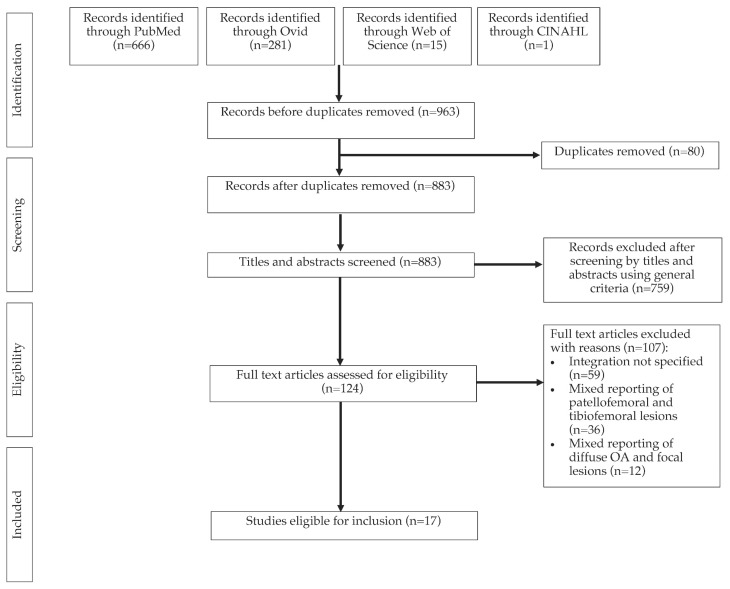
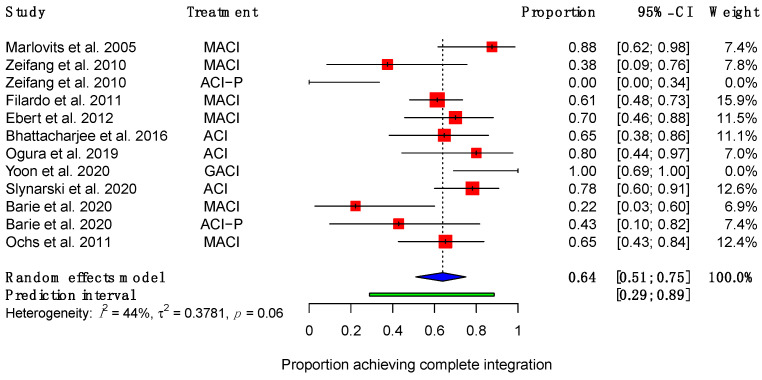
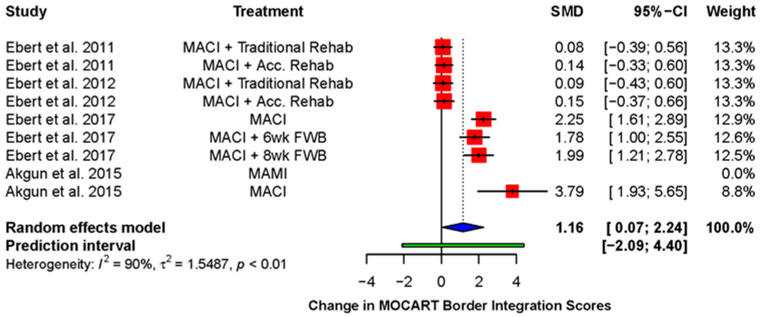
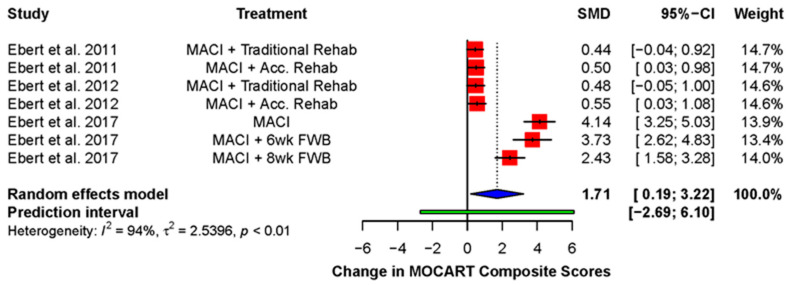
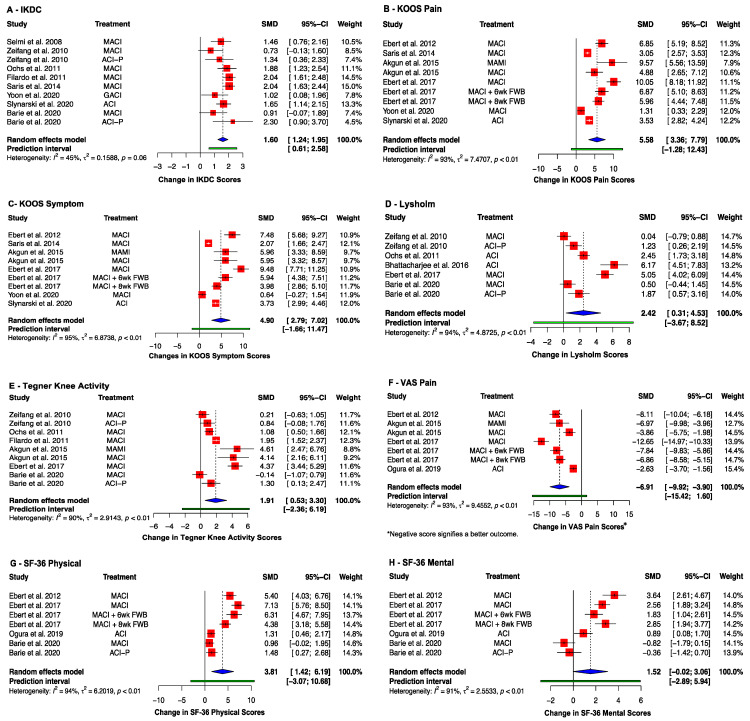
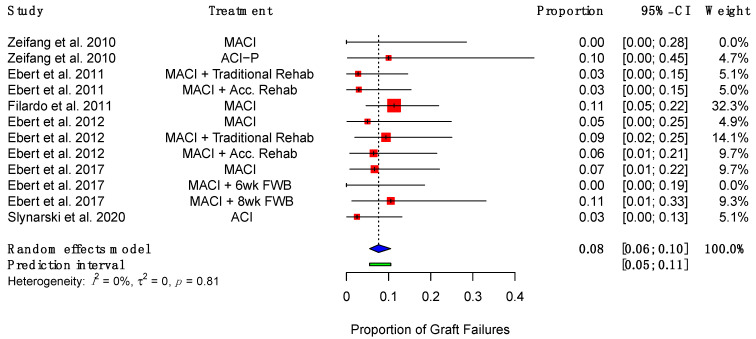
Focal chondral defects of the knee occur commonly in the young, active population due to trauma. Damage can insidiously spread and lead to osteoarthritis with significant functional and socioeconomic consequences. Implants consisting of autologous chondrocytes or mesenchymal stem cells (MSC) seeded onto scaffolds have been suggested as promising therapies to restore these defects. However, the degree of integration between the implant and native cartilage still requires optimization. A PRISMA systematic review and meta-analysis was conducted using five databases (PubMed, MEDLINE, EMBASE, Web of Science, CINAHL) to identify studies that used autologous chondrocyte implants (ACI) or MSC implant therapies to repair chondral defects of the tibiofemoral joint. Data on the integration of the implant-cartilage interface, as well as outcomes of clinical scoring systems, were extracted. Most eligible studies investigated the use of ACI only. Our meta-analysis showed that, across a total of 200 patients, 64% (95% CI (51%, 75%)) achieved complete integration with native cartilage. In addition, a pooled improvement in the mean MOCART integration score was observed during post-operative follow-up (standardized mean difference: 1.16; 95% CI (0.07, 2.24), = 0.04). All studies showed an improvement in the clinical scores. The use of a collagen-based scaffold was associated with better integration and clinical outcomes. This review demonstrated that cell-seeded scaffolds can achieve good quality integration in most patients, which improves over time and is associated with clinical improvements. A greater number of studies comparing these techniques to traditional cartilage repair methods, with more inclusion of MSC-seeded scaffolds, should allow for a standardized approach to cartilage regeneration to develop.
膝关节局灶性软骨缺损在年轻、活跃人群中较为常见,通常由创伤引起。损伤可能会悄然扩散,导致骨关节炎,从而产生重大的功能和社会经济影响。已有人提出,使用自体软骨细胞或间充质干细胞(MSC)接种于支架上的植入物是修复这些缺陷的有前途的治疗方法。然而,植入物与天然软骨之间的整合程度仍需要优化。本研究采用 PRISMA 系统综述和荟萃分析方法,检索了五个数据库(PubMed、MEDLINE、EMBASE、Web of Science、CINAHL),以确定使用自体软骨细胞植入物(ACI)或 MSC 植入物治疗修复胫骨股骨关节软骨缺损的研究。提取了关于植入物-软骨界面整合以及临床评分系统结果的数据。大多数合格研究仅调查了 ACI 的使用情况。我们的荟萃分析表明,在总共 200 名患者中,64%(95%CI(51%,75%))与天然软骨完全整合。此外,在术后随访期间观察到平均 MOCART 整合评分的综合改善(标准化均数差:1.16;95%CI(0.07,2.24), = 0.04)。所有研究均显示临床评分有所改善。使用胶原基支架与更好的整合和临床结果相关。本综述表明,在大多数患者中,细胞接种支架可以实现高质量的整合,并且随着时间的推移会逐渐改善,与临床改善相关。需要更多比较这些技术与传统软骨修复方法的研究,更多纳入 MSC 接种支架的研究,以制定标准化的软骨再生方法。