Pediatric Service, Hospital Virgen del Castillo, 30510 Murcia, Spain.
Department of Political Economy and Public Finance, Economic and Business Statistics and Economic Policy, Faculty of Social Sciences, University of Castilla-La Mancha, 16007 Cuenca, Spain.
Int J Environ Res Public Health. 2022 Mar 31;19(7):4124. doi: 10.3390/ijerph19074124.
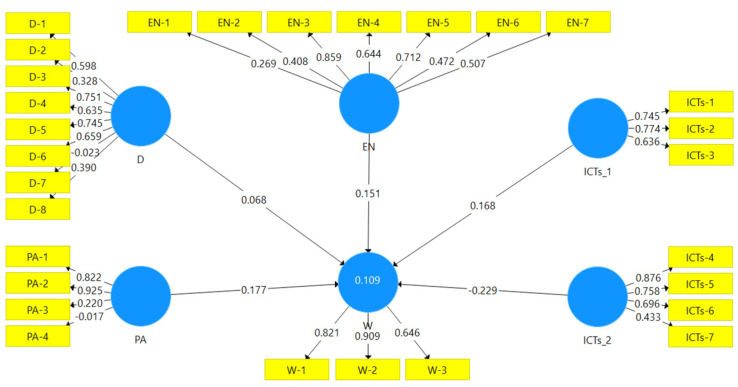
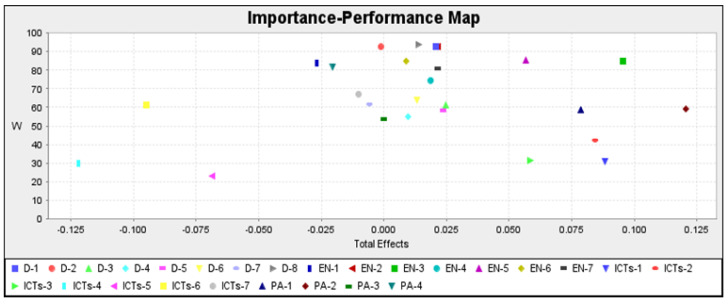
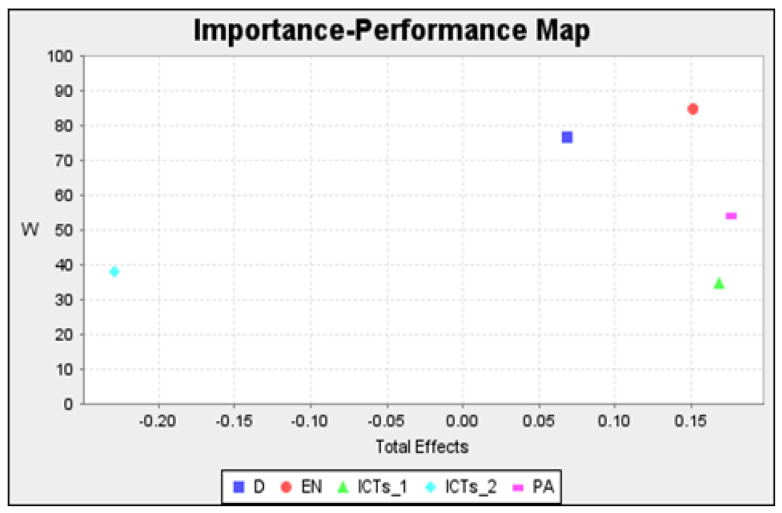
Background: The alarming increase in childhood obesity is a global public health problem since it has significant health consequences. This cross-sectional study aimed to identify the potentially modifiable risk factors for developing excess weight and determine the importance of developing certain habits to prevent childhood overweight and obesity. Methods: The sample included 416 students between the ages of 12 and 14 (12.8 ± 0.62) first-year high school students from Murcia in Spain. Data were collected on their lifestyle habits through the ENHASA questionnaire, and the somatometry of the participants was measured. Such data were studied through structural equation modeling and importance-performance map analyses. Results: The modifiable risk factors that presented the greatest potency directly regarding when developing excess weight in adolescents were ‘use of electronic devices’ and ‘not performing physical activity’ (p < 0.001). ‘Social and school environment’ and ‘diet’ showed relationships but no significant differences with overweight or obesity. Globally, the lifestyle habit of the greatest importance for not being overweight was ‘engagement in extracurricular physical activities’. On the other hand, the habits related to using new technologies in a sedentary way showed the best capacity for improvement. Therefore, it would be very efficient to focus on them to control excess weight. Conclusion: Responsible and limited use of screens and engaging in extracurricular physical activities may be the most remarkable and cost-effective strategies for obesity prevention programs.
儿童肥胖率的惊人增长是一个全球性的公共卫生问题,因为它会对健康产生重大影响。本横断面研究旨在确定导致超重的潜在可改变风险因素,并确定养成某些习惯对于预防儿童超重和肥胖的重要性。
该样本包括来自西班牙穆尔西亚的 416 名 12-14 岁(12.8±0.62)的一年级高中生。通过 ENHASA 问卷收集他们的生活方式习惯数据,并测量参与者的体成分。通过结构方程模型和重要性-绩效图分析研究这些数据。
在青少年超重的发展方面,最直接影响可改变风险因素的是“使用电子设备”和“不进行体育活动”(p<0.001)。“社会和学校环境”和“饮食”显示出关系,但与超重或肥胖无显著差异。总的来说,对于保持体重不过重,最重要的生活习惯是“参加课外体育活动”。另一方面,以久坐方式使用新技术的习惯显示出最佳的改进能力。因此,集中精力控制超重可能非常有效。
负责任和有限地使用屏幕以及参加课外体育活动可能是预防肥胖计划中最显著和最具成本效益的策略。