Non-Governmental Research Organization Biologic, 14 Schitului Str., 032044 Bucharest, Romania.
Department of Bioengineering and Biotechnologies, Faculty of Medical Engineering, University Politehnica of Bucharest, 011061 Bucharest, Romania.
Int J Environ Res Public Health. 2022 Apr 4;19(7):4310. doi: 10.3390/ijerph19074310.
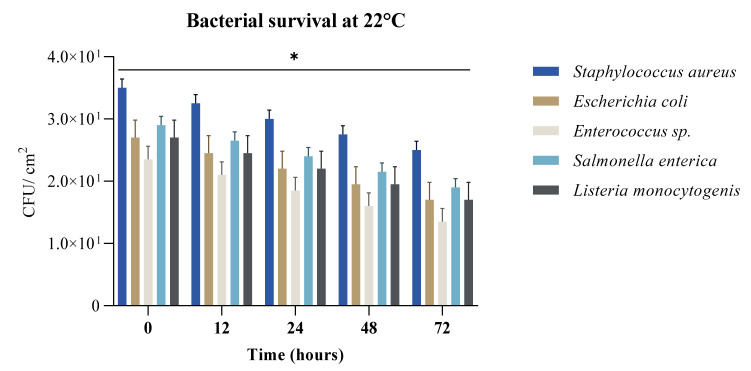
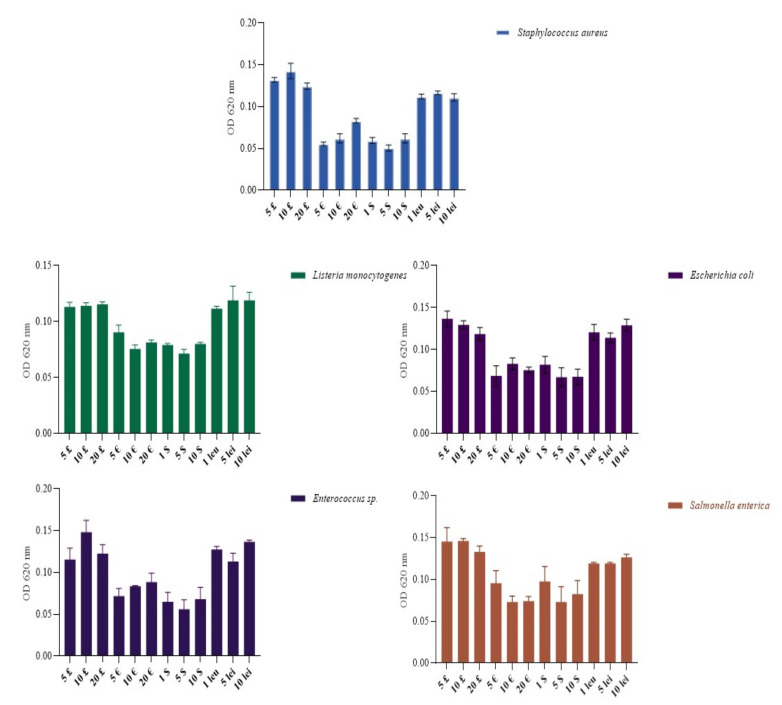
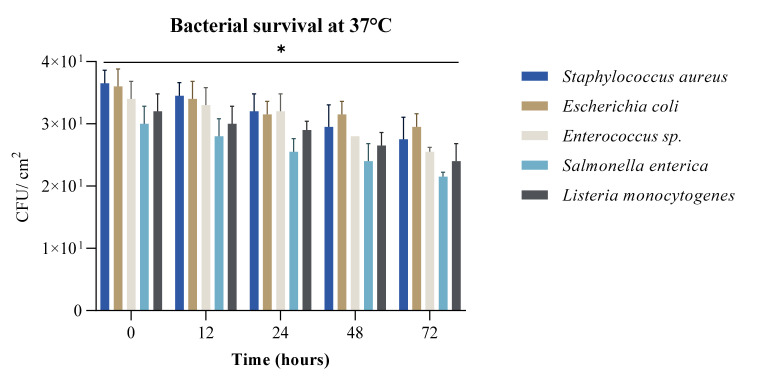
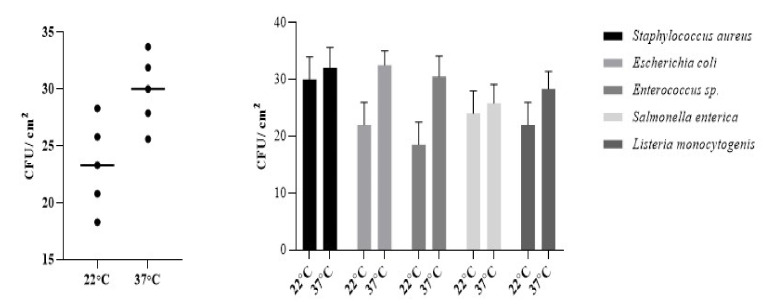
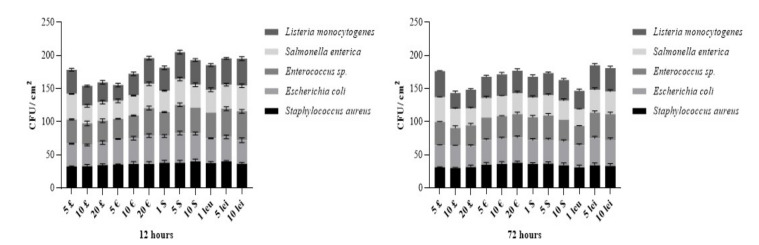
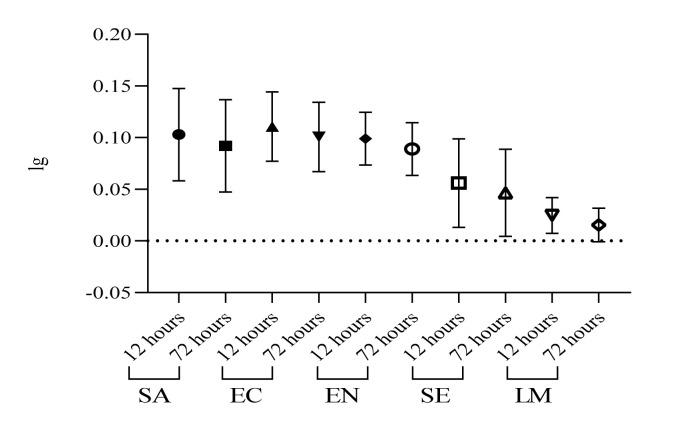
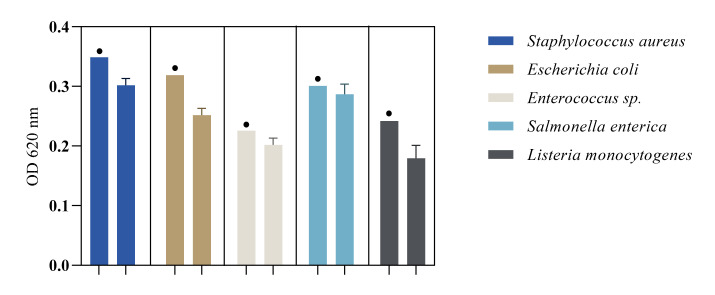
In the COVID-19 pandemic context, numerous concerns have been raised regarding the hygienic status of certain objects we interact with on a daily basis, and especially cash money and their potential to harbor and transmit pathogenic bacteria. Therefore, in the present study, we analyzed different currency bills represented by British pounds (5 £, 10 £ and 20 £), Romanian lei (1 leu, 5 lei and 10 lei), U.S. dollars (1 $, 5 $ and 10 $) and Euros (5 €, 10 € and 20 €) in order to evaluate the bacterial survival rate and bacterial adherence. We used five reference microorganisms by American Type Culture Collection (ATCC, Manassas, VA, USA): ATCC 6538, ATCC 8739, sp. ATCC 19952, subsp. enterica serovar ATCC 6539, and ATCC 7644. Microorganisms were selected in accordance with the criteria of prevalence, pathogenicity, opportunism, and incidence. However, Maldi-TOF analysis from samples taken from the banknotes revealed only a few of the common pathogens that are traditionally thought to be found on banknotes. Some of the most important factors for the survival of pathogenic agents on surfaces are the presence of organic matter, temperature and humidity. Our data showed that survived 72 h on every banknote tested, while tended to improve persistence in humid conditions. Survival rate is also influenced by the substrate composition, being lower for polymer-based banknotes especially for , and sp. The adherence of bacterial strains was lower for polymer-based banknotes British pounds and Romanian Leu, in contrast to the cotton-based U.S dollars and Euro banknotes. The risk of bacterial contamination from the banknote bills is high as indicated by both a strong survival capacity and low adherence of tested bacteria with differences between the two types of materials used for the tested banknotes.
在 COVID-19 大流行背景下,人们对我们日常接触的某些物品的卫生状况提出了诸多担忧,尤其是现金及其潜在的携带和传播致病菌的能力。因此,在本研究中,我们分析了不同货币钞票,包括英国英镑(5 英镑、10 英镑和 20 英镑)、罗马尼亚列伊(1 列伊、5 列伊和 10 列伊)、美元(1 美元、5 美元和 10 美元)和欧元(5 欧元、10 欧元和 20 欧元),以评估细菌存活率和细菌黏附性。我们使用了美国典型培养物保藏中心(ATCC,弗吉尼亚州马纳萨斯)的五种参考微生物:ATCC 6538、ATCC 8739、sp.ATCC 19952、subsp.enterica serovar ATCC 6539 和 ATCC 7644。微生物的选择符合普遍性、致病性、机会性和发生率的标准。然而,从钞票上采集的样本的 MALDI-TOF 分析仅揭示了一些传统上认为存在于钞票上的常见病原体。在表面存活的致病因子的一些最重要因素是有机物的存在、温度和湿度。我们的数据显示,每种测试的钞票上都有 存活了 72 小时,而 则倾向于在潮湿条件下提高其持久性。存活率还受到基质组成的影响,聚合物基钞票的存活率较低,尤其是对于 、 和 sp.。与棉基美元和欧元钞票相比,聚合物基钞票的英国英镑和罗马尼亚列伊钞票上细菌菌株的黏附率较低。从钞票上细菌污染的风险很高,这表明测试细菌具有很强的生存能力和低黏附力,这与用于测试钞票的两种材料之间存在差异。