Valdez Fevrier, Melin Patricia
Tijuana Institute of Technology, Calzada Tecnologico S/N, 22414 Tijuana, BC Mexico.
Soft comput. 2022 Apr 7:1-20. doi: 10.1007/s00500-022-07037-4.
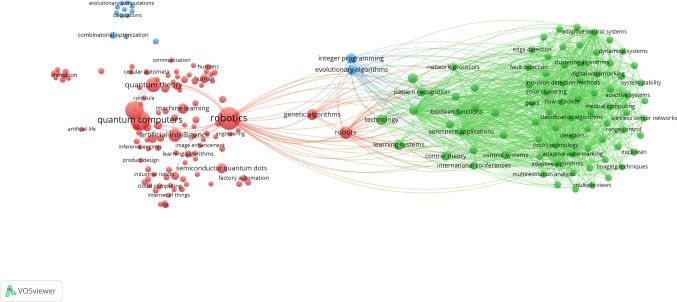
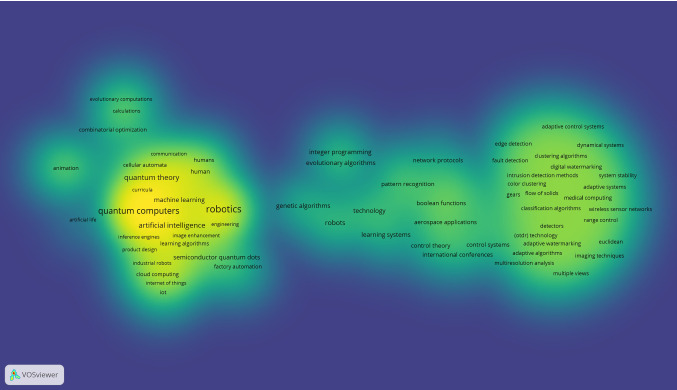
In this paper, we describe a review concerning the Quantum Computing (QC) and Deep Learning (DL) areas and their applications in Computational Intelligence (CI). Quantum algorithms (QAs), engage the rules of quantum mechanics to solve problems using quantum information, where the quantum information is concerning the state of a quantum system, which can be manipulated using quantum information algorithms and other processing techniques. Nowadays, many QAs have been proposed, whose general conclusion is that using the effects of quantum mechanics results in a significant speedup (exponential, polynomial, super polynomial) over the traditional algorithms. This implies that some complex problems currently intractable with traditional algorithms can be solved with QA. On the other hand, DL algorithms offer what is known as machine learning techniques. DL is concerned with teaching a computer to filter inputs through layers to learn how to predict and classify information. Observations can be in the form of plain text, images, or sound. The inspiration for deep learning is the way that the human brain filters information. Therefore, in this research, we analyzed these two areas to observe the most relevant works and applications developed by the researchers in the world.
在本文中,我们描述了一篇关于量子计算(QC)和深度学习(DL)领域及其在计算智能(CI)中的应用的综述。量子算法(QAs)运用量子力学规则,利用量子信息来解决问题,其中量子信息涉及量子系统的状态,可通过量子信息算法和其他处理技术进行操纵。如今,已提出了许多量子算法,其总体结论是,利用量子力学效应能比传统算法实现显著的加速(指数级、多项式级、超多项式级)。这意味着一些目前传统算法难以处理的复杂问题可用量子算法解决。另一方面,深度学习算法提供了所谓的机器学习技术。深度学习关注教导计算机通过多层对输入进行筛选,以学习如何预测和分类信息。观测数据可以是纯文本、图像或声音形式。深度学习的灵感来源于人类大脑筛选信息的方式。因此,在本研究中,我们分析了这两个领域,以观察全球研究人员所开展的最相关的工作和应用。