Laboratory of Genetics and Genomics, National Institute on Aging, National Institutes of Health Intramural Research Program, Baltimore, Maryland, USA.
Translational Gerontology Branch, National Institute on Aging, National Institutes of Health Intramural Research Program, Baltimore, Maryland, USA.
Aging Cell. 2022 May;21(5):e13609. doi: 10.1111/acel.13609. Epub 2022 Apr 15.
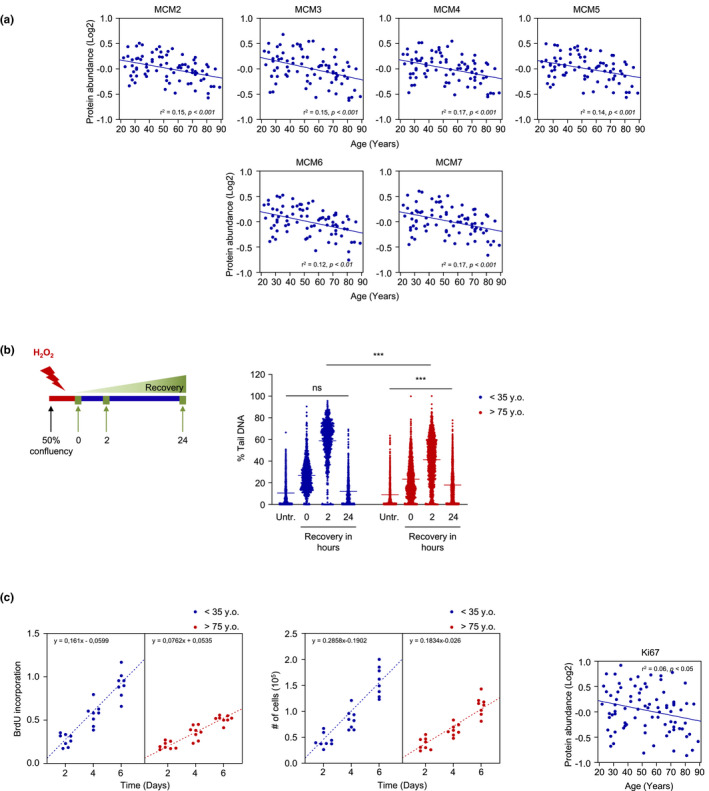
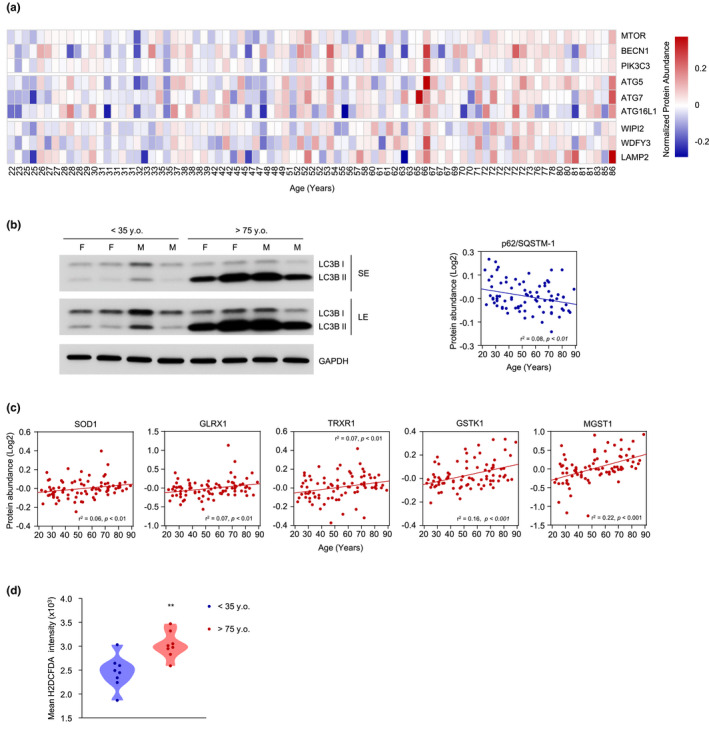
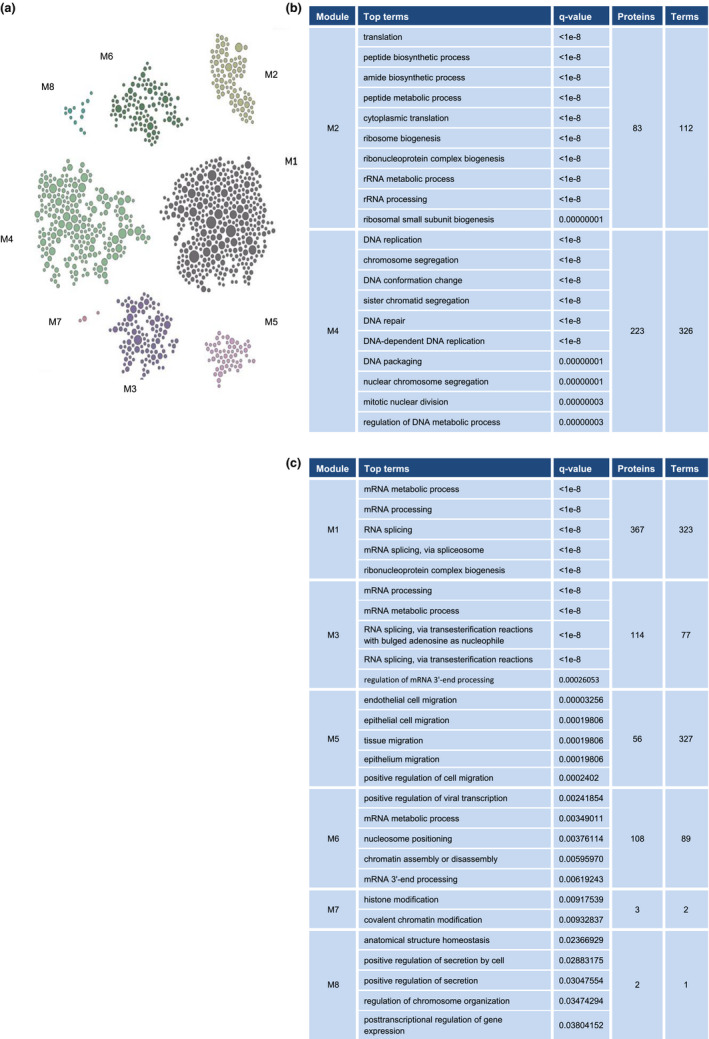
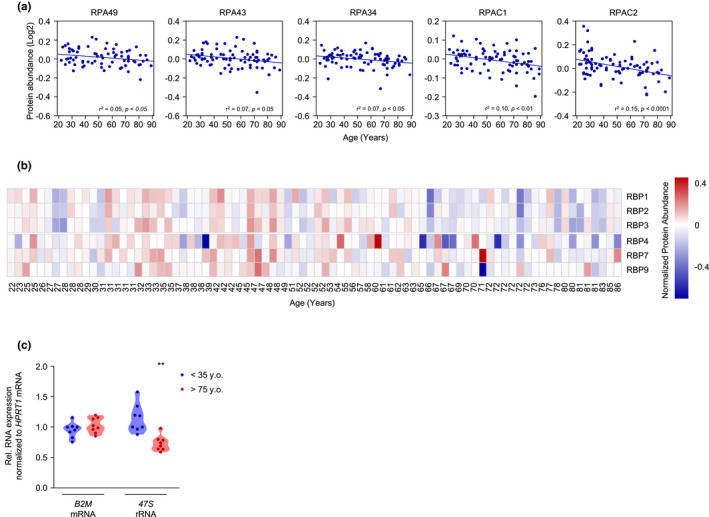
Changes in the proteome of different human tissues with advancing age are poorly characterized. Here, we studied the proteins present in primary skin fibroblasts collected from 82 healthy individuals across a wide age spectrum (22-89 years old) who participated in the GESTALT (Genetic and Epigenetic Signatures of Translational Aging Laboratory Testing) study of the National Institute on Aging, NIH. Proteins were extracted from lysed fibroblasts and subjected to liquid chromatography-mass spectrometry analysis, and the expression levels of 9341 proteins were analyzed using linear regression models. We identified key pathways associated with skin fibroblast aging, including autophagy, scavenging of reactive oxygen species (ROS), ribosome biogenesis, DNA replication, and DNA repair. Changes in these prominent pathways were corroborated using molecular and cell culture approaches. Our study establishes a framework of the global proteome governing skin fibroblast aging and points to possible biomarkers and therapeutic targets.
随着年龄的增长,不同人体组织中的蛋白质组变化特征描述不足。在这里,我们研究了参与美国国立卫生研究院(NIH)转化衰老实验室测试(GENETIC AND EPIGENETIC SIGNATURES OF TRANSLATIONAL AGING LABORATORY TESTING,GESTALT)研究的 82 名健康个体(年龄 22-89 岁)的原代皮肤成纤维细胞中存在的蛋白质。从裂解的成纤维细胞中提取蛋白质,并进行液相色谱-质谱分析,使用线性回归模型分析 9341 种蛋白质的表达水平。我们确定了与皮肤成纤维细胞衰老相关的关键途径,包括自噬、活性氧(ROS)清除、核糖体生物发生、DNA 复制和 DNA 修复。使用分子和细胞培养方法证实了这些突出途径的变化。我们的研究建立了一个控制皮肤成纤维细胞衰老的整体蛋白质组框架,并指出了可能的生物标志物和治疗靶点。