Department of Clinical Microbiology and Infection Control, The University of Hong Kong-Shenzhen Hospital, Shenzhen, Guangdong, China.
Department of Pathology, The University of Hong Kong-Shenzhen Hospital, Shenzhen, Guangdong, China.
PLoS Negl Trop Dis. 2022 Apr 20;16(4):e0010364. doi: 10.1371/journal.pntd.0010364. eCollection 2022 Apr.
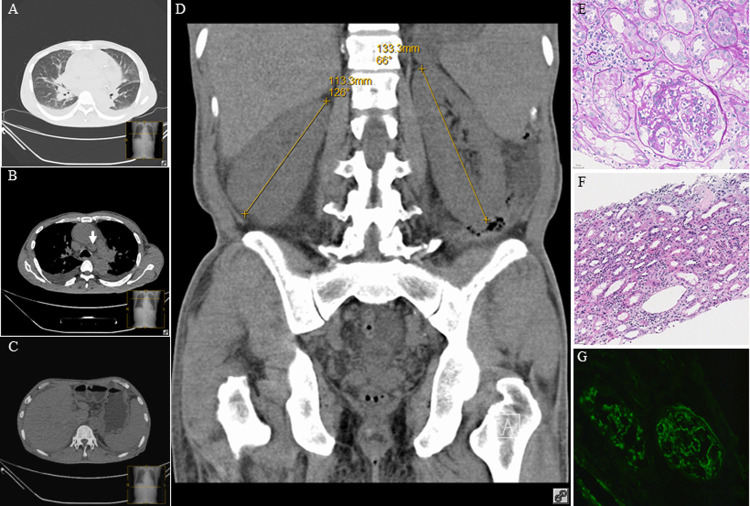
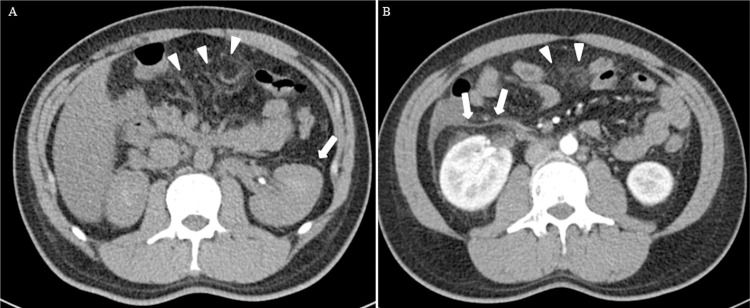
Although Q fever has been widely reported in the rural areas of China, there is a paucity of data on the epidemiology and clinical characteristics of this disease in large metropolitan cities. In this study, we profile the epidemiology and clinical manifestations of Q fever from a tertiary hospital in Shenzhen, a Southern Chinese metropolitan city with a large immigrant population from other parts of China. A total of 14 patients were confirmed to have Q fever during a nine-year-and-six-month period, five of whom were retrospectively diagnosed during case review or incidentally picked up because of another research project on unexplained fever without localizing features. Some patients had the typical exposure histories and clinical features, while a few other patients had rare manifestations of Q fever, including one with heart failure and diffuse intracapillary proliferative glomerulonephritis, a patient presenting with a spontaneous bacterial peritonitis-like syndrome, and another one with concomitant Q fever and brucellosis. Using a combination of clinical manifestation, inflammatory marker levels, echocardiographic findings and serological or molecular test results, nine, three and two patients were diagnosed to have acute, chronic and convalescent Q fever, respectively. Seven, five and two patients were diagnosed to have Q fever by serological test, nested real-time PCR and next-generation sequencing respectively. Diverse and atypical manifestations are associated with Q fever. The incidence of Q fever is likely to be underestimated. Next-generation sequencing is becoming an important diagnostic modality for culture-negative infections, particularly those that the physicians fail to recognize clinically, such as Q fever.
虽然在中国农村地区广泛报道了 Q 热,但在大城市的医学文献中关于这种疾病的流行病学和临床特征的数据却很少。在这项研究中,我们描述了来自中国南部大城市深圳的一家三级医院的 Q 热的流行病学和临床表现,该城市有大量来自中国其他地区的移民。在九年零六个月的时间里,共有 14 名患者被确诊患有 Q 热,其中 5 名是在病例回顾或因不明原因发热而偶然发现的,这些患者没有局部特征,也没有进行其他研究项目。一些患者有典型的暴露史和临床特征,而少数其他患者有 Q 热的罕见表现,包括 1 例心力衰竭和弥漫性毛细血管内增生性肾小球肾炎,1 例表现为自发性细菌性腹膜炎样综合征,另 1 例同时患有 Q 热和布鲁氏菌病。通过临床表现、炎症标志物水平、超声心动图结果和血清学或分子检测结果的综合分析,9 例、3 例和 2 例患者分别被诊断为急性、慢性和恢复期 Q 热。分别通过血清学检测、巢式实时 PCR 和下一代测序诊断出 7 例、5 例和 2 例 Q 热。多样和不典型的表现与 Q 热有关。Q 热的发病率可能被低估了。下一代测序正成为一种重要的诊断方法,用于检测培养阴性感染,特别是那些临床上无法识别的感染,如 Q 热。