Infectious Disease Epidemiology Group, Weill Cornell Medicine - Qatar, Doha, Qatar
World Health Organization Collaborating Centre for Disease Epidemiology Analytics on HIV/AIDS, Sexually Transmitted Infections, and Viral Hepatitis, Weill Cornell Medicine-Qatar, Doha, Dawha, Qatar.
BMJ Open Diabetes Res Care. 2022 Apr;10(2). doi: 10.1136/bmjdrc-2021-002704.
We aimed to characterize and forecast type 2 diabetes mellitus (T2DM) disease burden between 2021 and 2050 in Qatar where 89% of the population comprises expatriates from over 150 countries.
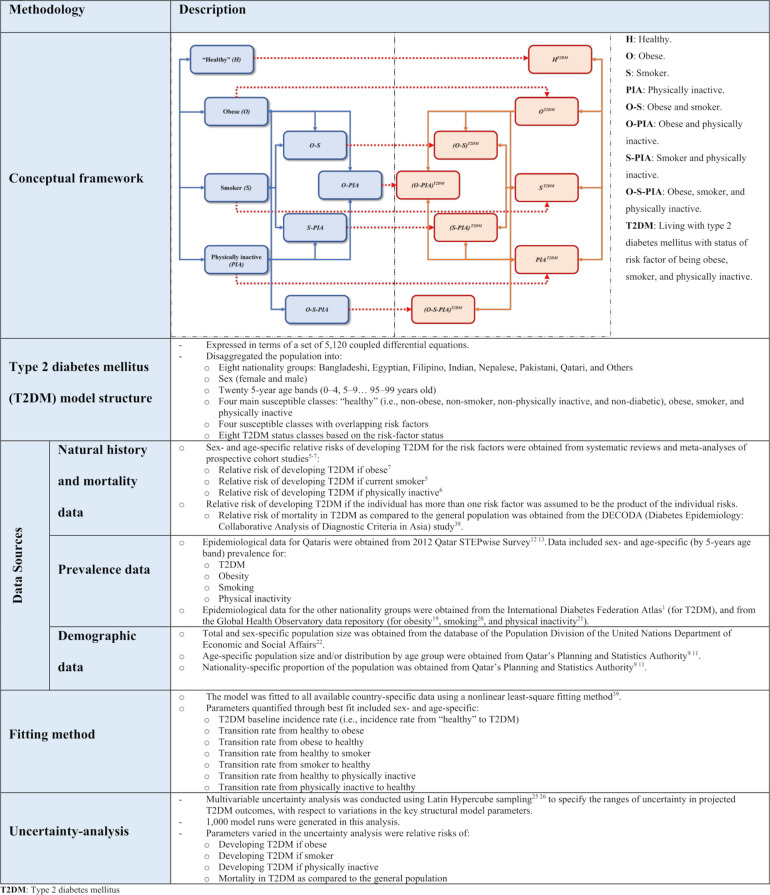
An age-structured mathematical model was used to forecast T2DM burden and the impact of key risk factors (obesity, smoking, and physical inactivity). The model was parametrized using data from T2DM natural history studies, Qatar's 2012 STEPwise survey, the Global Health Observatory, and the International Diabetes Federation Diabetes Atlas, among other data sources.
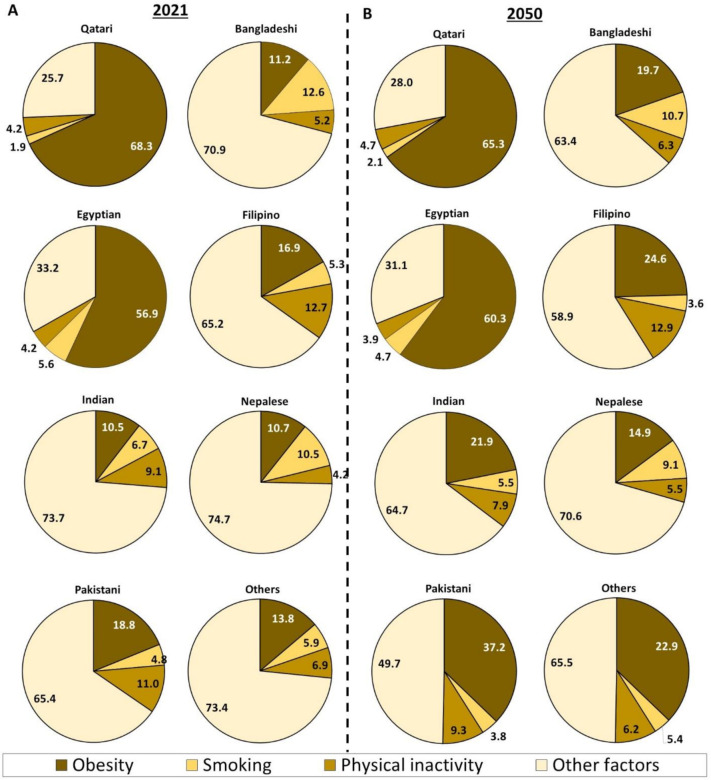
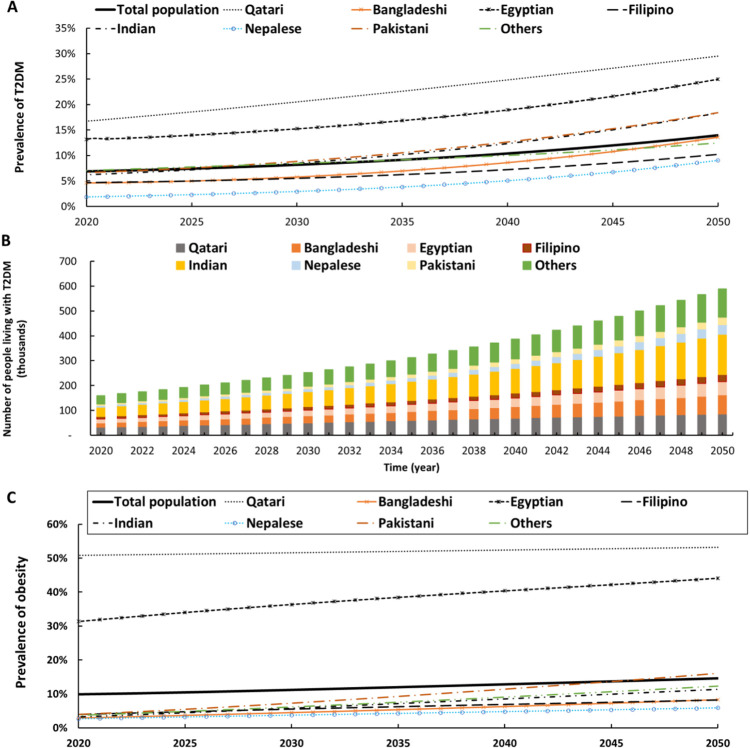
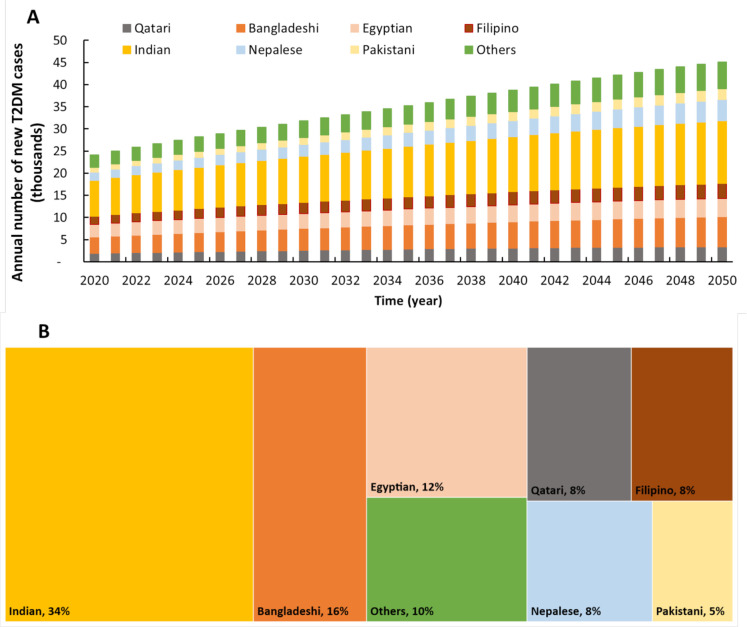
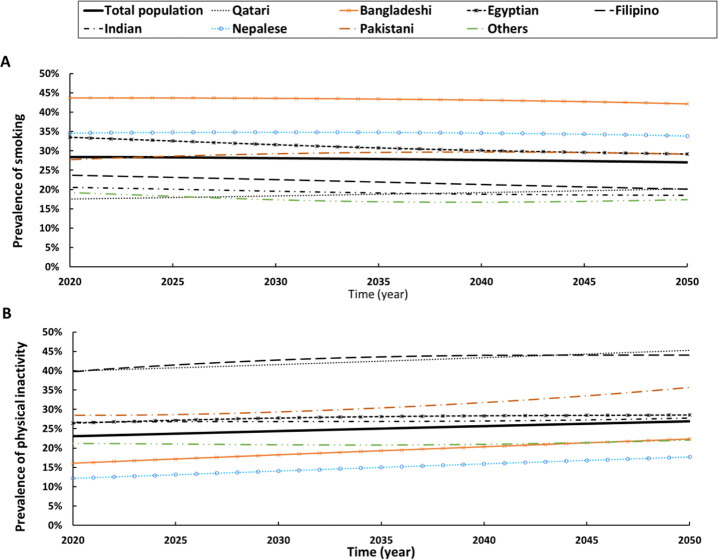
Between 2021 and 2050, T2DM prevalence increased from 7.0% to 14.0%, the number of people living with T2DM increased from 170 057 to 596 862, and the annual number of new T2DM cases increased from 25 007 to 45 155 among those 20-79 years of age living in Qatar. Obesity prevalence increased from 8.2% to 12.5%, smoking declined from 28.3% to 26.9%, and physical inactivity increased from 23.1% to 26.8%. The proportion of incident T2DM cases attributed to obesity increased from 21.9% to 29.9%, while the contribution of smoking and physical inactivity decreased from 7.1% to 6.0% and from 7.3% to 7.2%, respectively. The results showed substantial variability across various nationality groups residing in Qatar-for example, in Qataris and Egyptians, the T2DM burden was mainly due to obesity, while in other nationality groups, it appeared to be multifactorial.
T2DM prevalence and incidence in Qatar were forecasted to increase sharply by 2050, highlighting the rapidly growing need of healthcare resources to address the disease burden. T2DM epidemiology varied between nationality groups, stressing the need for prevention and treatment intervention strategies tailored to each nationality.
我们旨在描述并预测 2021 年至 2050 年期间卡塔尔 2 型糖尿病(T2DM)的疾病负担,因为该国 89%的人口都是来自 150 多个国家的侨民。
我们使用一个年龄结构的数学模型来预测 T2DM 负担和关键风险因素(肥胖、吸烟和身体活动不足)的影响。该模型使用来自 T2DM 自然史研究、卡塔尔 2012 年 STEPWISE 调查、全球卫生观察站和国际糖尿病联合会糖尿病地图等数据来源的参数进行了参数化。
在 2021 年至 2050 年期间,T2DM 的患病率从 7.0%上升到 14.0%,卡塔尔 20-79 岁人群中患有 T2DM 的人数从 170057 人增加到 596862 人,每年新诊断的 T2DM 病例数从 25007 人增加到 45155 人。肥胖患病率从 8.2%上升到 12.5%,吸烟率从 28.3%下降到 26.9%,身体活动不足率从 23.1%上升到 26.8%。肥胖导致的 T2DM 病例比例从 21.9%上升到 29.9%,而吸烟和身体活动不足的比例分别从 7.1%下降到 6.0%和从 7.3%下降到 7.2%。结果表明,在卡塔尔居住的不同国籍群体之间存在很大的差异,例如,在卡塔尔人和埃及人当中,T2DM 负担主要归因于肥胖,而在其他国籍群体中,似乎是多因素导致的。
预计到 2050 年,卡塔尔的 T2DM 患病率和发病率将急剧上升,突出表明需要迅速增加医疗保健资源来应对疾病负担。T2DM 的流行病学在不同国籍群体之间存在差异,强调需要针对每个国籍制定预防和治疗干预策略。