Khachnaoui Hajer, Khlifa Nawres, Mabrouk Rostom
Laboratoire de Biophysique et Technologies Médicales, Institut Superieur des Technologies Medicales de Tunis, Université de Tunis El Manar, Tunis 1006, Tunisia.
Department of Computer Sciences, Bishop's University, Bishop's 2600 College St., Sherbrooke, QC J1M 1Z7, Canada.
J Imaging. 2022 Apr 2;8(4):97. doi: 10.3390/jimaging8040097.
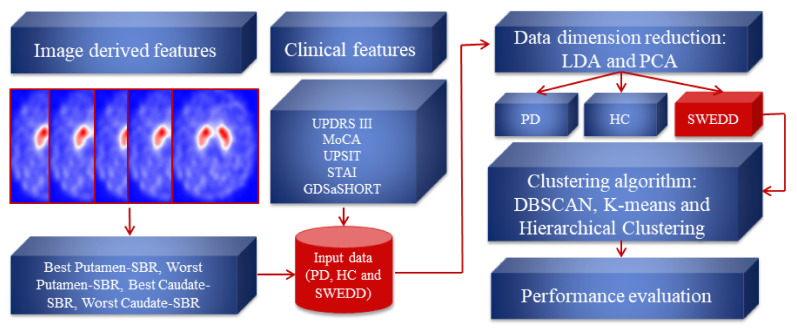
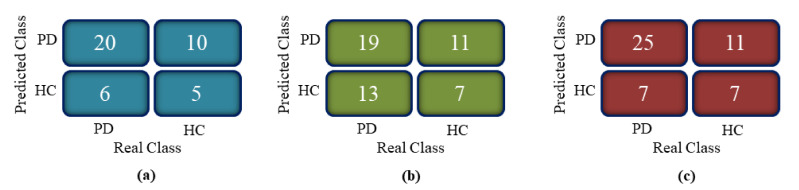
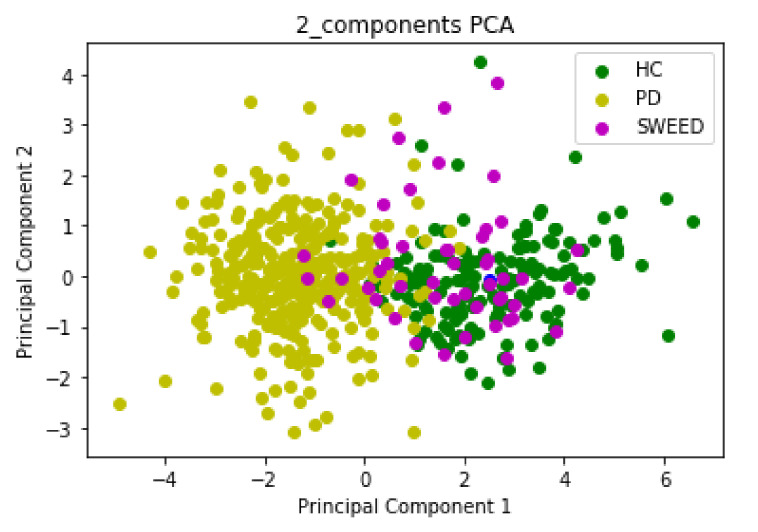
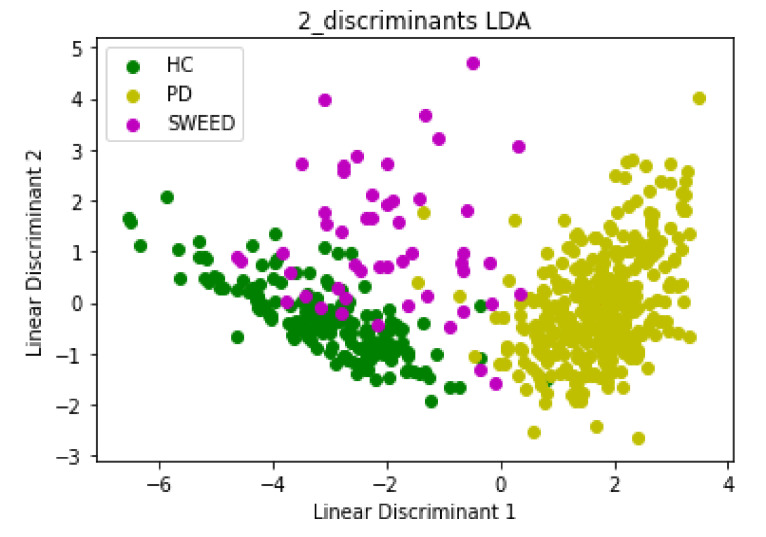
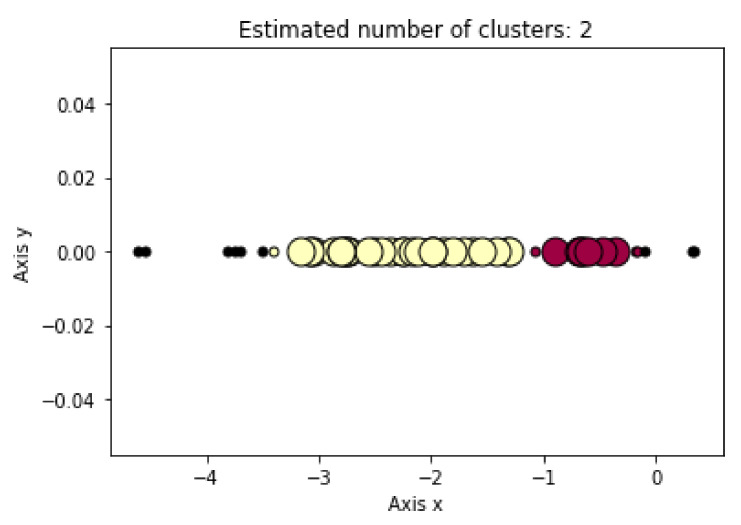
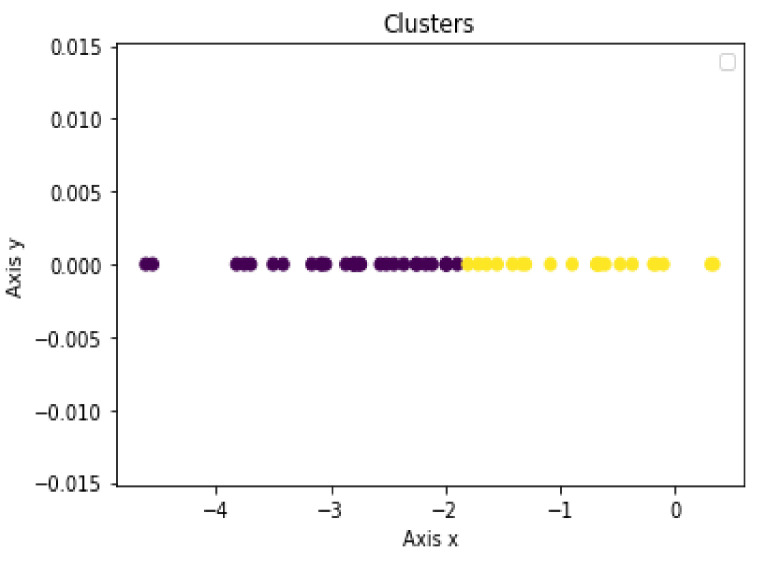
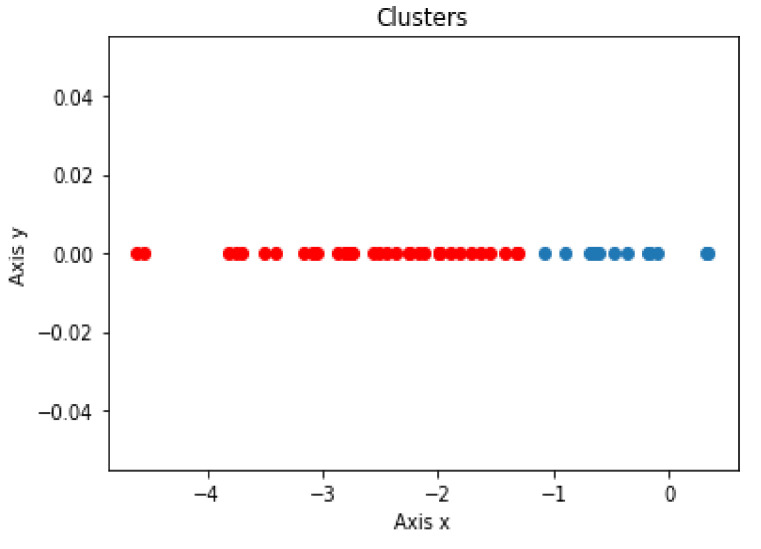
Early Parkinson's Disease (PD) diagnosis is a critical challenge in the treatment process. Meeting this challenge allows appropriate planning for patients. However, Scan Without Evidence of Dopaminergic Deficit (SWEDD) is a heterogeneous group of PD patients and Healthy Controls (HC) in clinical and imaging features. The application of diagnostic tools based on Machine Learning (ML) comes into play here as they are capable of distinguishing between HC subjects and PD patients within an SWEDD group. In the present study, three ML algorithms were used to separate PD patients from HC within an SWEDD group. Data of 548 subjects were firstly analyzed by Principal Component Analysis (PCA) and Linear Discriminant Analysis (LDA) techniques. Using the best reduction technique result, we built the following clustering models: Density-Based Spatial (DBSCAN), K-means and Hierarchical Clustering. According to our findings, LDA performs better than PCA; therefore, LDA was used as input for the clustering models. The different models' performances were assessed by comparing the clustering algorithms outcomes with the ground truth after a follow-up. Hierarchical Clustering surpassed DBSCAN and K-means algorithms by 64%, 78.13% and 38.89% in terms of accuracy, sensitivity and specificity. The proposed method demonstrated the suitability of ML models to distinguish PD patients from HC subjects within an SWEDD group.
早期帕金森病(PD)诊断是治疗过程中的一项关键挑战。应对这一挑战有助于为患者进行合理规划。然而,多巴胺能缺陷无证据扫描(SWEDD)患者组在临床和影像特征方面是一个异质性群体,包含帕金森病患者和健康对照(HC)。基于机器学习(ML)的诊断工具在此发挥了作用,因为它们能够在SWEDD组内区分健康对照者和帕金森病患者。在本研究中,使用了三种机器学习算法在SWEDD组内将帕金森病患者与健康对照区分开来。首先通过主成分分析(PCA)和线性判别分析(LDA)技术对548名受试者的数据进行了分析。利用最佳降维技术结果,我们构建了以下聚类模型:基于密度的空间聚类(DBSCAN)、K均值聚类和层次聚类。根据我们的研究结果,LDA的表现优于PCA;因此,LDA被用作聚类模型的输入。通过在随访后将聚类算法的结果与真实情况进行比较,评估了不同模型的性能。在准确性、敏感性和特异性方面,层次聚类分别比DBSCAN和K均值算法高出64%、78.13%和38.89%。所提出的方法证明了机器学习模型在SWEDD组内区分帕金森病患者和健康对照者的适用性。