Desai Shivani, Mehta Kevil, Chhikaniwala Hitesh
Research Scholar, Gujarat Technological University, Ahmedabad, Gujarat, India.
Institute of Technology, Nirma University, Ahmedabad, Gujarat, India.
J Educ Health Promot. 2024 Oct 28;13:388. doi: 10.4103/jehp.jehp_1777_23. eCollection 2024.
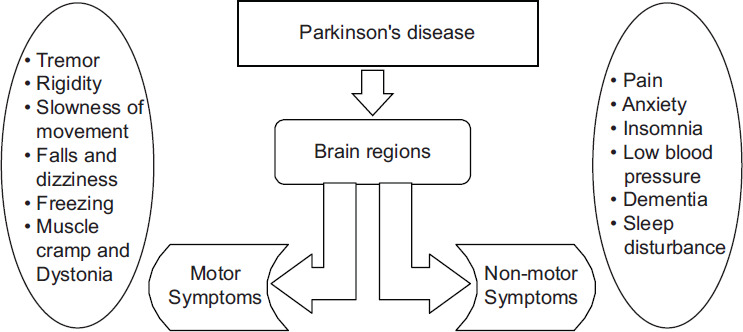
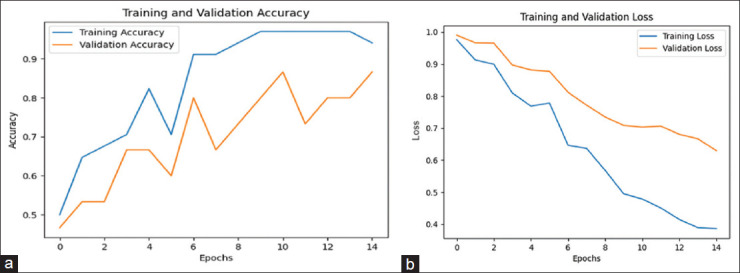
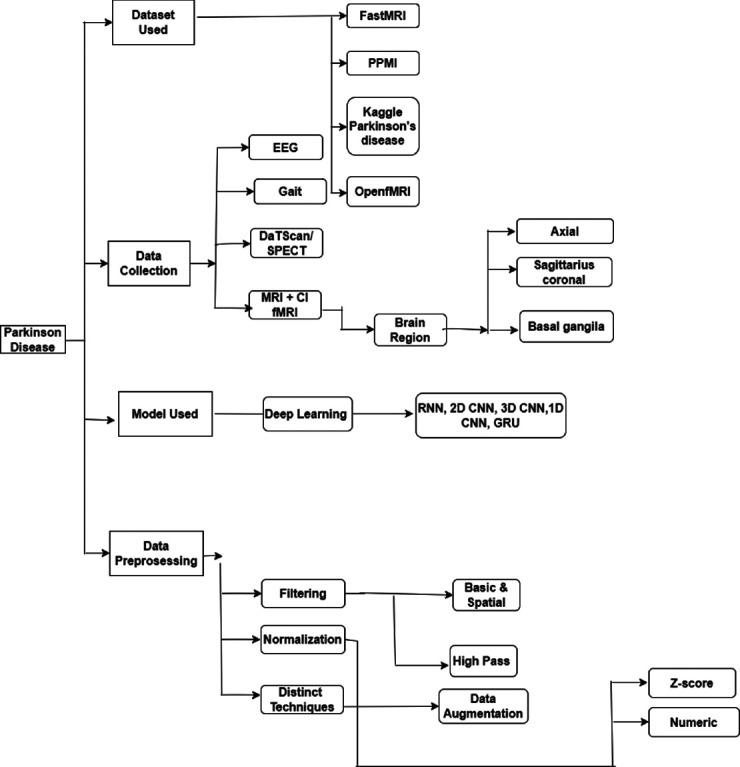
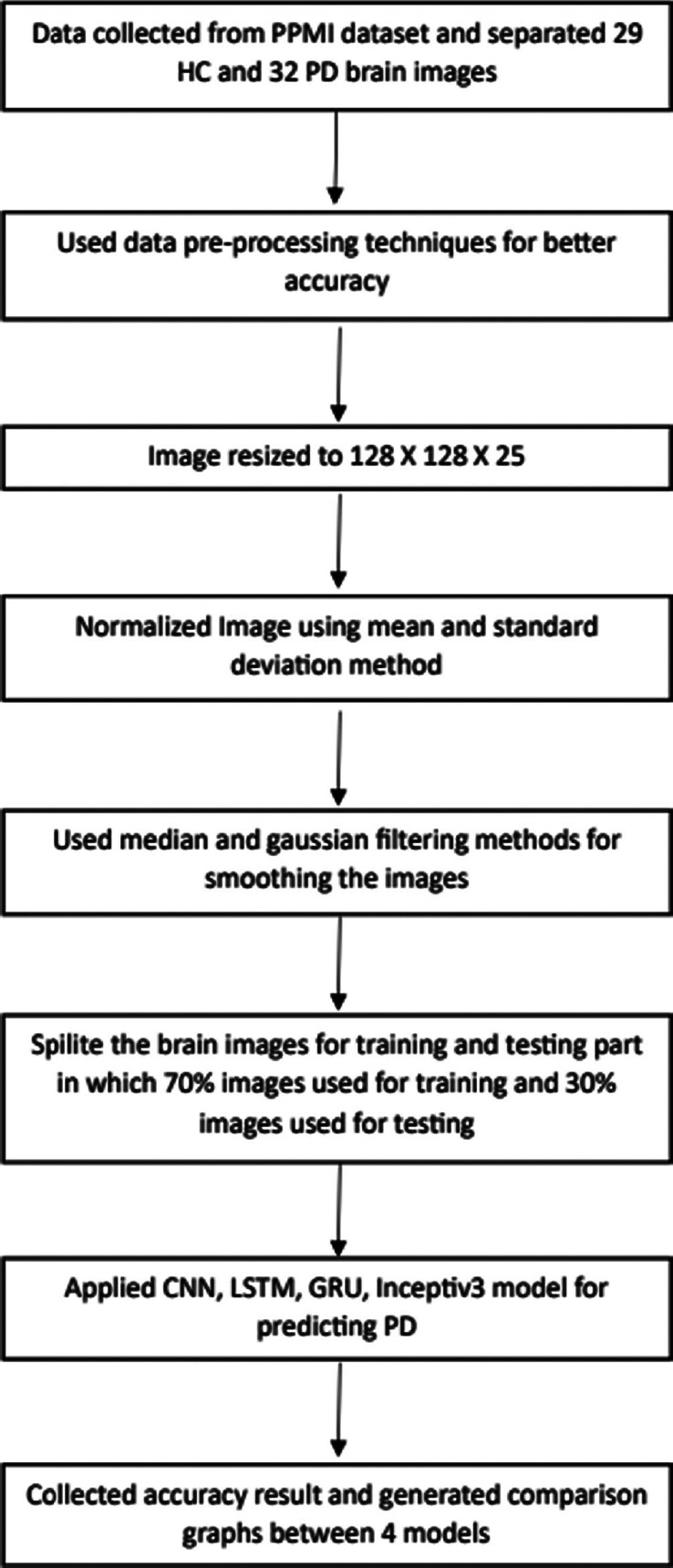
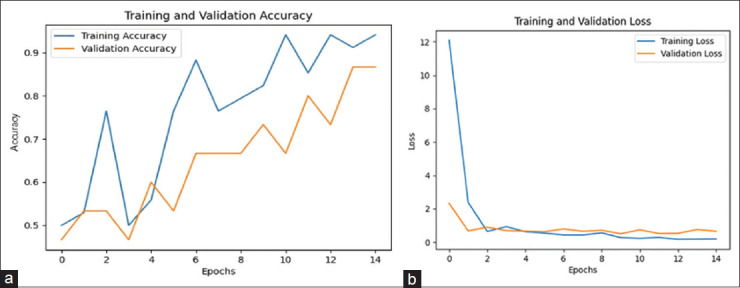
Parkinson's disease (PD) is a neurodegenerative brain disorder that causes symptoms such as tremors, sleeplessness, behavioral problems, sensory abnormalities, and impaired mobility, according to the World Health Organization (WHO). Artificial intelligence, machine learning (ML), and deep learning (DL) have been used in recent studies (2015-2023) to improve PD diagnosis by categorizing patients and healthy controls based on similar clinical presentations. This study investigates several datasets, modalities, and data preprocessing techniques from the collected data. Issues are also addressed, with suggestions for future PD research involving subgrouping and connection analysis using magnetic resonance imaging (MRI), dopamine transporter scan (DaTscan), and single-photon emission computed tomography (SPECT) data. We have used different models like Convolutional Neural Network (CNN) and Gated Recurrent Unit (GRU) for detecting PD at an early stage. We have used the Parkinson's Progression Markers Initiative (PPMI) dataset 3D brain images and archived the 86.67%, 94.02%, accuracy of models, respectively.
根据世界卫生组织(WHO)的说法,帕金森病(PD)是一种神经退行性脑部疾病,会导致震颤、失眠、行为问题、感觉异常和行动能力受损等症状。在最近的研究(2015 - 2023年)中,人工智能、机器学习(ML)和深度学习(DL)已被用于通过根据相似的临床表现对患者和健康对照进行分类来改善帕金森病的诊断。本研究调查了从收集的数据中获取的几个数据集、模态和数据预处理技术。还讨论了相关问题,并对未来涉及使用磁共振成像(MRI)、多巴胺转运体扫描(DaTscan)和单光子发射计算机断层扫描(SPECT)数据进行亚组分析和关联分析的帕金森病研究提出了建议。我们使用了不同的模型,如卷积神经网络(CNN)和门控循环单元(GRU)来早期检测帕金森病。我们使用了帕金森病进展标记物倡议(PPMI)数据集的3D脑部图像,模型的准确率分别达到了86.67%和94.02%。