da Silva Liziane Cristine Malaquias, da Silva Platner Fernanda, da Silva Fonseca Lauany, Rossato Virgílio Frota, de Andrade Dian Carlos Pereira, de Sousa Valente João, Brain Susan Diana, Fernandes Elizabeth Soares
Programa de Pós-Graduação em Biotecnologia Aplicada à Saúde da Criança e do Adolescente, Faculdades Pequeno Príncipe, Av. Iguaçu No 333, Curitiba 80230-020, PR, Brazil.
Instituto de Pesquisa Pelé Pequeno Príncipe, Av. Silva Jardim No 1632, Curitiba 80240-020, PR, Brazil.
Pathogens. 2022 Mar 29;11(4):412. doi: 10.3390/pathogens11040412.
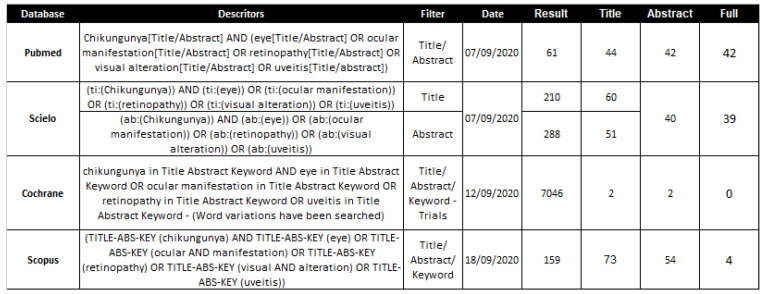
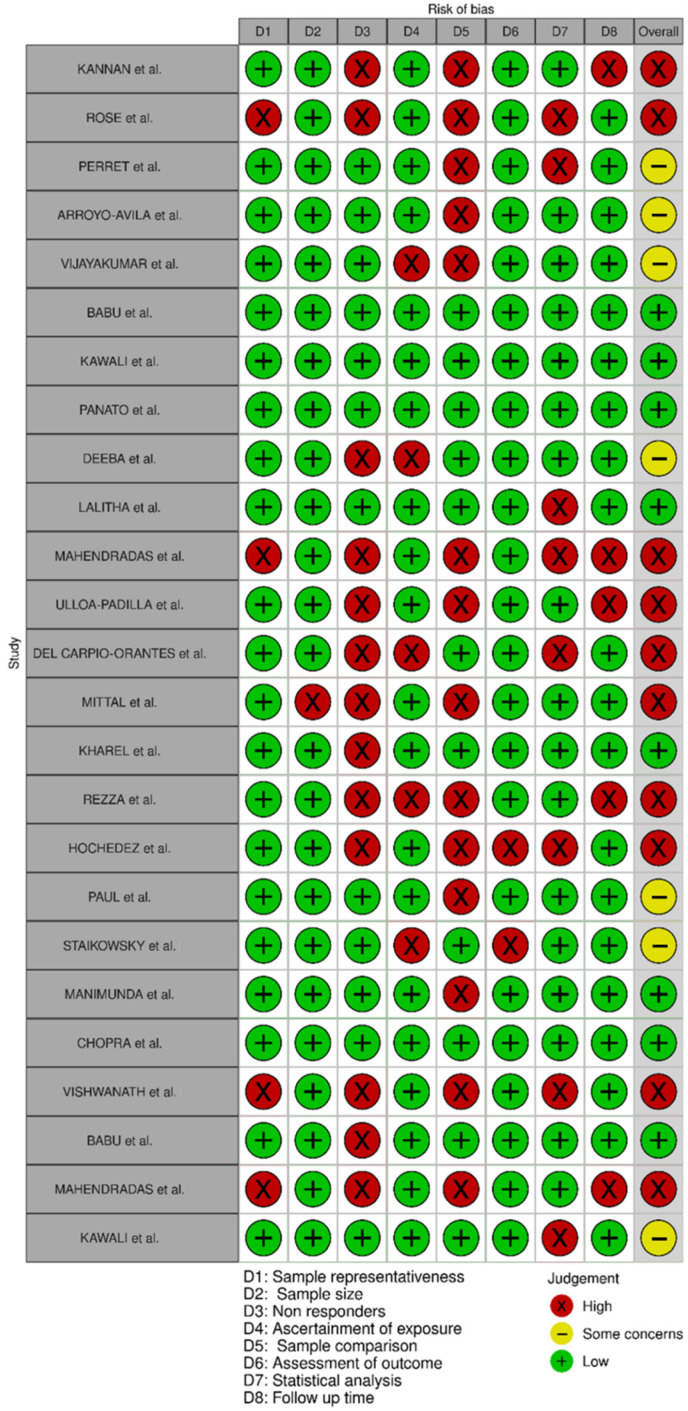
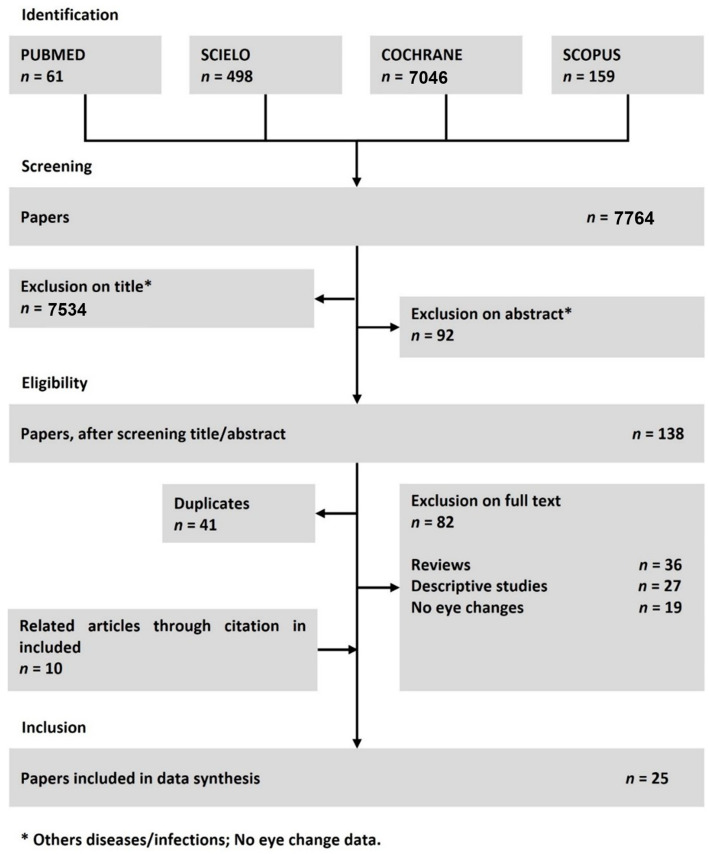
The Chikungunya virus (CHIKV) can cause long lasting symptoms and manifestations. However, there is little information on which ocular ones are most frequent following infection. We performed a systematic review (registered in the International Prospective Register of Systematic Reviews; no CRD42020171928) to establish the most frequent ocular manifestations of CHIKV infection and their associations with gender and age. Articles published until September 2020 were selected from PubMed, Scielo, Cochrane and Scopus databases. Only studies with CHIKV-infected patients and eye alterations were included. Reviews, descriptive studies, or those not investigating the human ocular manifestations of CHIKV, those with patients with other diseases and infections, abstracts and studies without relevant data were excluded. Twenty-five studies were selected for inclusion. Their risk of bias was evaluated by a modified Newcastle-Ottawa scale. The most frequent ocular symptoms of CHIKV infection included ocular pain, inflammation and reduced visual acuity, whilst conjunctivitis and optic neuritis were the most common manifestations of the disease. These occurred mostly in individuals of 42 ± 9.5 years of age and woman. The few available reports on CHIKV-induced eye manifestations highlight the need for further research in the field to gather more substantial evidence linking CHIKV infection, the eye and age/gender. Nonetheless, the data emphasizes that ocular alterations are meaningful occurrences of CHIKV infection which can substantially affect quality of life.
基孔肯雅病毒(CHIKV)可导致长期症状和表现。然而,关于感染后最常见的眼部症状却知之甚少。我们进行了一项系统综述(已在国际系统综述前瞻性注册库注册;注册号CRD42020171928),以确定CHIKV感染最常见的眼部表现及其与性别和年龄的关联。从PubMed、Scielo、Cochrane和Scopus数据库中筛选出截至2020年9月发表的文章。仅纳入有关CHIKV感染患者和眼部病变的研究。排除综述、描述性研究,或未调查CHIKV人类眼部表现的研究、涉及患有其他疾病和感染的患者的研究、摘要以及无相关数据的研究。共筛选出25项研究纳入。采用改良的纽卡斯尔-渥太华量表评估其偏倚风险。CHIKV感染最常见的眼部症状包括眼痛、炎症和视力下降,而结膜炎和视神经炎是该疾病最常见的表现。这些症状大多发生在年龄为42±9.5岁的女性身上。关于CHIKV引起的眼部表现的现有报告较少,这凸显了该领域需要进一步研究,以收集更多将CHIKV感染、眼睛与年龄/性别联系起来的实质性证据。尽管如此,数据强调眼部病变是CHIKV感染的重要表现,可严重影响生活质量。