Feng Dechao, Shi Xu, Zhang Facai, Xiong Qiao, Wei Qiang, Yang Lu
Department of Urology, Institute of Urology, West China Hospital, Sichuan University, Chengdu, China.
Front Oncol. 2022 Apr 6;12:858479. doi: 10.3389/fonc.2022.858479. eCollection 2022.
Given the age relevance of prostate cancer (PCa) and the role of mitochondrial dysfunction (MIDS) in aging, we orchestrated molecular subtypes and identified key genes for PCa from the perspective of MIDS.
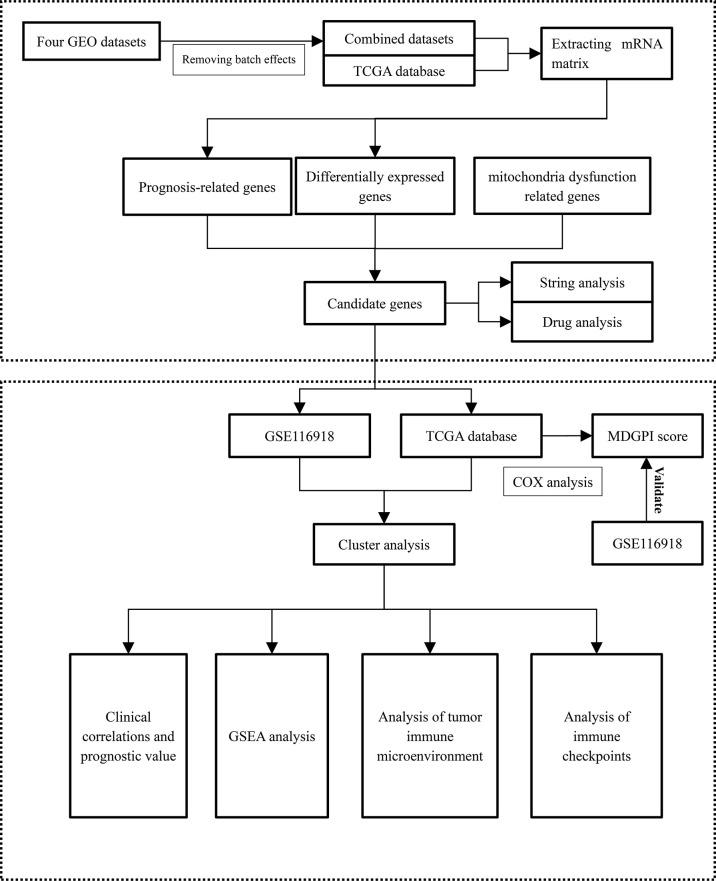
Cluster analysis, COX regression analysis, function analysis, and tumor immune environment were conducted. We performed all analyses using software R 3.6.3 and its suitable packages.
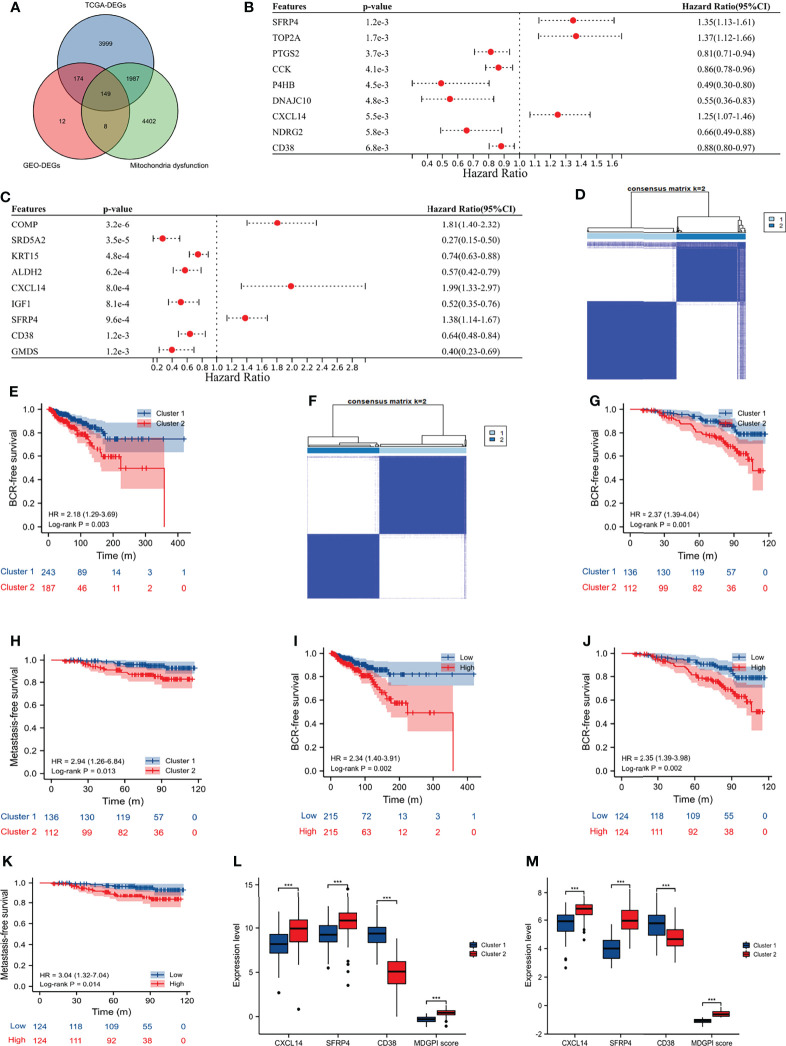
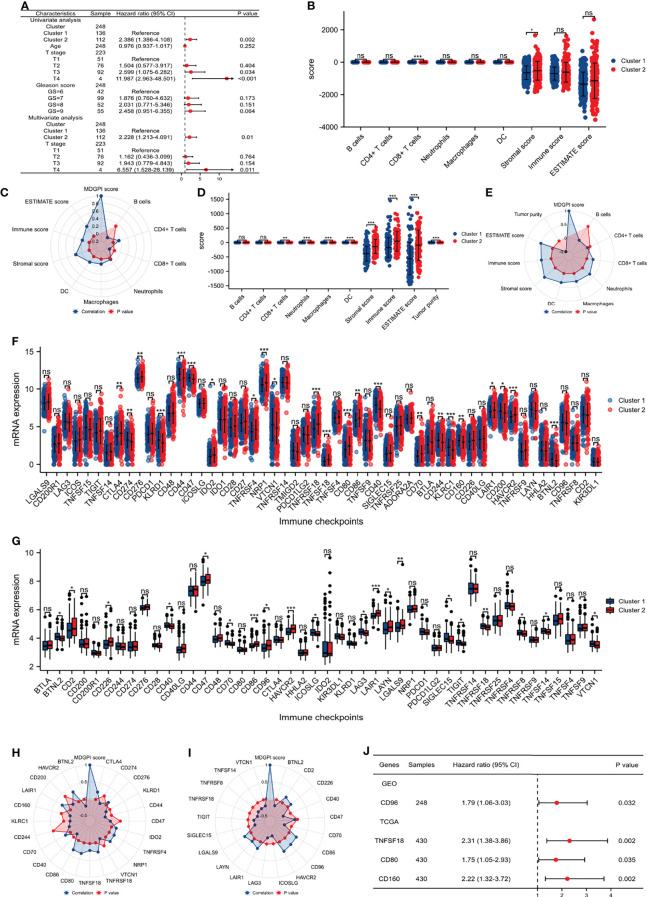
CXCL14, SFRP4, and CD38 were eventually identified to classify the PCa patients in The Cancer Genome Atlas (TCGA) database and the Gene Expression Omnibus (GEO) dataset into two distinct clusters. Patients in the cluster 2 had shorter BCR-free survival than those in the cluster 1 in terms of both TCGA database and GEO dataset. We divided the patients from the TCGA database and the GEO dataset into high- and low-risk groups according to the median of MIDS-related genetic prognostic index. For patients in the TCGA database, the biochemical recurrence (BCR) risk in high-risk group was 2.34 times higher than that in low-risk group. Similarly, for patients in the GEO dataset, the risk of BCR and metastasis in high-risk group was 2.35 and 3.04 times higher than that in low-risk group, respectively. Cluster 2 was closely associated with advanced T stage and higher Gleason score for patients undergoing radical prostatectomy or radiotherapy. For patients undergoing radical prostatectomy, the number of CD8 T cells was significantly lower in cluster 2 than in cluster 1, while cluster 2 had significantly higher stromal score than cluster 1. For patients undergoing radical radiotherapy, cluster 2 had significantly higher level of CD8 T cells, neutrophils, macrophages, dendritic cells, stromal score, immune score, and estimate score, but showed lower level of tumor purity than cluster 1.
We proposed distinctly prognosis-related molecular subtypes at genetic level and related formula for PCa patients undergoing radical prostatectomy or radiotherapy, mainly to provide a roadmap for precision medicine.
鉴于前列腺癌(PCa)与年龄的相关性以及线粒体功能障碍(MIDS)在衰老中的作用,我们从MIDS的角度精心划分了分子亚型并确定了PCa的关键基因。
进行了聚类分析、COX回归分析、功能分析和肿瘤免疫环境分析。我们使用软件R 3.6.3及其合适的软件包进行了所有分析。
最终确定CXCL14、SFRP4和CD38可将癌症基因组图谱(TCGA)数据库和基因表达综合数据库(GEO)数据集中的PCa患者分为两个不同的聚类。在TCGA数据库和GEO数据集中,聚类2中的患者无生化复发(BCR)生存期均短于聚类1中的患者。我们根据MIDS相关基因预后指数的中位数将TCGA数据库和GEO数据集中的患者分为高风险组和低风险组。对于TCGA数据库中的患者,高风险组的生化复发(BCR)风险比低风险组高2.34倍。同样,对于GEO数据集中的患者,高风险组的BCR和转移风险分别比低风险组高2.35倍和3.04倍。聚类2与接受根治性前列腺切除术或放疗的患者的晚期T分期和更高的 Gleason评分密切相关。对于接受根治性前列腺切除术的患者,聚类2中的CD8 T细胞数量明显低于聚类1,而聚类2的基质评分明显高于聚类1。对于接受根治性放疗的患者,聚类2的CD8 T细胞、中性粒细胞、巨噬细胞、树突状细胞水平、基质评分、免疫评分和估计评分均明显较高,但肿瘤纯度水平低于聚类1。
我们在基因水平上提出了与预后明显相关的分子亚型以及针对接受根治性前列腺切除术或放疗的PCa患者的相关公式,主要是为精准医学提供路线图。