China Rehabilitation Science Institute, Feng tai District, Beijing, People's Republic of China.
China Rehabilitation Research Center, Feng tai District, Beijing, People's Republic of China.
Microbiol Spectr. 2022 Jun 29;10(3):e0017722. doi: 10.1128/spectrum.00177-22. Epub 2022 Apr 25.
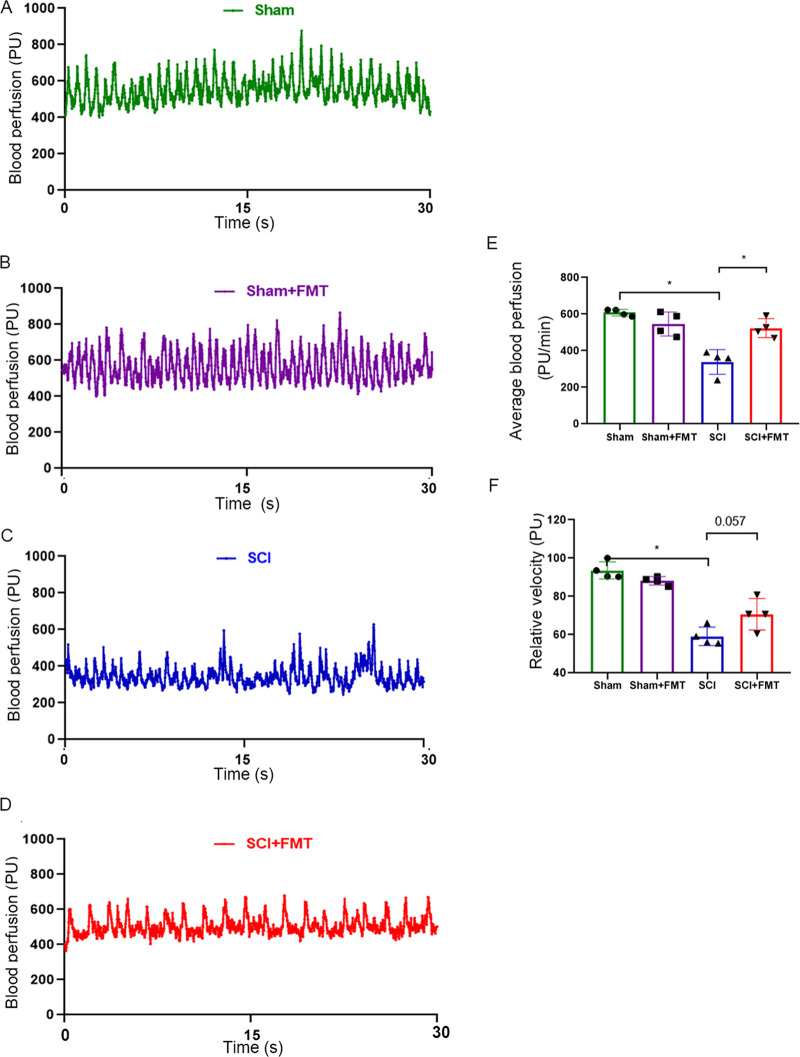
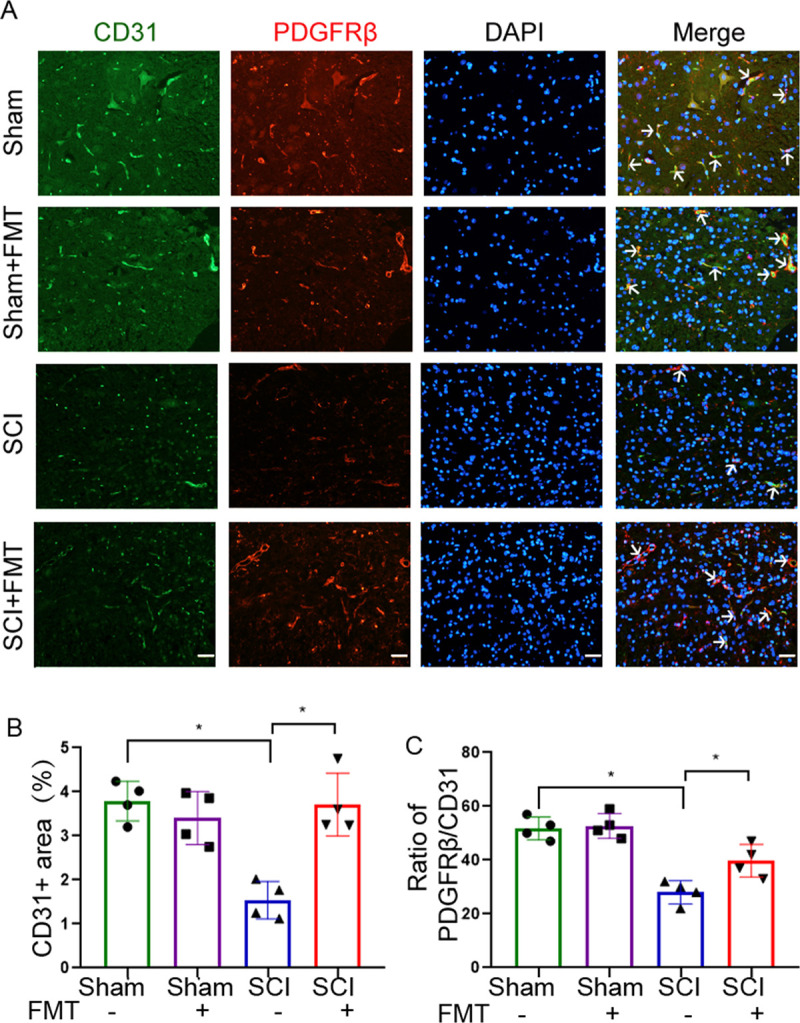
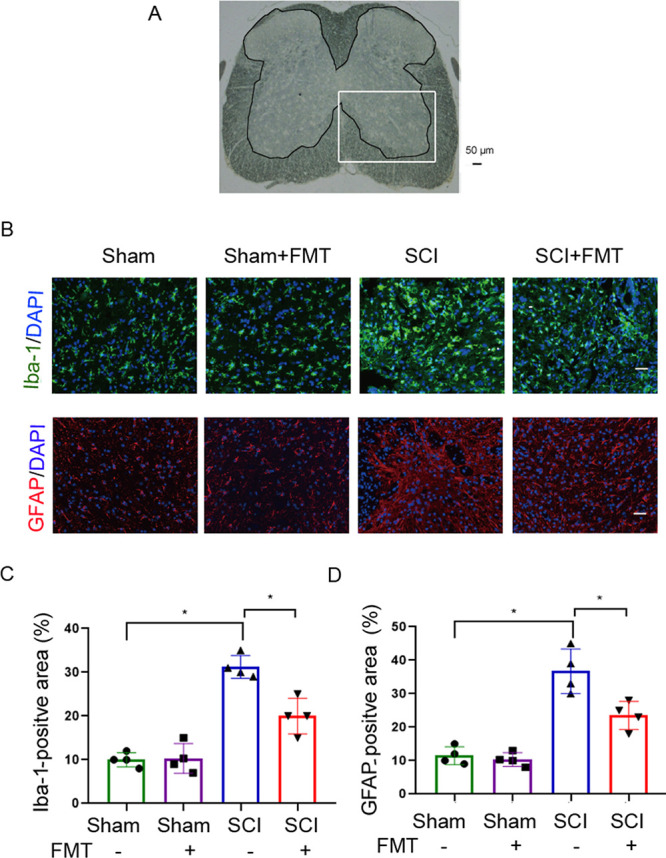
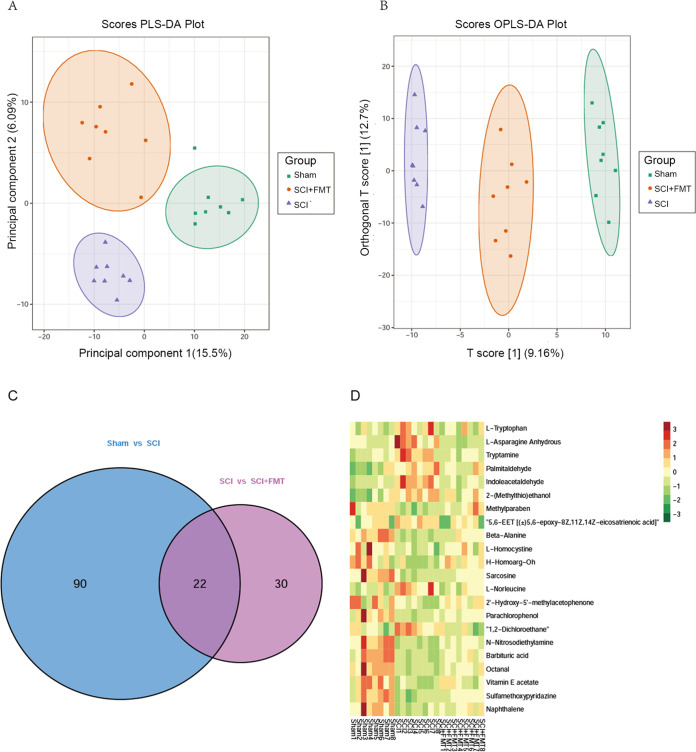
The primary traumatic event that causes spinal cord injury (SCI) is followed by a progressive secondary injury featured by vascular disruption and ischemia, inflammatory responses and the release of cytotoxic debris, which collectively add to the hostile microenvironment of the lesioned cord and inhibit tissue regeneration and functional recovery. In a previous study, we reported that fecal microbiota transplantation (FMT) promotes functional recovery in a contusion SCI mouse model; yet whether and how FMT treatment may impact the microenvironment at the injury site are not well known. In the current study, we examined individual niche components and investigated the effects of FMT on microcirculation, inflammation and trophic factor secretion in the spinal cord of SCI mice. FMT treatment significantly improved spinal cord tissue sparing, vascular perfusion and pericyte coverage and blood-spinal cord-barrier (BSCB) integrity, suppressed the activation of microglia and astrocytes, and enhanced the secretion of neurotrophic factors. Suppression of inflammation and upregulation of trophic factors, jointly, may rebalance the niche homeostasis at the injury site and render it favorable for reparative and regenerative processes, eventually leading to functional recovery. Furthermore, microbiota metabolic profiling revealed that amino acids including β-alanine constituted a major part of the differentially detected metabolites between the groups. Supplementation of β-alanine in SCI mice reduced BSCB permeability and increased the number of surviving neurons, suggesting that β-alanine may be one of the mediators of FMT that participates in the modulation and rebalancing of the microenvironment at the injured spinal cord. FMT treatment shows a profound impact on the microenvironment that involves microcirculation, blood-spinal cord-barrier, activation of immune cells, and secretion of neurotrophic factors. Analysis of metabolic profiles reveals around 22 differentially detected metabolites between the groups, and β-alanine was further chosen for functional validation experiments. Supplementation of SCI mice with β-alanine significantly improves neuronal survival, and the integrity of blood-spinal cord-barrier at the lesion site, suggesting that β-alanine might be one of the mediators following FMT that has contributed to the recovery.
原发性创伤事件导致脊髓损伤 (SCI),随后是渐进性的继发性损伤,其特征是血管破坏和缺血、炎症反应和细胞毒性碎片的释放,这些共同加剧了损伤脊髓的恶劣微环境,并抑制组织再生和功能恢复。在之前的研究中,我们报告了粪便微生物群移植 (FMT) 可促进挫伤性 SCI 小鼠模型的功能恢复;然而,FMT 治疗是否以及如何影响损伤部位的微环境尚不清楚。在本研究中,我们检查了单个生态位成分,并研究了 FMT 对 SCI 小鼠脊髓微循环、炎症和营养因子分泌的影响。FMT 治疗显著改善了脊髓组织保存、血管灌注和周细胞覆盖以及血脊髓屏障 (BSCB) 的完整性,抑制了小胶质细胞和星形胶质细胞的激活,并增强了神经营养因子的分泌。炎症的抑制和营养因子的上调共同使损伤部位的生态位平衡,并使其有利于修复和再生过程,最终导致功能恢复。此外,微生物组代谢谱分析显示,包括β-丙氨酸在内的氨基酸构成了两组之间差异检测代谢物的主要部分。在 SCI 小鼠中补充β-丙氨酸可降低 BSCB 通透性并增加存活神经元的数量,表明β-丙氨酸可能是参与调节和平衡损伤脊髓微环境的 FMT 介导物之一。FMT 治疗对涉及微循环、血脊髓屏障、免疫细胞激活和神经营养因子分泌的微环境产生深远影响。代谢谱分析显示两组之间有 22 个差异检测代谢物,进一步选择β-丙氨酸进行功能验证实验。在 SCI 小鼠中补充β-丙氨酸可显著改善神经元存活和损伤部位 BSCB 的完整性,表明β-丙氨酸可能是 FMT 后有助于恢复的介导物之一。