Department of Molecular Microbiology, Washington University School of Medicine in St. Louis, St. Louis, Missouri, USA.
Biology Department, Boston Collegegrid.208226.c, Chestnut Hill, Massachusetts, USA.
mBio. 2022 Jun 28;13(3):e0186321. doi: 10.1128/mbio.01863-21. Epub 2022 Apr 25.
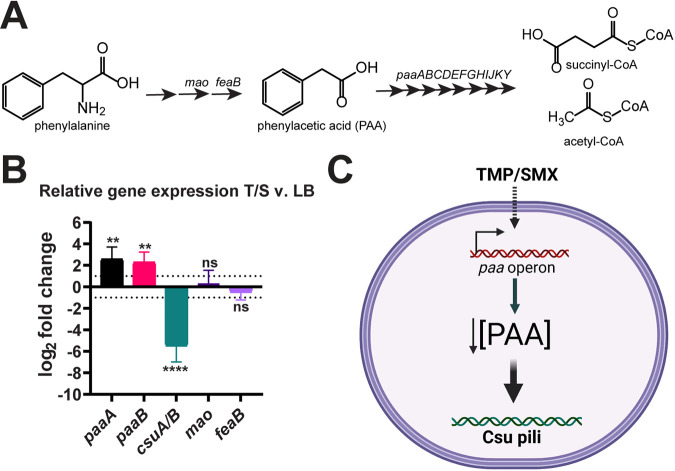
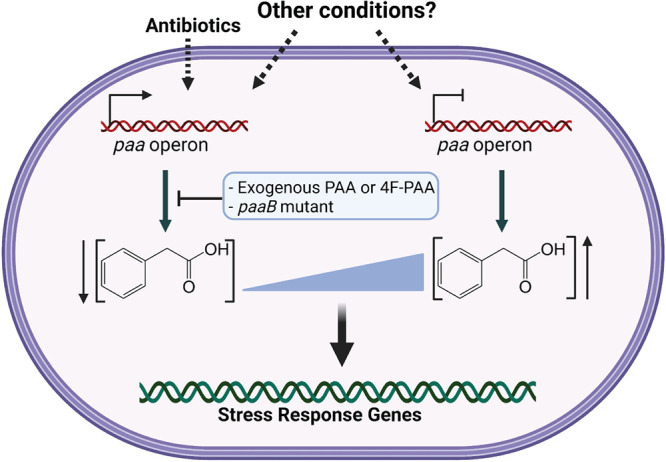
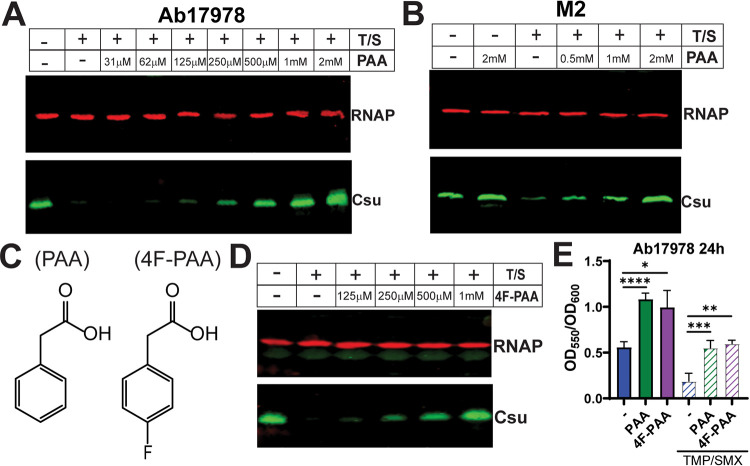
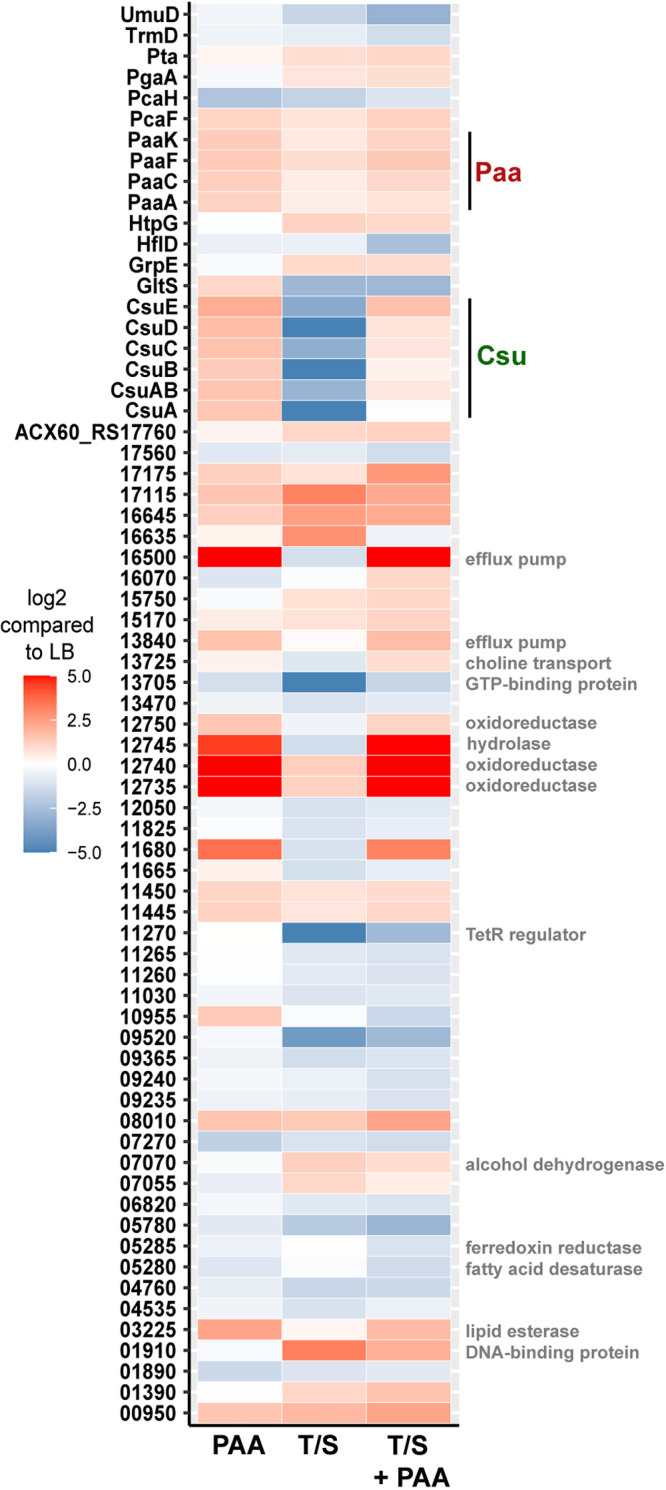
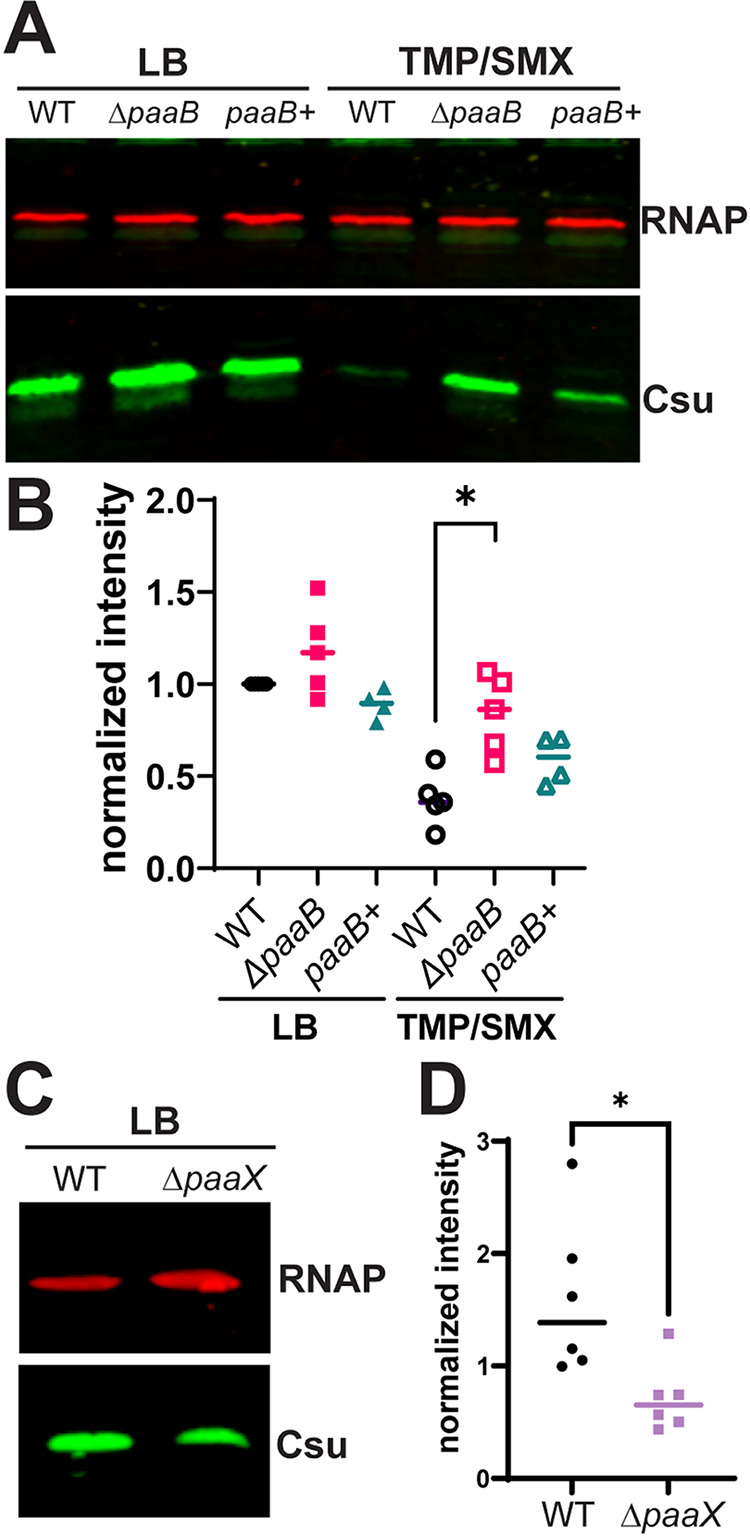
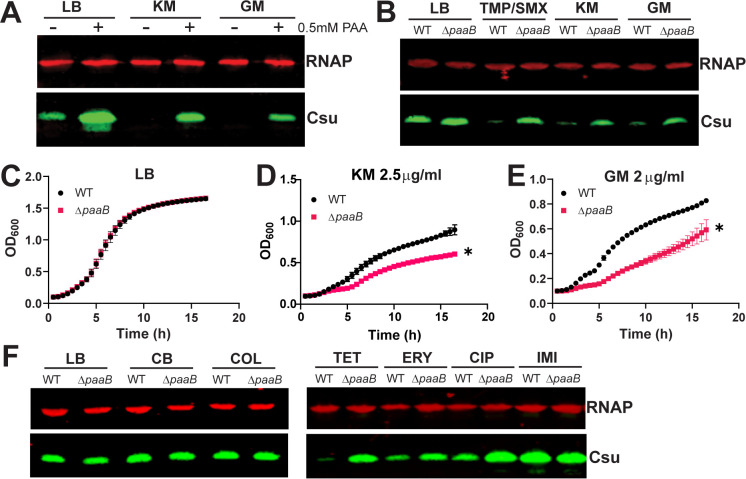
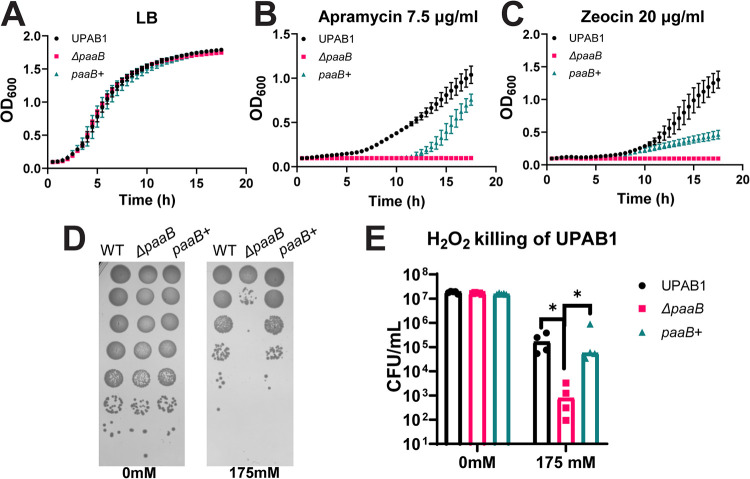
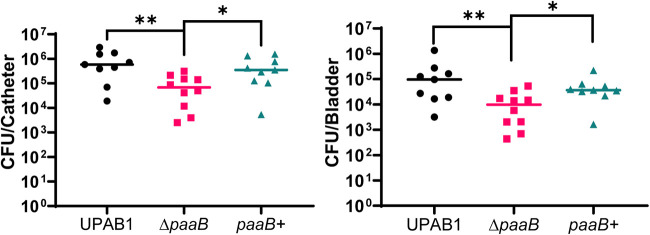
The opportunistic pathogen Acinetobacter baumannii is responsible for a wide range of infections that are becoming increasingly difficult to treat due to extremely high rates of multidrug resistance. Acinetobacter's pathogenic potential is thought to rely on a "persist and resist" strategy that facilitates its remarkable ability to survive under a variety of harsh conditions. The operon is involved in the catabolism of phenylacetic acid (PAA), an intermediate in phenylalanine degradation, and is the most differentially regulated pathway under many environmental conditions. We found that, under subinhibitory concentrations of antibiotics, A. baumannii upregulates expression of the operon while simultaneously repressing chaperone-usher Csu pilus expression and biofilm formation. These phenotypes are reverted either by exogenous addition of PAA and its nonmetabolizable derivative 4-fluoro-PAA or by a mutation that blocks PAA degradation. Interference with PAA degradation increases susceptibility to antibiotics and hydrogen peroxide treatment. Transcriptomic and proteomic analyses identified a subset of genes and proteins whose expression is affected by addition of PAA or disruption of the pathway. Finally, we demonstrated that blocking PAA catabolism results in attenuated virulence in a murine catheter-associated urinary tract infection (CAUTI) model. We conclude that the operon is part of a regulatory network that responds to antibiotic and oxidative stress and is important for virulence. PAA has known regulatory functions in plants, and our experiments suggest that PAA is a cross-kingdom signaling molecule. Interference with this pathway may lead, in the future, to novel therapeutic strategies against A. baumannii infections. Acinetobacter baumannii causes a wide range of infections that are difficult to treat due to increasing rates of multidrug resistance; however, the mechanisms that this pathogen uses to respond to stress are poorly understood. Here, we describe a new mechanism of stress signaling in Acinetobacter that is mediated by the metabolite phenylacetic acid (PAA). We found that disrupting PAA catabolism interfered with A. baumannii's ability to adapt to stress, leading to decreased antibiotic tolerance and hydrogen peroxide resistance. We propose that investigating this stress response could lead to the development of novel therapeutics. In fact, PAA derivatives constitute a group of FDA-approved nonsteroidal anti-inflammatory drugs that could potentially be repurposed as antivirulence therapies to target multidrug-resistant Acinetobacter infections.
机会性病原体鲍曼不动杆菌可引起多种感染,由于其具有极高的多重耐药性,这些感染越来越难以治疗。人们认为鲍曼不动杆菌的致病潜能依赖于一种“持续抵抗”策略,该策略使其在各种恶劣条件下生存的能力显著增强。 操纵子参与苯乙酸(PAA)的分解代谢,苯乙酸是苯丙氨酸降解的中间产物,是许多环境条件下差异调节程度最高的途径。我们发现,在亚抑菌浓度的抗生素下,鲍曼不动杆菌上调 操纵子的表达,同时抑制伴侣-usher Csu 菌毛的表达和生物膜的形成。这些表型可以通过添加 PAA 及其不可代谢的衍生物 4-氟-PAA 或通过阻断 PAA 降解的突变来逆转。干扰 PAA 降解会增加对抗生素和过氧化氢处理的敏感性。转录组和蛋白质组分析确定了一组受添加 PAA 或阻断 途径影响的基因和蛋白质的表达。最后,我们证明阻断 PAA 分解代谢会导致在小鼠导管相关性尿路感染(CAUTI)模型中的毒力减弱。我们得出结论, 操纵子是响应抗生素和氧化应激的调控网络的一部分,对毒力很重要。PAA 在植物中有已知的调控功能,我们的实验表明 PAA 是一种跨物种的信号分子。干扰该途径可能会导致针对鲍曼不动杆菌感染的新治疗策略的出现。
鲍曼不动杆菌可引起多种感染,由于其具有极高的多重耐药性,这些感染越来越难以治疗;然而,这种病原体用于应对压力的机制还知之甚少。在这里,我们描述了一种新的鲍曼不动杆菌应激信号机制,该机制由代谢物苯乙酸(PAA)介导。我们发现,破坏 PAA 分解代谢会干扰鲍曼不动杆菌适应压力的能力,导致抗生素耐受性和过氧化氢抗性降低。我们提出,研究这种应激反应可能会导致新的治疗方法的发展。事实上,PAA 衍生物构成了一组美国食品和药物管理局批准的非甾体抗炎药,它们可能被重新用于作为抗毒力疗法,以针对多药耐药鲍曼不动杆菌感染。