Ludwig Engel Centre for Respiratory Research, The Westmead Institute for Medical Research, Westmead, New South Wales, Australia.
Westmead Clinical School, Faculty of Medicine and Health, The University of Sydney, Westmead, New South Wales, Australia.
J Sleep Res. 2022 Oct;31(5):e13588. doi: 10.1111/jsr.13588. Epub 2022 Apr 25.
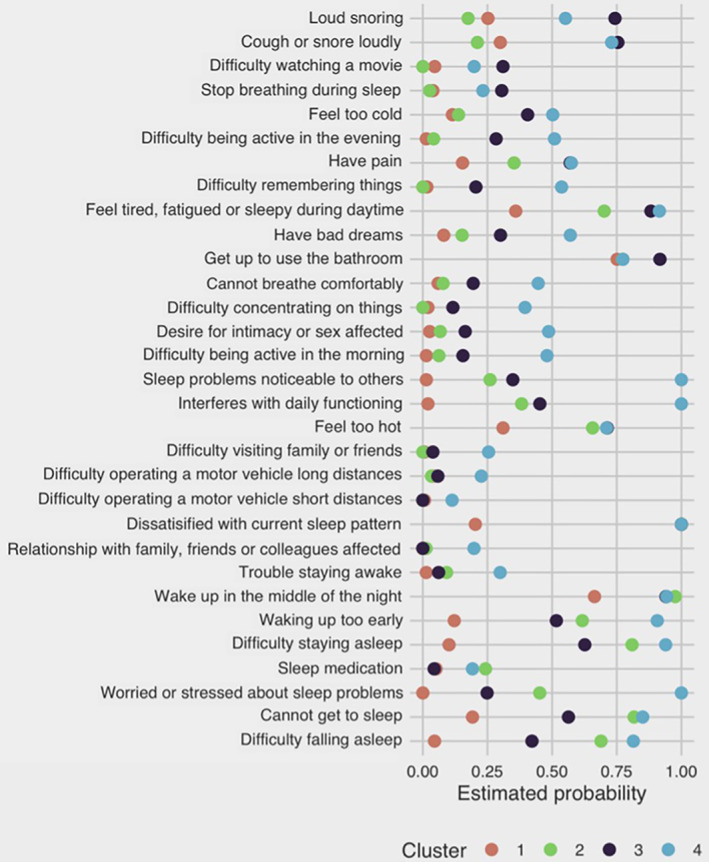
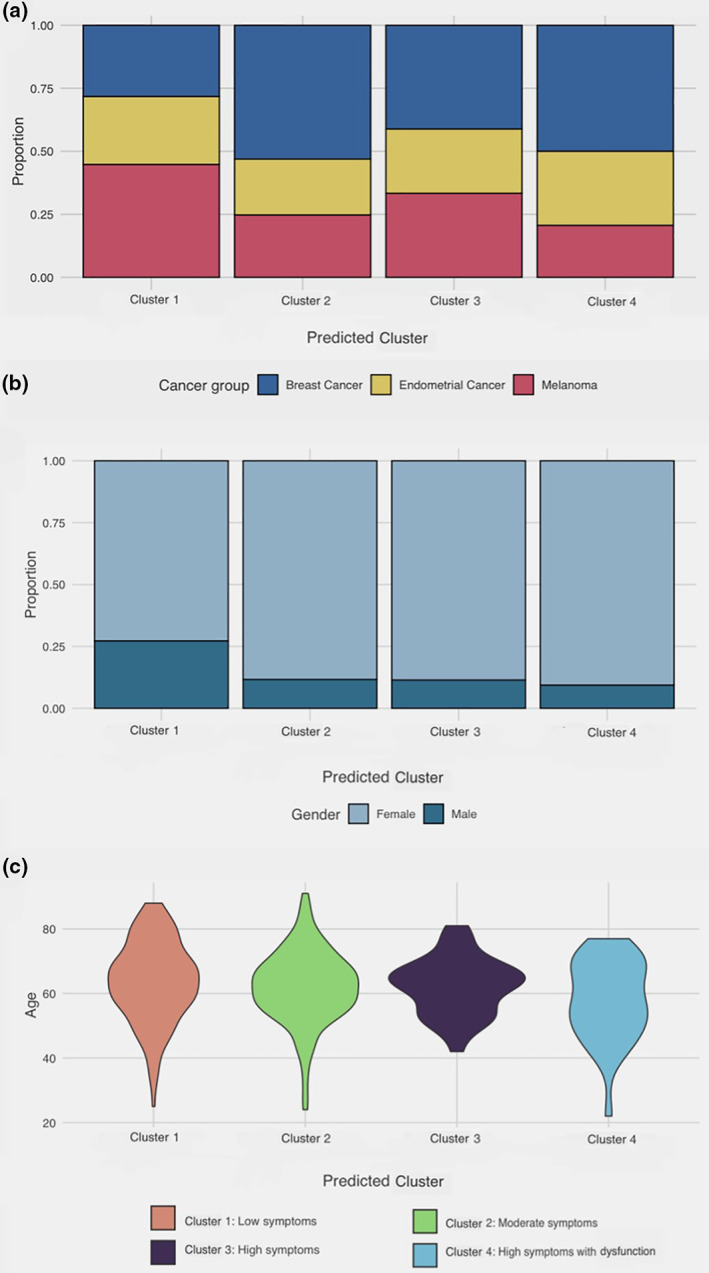
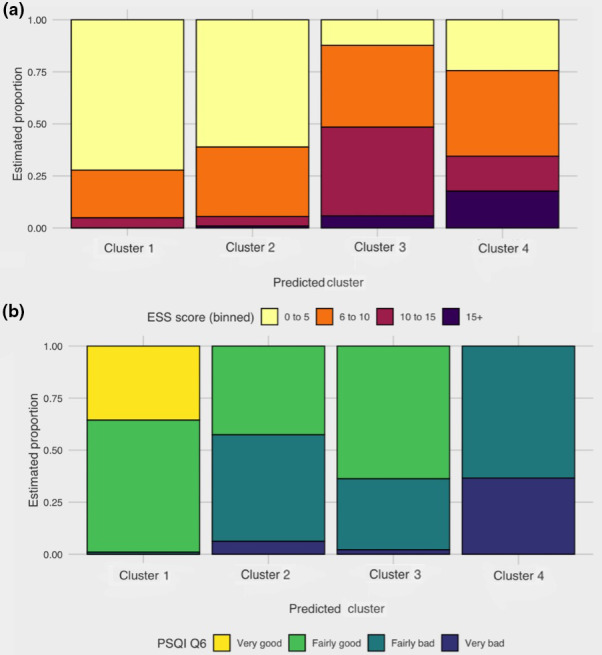
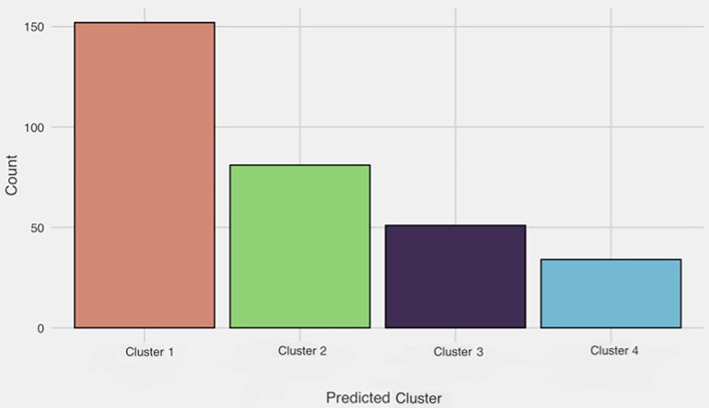
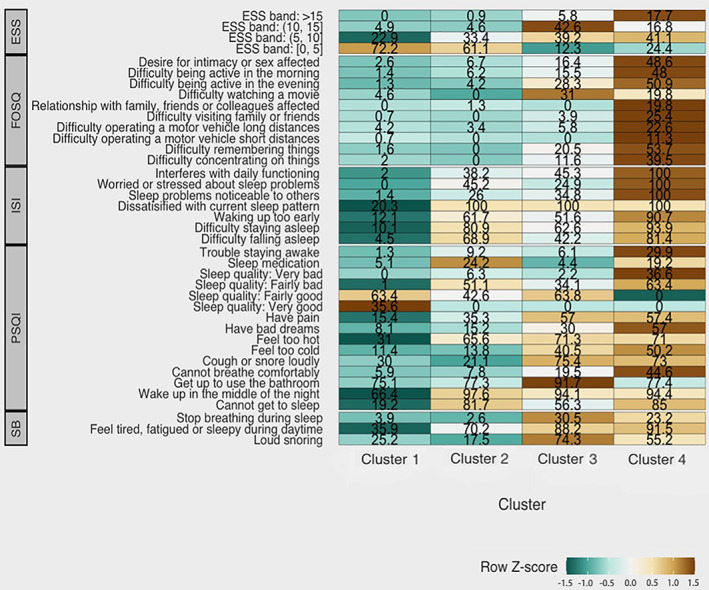
Specific sleep disorders have been linked to disease progression in different cancers. We hypothesised sleep symptom clusters would differ between cancer types. The aim of this study was to compare sleep symptom clusters in post-treatment melanoma, breast and endometrial cancer patients. Data were collected from 124 breast cancer patients (1 male, 60 ± 15 years, 28.1 ± 6.6 kg/m ), 82 endometrial cancer patients (64.0 ± 12.5 years, 33.5 ± 10.4 kg/m ) and 112 melanoma patients (59 male, 65.0 ± 18.0 years, 29.1 ± 6.6 kg/m ). All patients completed validated questionnaires to assess sleep symptoms, including the Epworth Sleepiness Scale (ESS), Pittsburgh Sleep Quality Index (PSQI), Insomnia Severity Index (ISI), and Functional Outcomes of Sleep Questionnaire-10 (FOSQ-10). Snoring, tiredness, observed apneas, age, BMI, and gender data were also collected. Binary values (PSQI, ISI, FOSQ), or continuous variables for sleepiness (ESS) and perceived sleep quality (PSQI), were created and sleep symptom clusters were identified and compared across cancer cohorts. Four distinct sleep symptom clusters were identified: minimally symptomatic (n = 152, 47.7%); insomnia-predominant (n = 87, 24.9%); very sleepy with upper airway symptoms (n = 51, 16.3%), and severely symptomatic with severe dysfunction (n = 34, 11.1%). Breast cancer patients were significantly more likely to be in the insomnia predominant or severely symptomatic with severe dysfunction clusters, whereas melanoma patients were more likely to be minimally symptomatic or sleepy with upper airway symptoms (p <0.0001). Endometrial cancer patients were equally distributed across symptom clusters. Sleep symptom clusters vary across cancer patients. A more personalised approach to the management of sleep-related symptoms in these patients may improve the long term quality of life and survival.
特定的睡眠障碍与不同癌症的疾病进展有关。我们假设睡眠症状群在癌症类型之间会有所不同。本研究旨在比较治疗后黑色素瘤、乳腺癌和子宫内膜癌患者的睡眠症状群。数据来自 124 名乳腺癌患者(1 名男性,60±15 岁,28.1±6.6kg/m2)、82 名子宫内膜癌患者(64.0±12.5 岁,33.5±10.4kg/m2)和 112 名黑色素瘤患者(59 名男性,65.0±18.0 岁,29.1±6.6kg/m2)。所有患者均完成了评估睡眠症状的有效问卷,包括埃普沃思嗜睡量表(ESS)、匹兹堡睡眠质量指数(PSQI)、失眠严重程度指数(ISI)和睡眠功能结局问卷-10(FOSQ-10)。还收集了打鼾、疲倦、观察到的呼吸暂停、年龄、BMI 和性别数据。创建了睡眠症状的二进制值(PSQI、ISI、FOSQ)或嗜睡的连续变量(ESS)和感知睡眠质量(PSQI),并确定了睡眠症状群,并在癌症队列之间进行了比较。确定了四个不同的睡眠症状群:症状轻微(n=152,47.7%);以失眠为主(n=87,24.9%);伴有上呼吸道症状的非常困倦(n=51,16.3%),严重症状伴严重功能障碍(n=34,11.1%)。乳腺癌患者更有可能处于失眠为主或严重症状伴严重功能障碍的群组,而黑色素瘤患者更有可能处于症状轻微或伴有上呼吸道症状的群组(p<0.0001)。子宫内膜癌患者在症状群中分布均匀。癌症患者的睡眠症状群不同。对这些患者的睡眠相关症状进行更个性化的管理可能会提高他们的长期生活质量和生存率。