From the Paul G. Allen School for Global Animal Health, Washington State University, Pullman, WA.
Department of Computer and Information Science, University of Pennsylvania, Philadelphia, PA.
Epidemiology. 2022 Jul 1;33(4):480-492. doi: 10.1097/EDE.0000000000001476. Epub 2022 Apr 27.
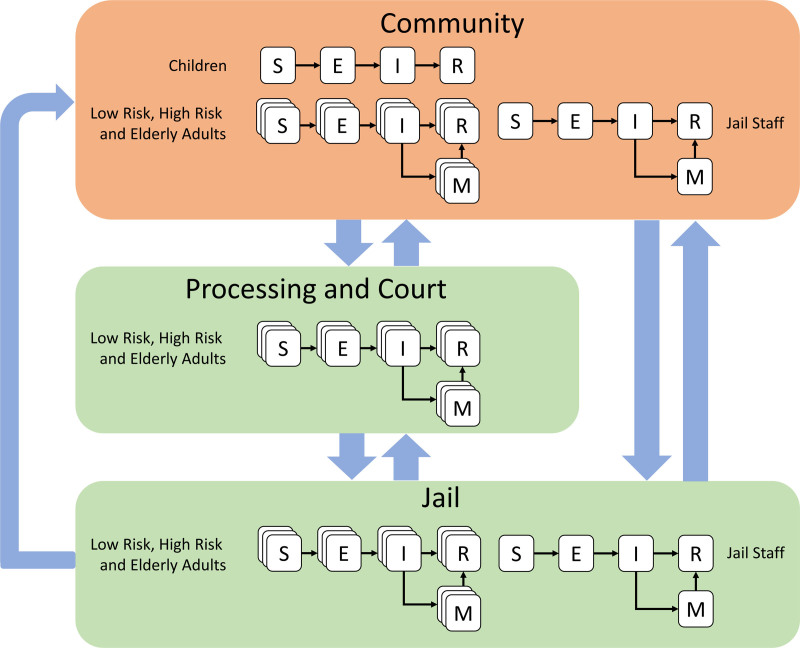
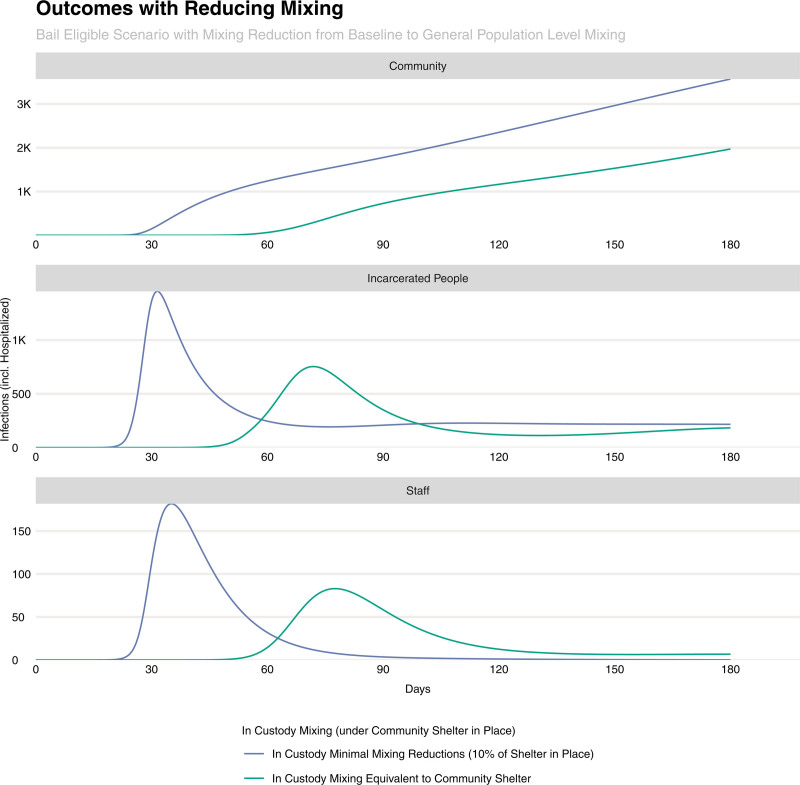
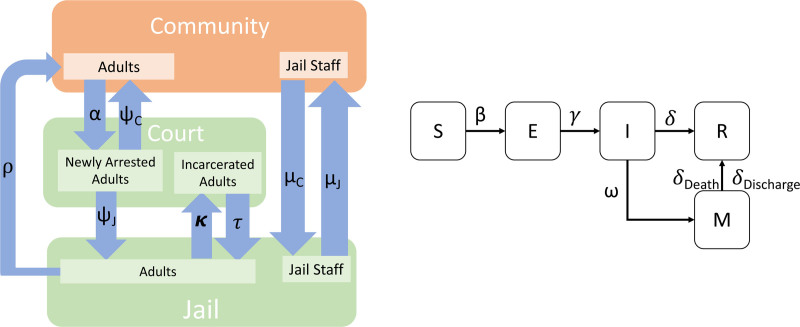
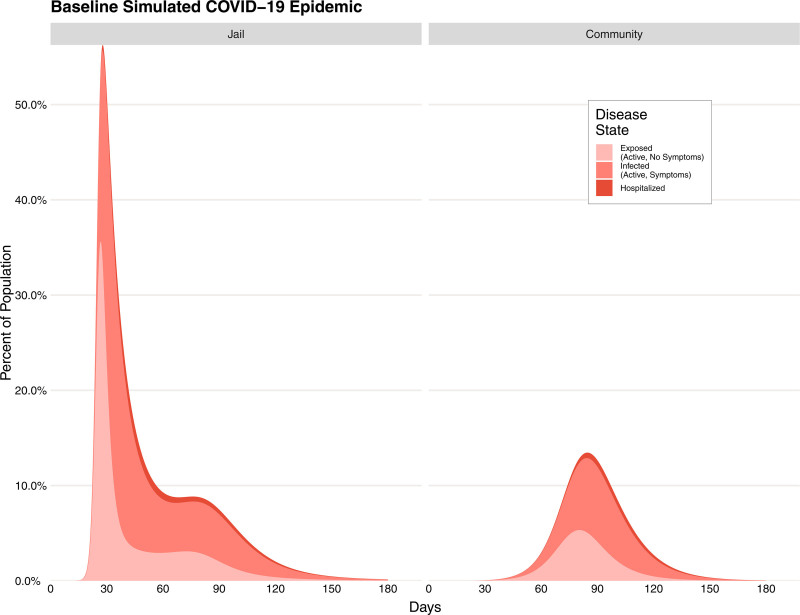
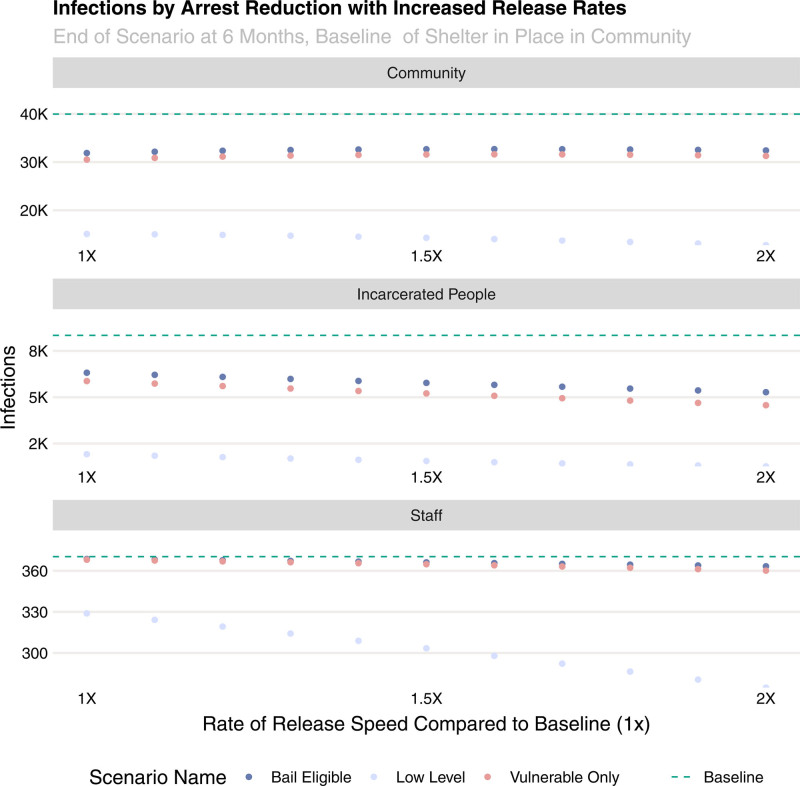
COVID-19 is challenging many societal institutions, including our criminal justice systems. Some have proposed or enacted (e.g., the State of New Jersey) reductions in the jail and/or prison populations. We present a mathematical model to explore the epidemiologic impact of such interventions in jails and contrast them with the consequences of maintaining unaltered practices. We consider infection risk and likely in-custody deaths, and estimate how within-jail dynamics lead to spill-over risks, not only affecting incarcerated people but increasing exposure, infection, and death rates for both corrections officers and the broader community beyond the justice system. We show that, given a typical jail-community dynamic, operating in a business-as-usual way results in substantial, rapid, and ongoing loss of life. Our results are consistent with the hypothesis that large-scale reductions in arrest and speeding of releases are likely to save the lives of incarcerated people, jail staff, and the wider community.
COVID-19 正在挑战许多社会机构,包括我们的刑事司法系统。一些人已经提出或实施了(例如,新泽西州)减少监狱和/或囚犯人数的措施。我们提出了一个数学模型来探讨这种干预措施对监狱的流行病学影响,并将其与维持不变的做法的后果进行对比。我们考虑感染风险和可能的羁押死亡,并估计监狱内的动态如何导致溢出风险,不仅影响被监禁的人,而且增加了惩教官员和司法系统以外的更广泛社区的暴露、感染和死亡率。我们表明,在典型的监狱-社区动态下,按照惯例运作会导致大量、快速和持续的生命损失。我们的结果与以下假设一致:大规模减少逮捕和加快释放速度可能会拯救被监禁者、监狱工作人员和更广泛的社区的生命。