Kirby Institute, UNSW Sydney, Sydney, NSW, Australia.
University of South Australia, Adelaide, SA, Australia.
Front Public Health. 2024 Mar 15;12:1279572. doi: 10.3389/fpubh.2024.1279572. eCollection 2024.
Correctional facilities are high-priority settings for coordinated public health responses to the COVID-19 pandemic. These facilities are at high risk of disease transmission due to close contacts between people in prison and with the wider community. People in prison are also vulnerable to severe disease given their high burden of co-morbidities.
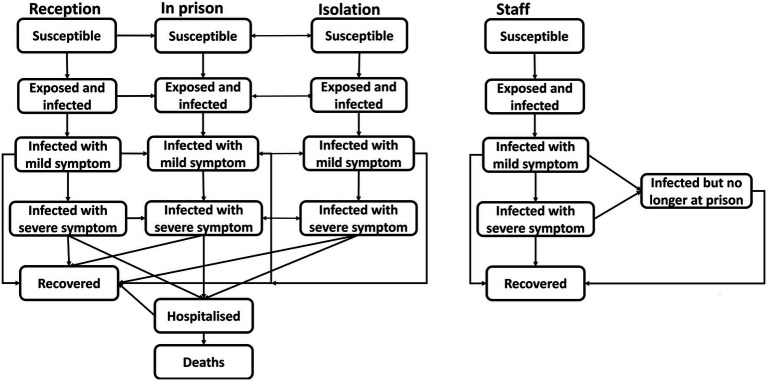
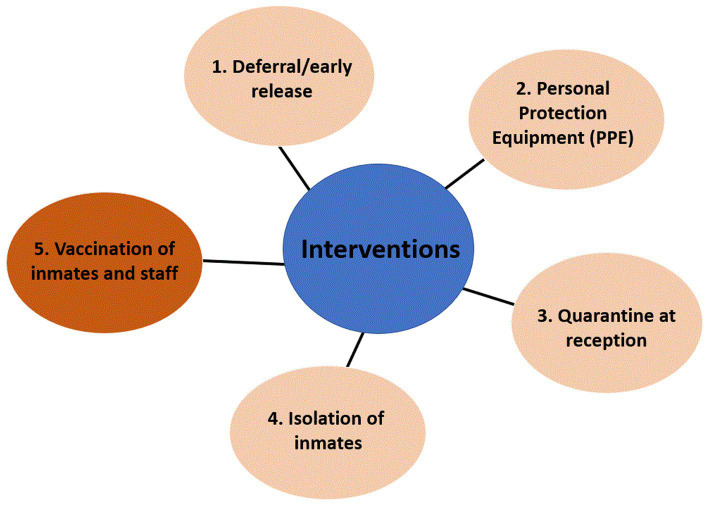
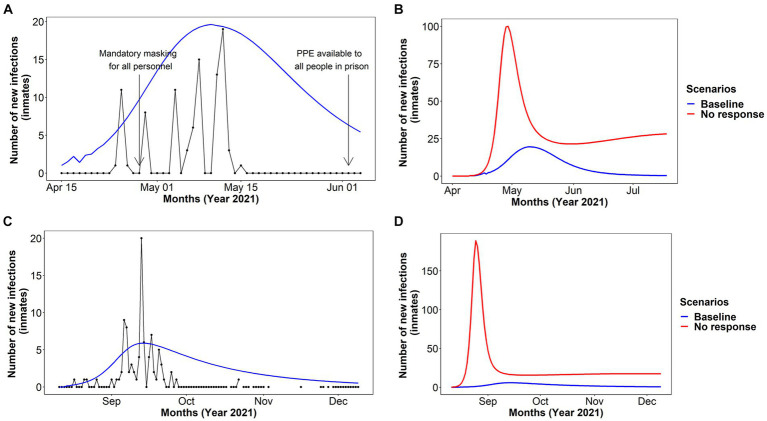
We developed a mathematical model to evaluate the effect of various public health interventions, including vaccination, on the mitigation of COVID-19 outbreaks, applying it to prisons in Australia and Canada.
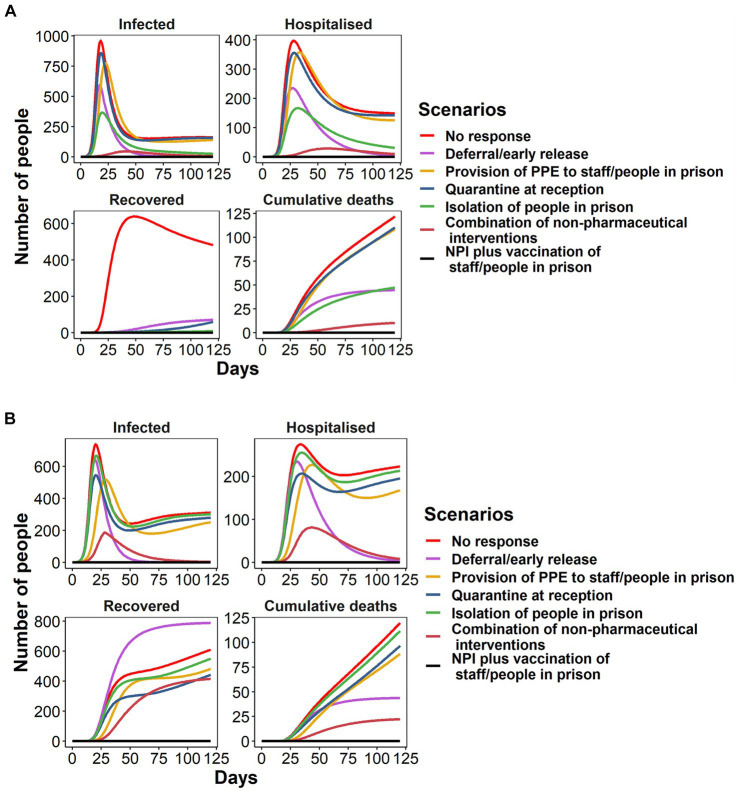
We found that, in the absence of any intervention, an outbreak would occur and infect almost 100% of people in prison within 20 days of the index case. However, the rapid rollout of vaccines with other non-pharmaceutical interventions would almost eliminate the risk of an outbreak.
Our study highlights that high vaccination coverage is required for variants with high transmission probability to completely mitigate the outbreak risk in prisons.
惩教设施是协调应对 COVID-19 大流行的公共卫生的高优先级场所。由于囚犯与更广泛的社区之间的密切接触,这些设施有很高的疾病传播风险。鉴于囚犯患有多种合并症的负担很重,他们也容易患上严重疾病。
我们开发了一个数学模型来评估各种公共卫生干预措施(包括疫苗接种)对减轻 COVID-19 疫情的影响,并将其应用于澳大利亚和加拿大的监狱。
我们发现,如果不采取任何干预措施,在首例病例出现后的 20 天内,疫情将爆发并感染监狱中几乎 100%的人。然而,快速推出疫苗和其他非药物干预措施几乎可以消除疫情爆发的风险。
我们的研究表明,对于具有高传播概率的变体,需要高疫苗接种率才能完全减轻监狱中疫情爆发的风险。