Center for Mind and Brain, University of California, 267 Cousteau Pl, Davis, CA, 95618, USA.
Department of Psychology, University of California, One Shields Ave, Davis, CA, 95616, USA.
Atten Percept Psychophys. 2022 Jul;84(5):1432-1445. doi: 10.3758/s13414-022-02478-3. Epub 2022 Apr 26.
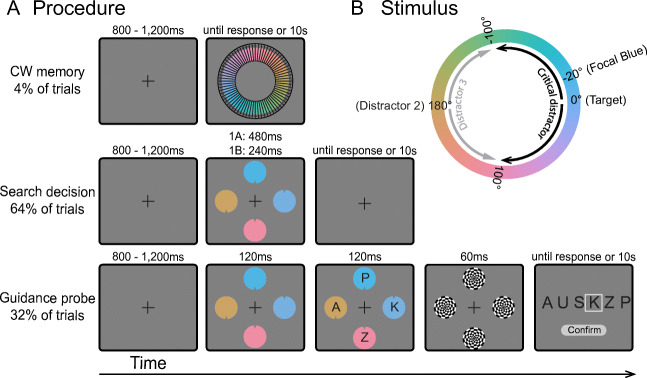
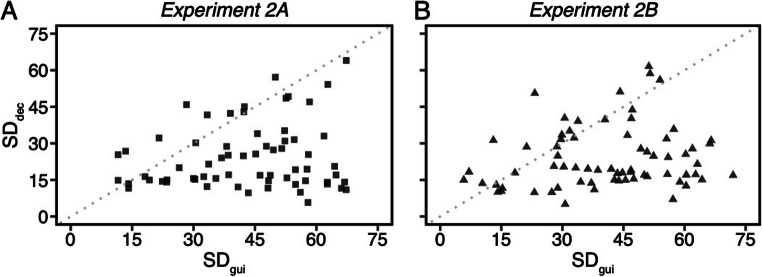
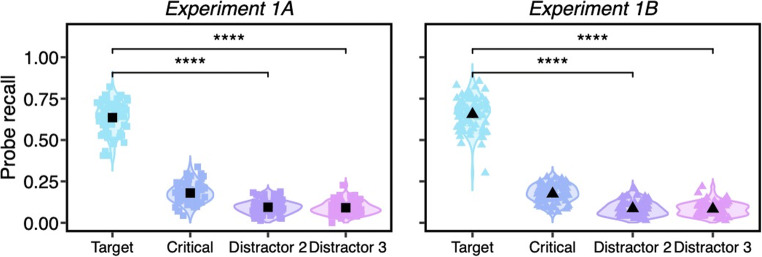
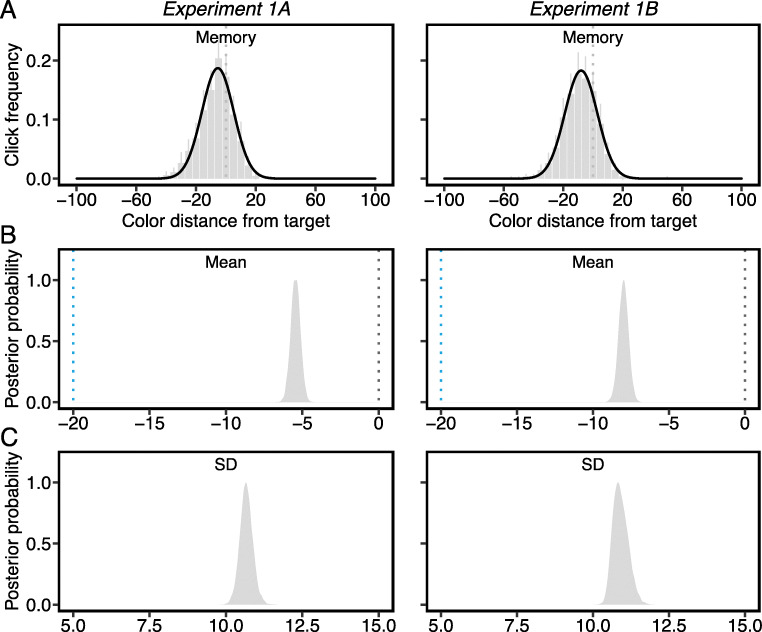
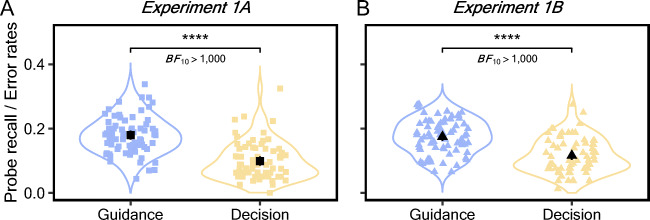
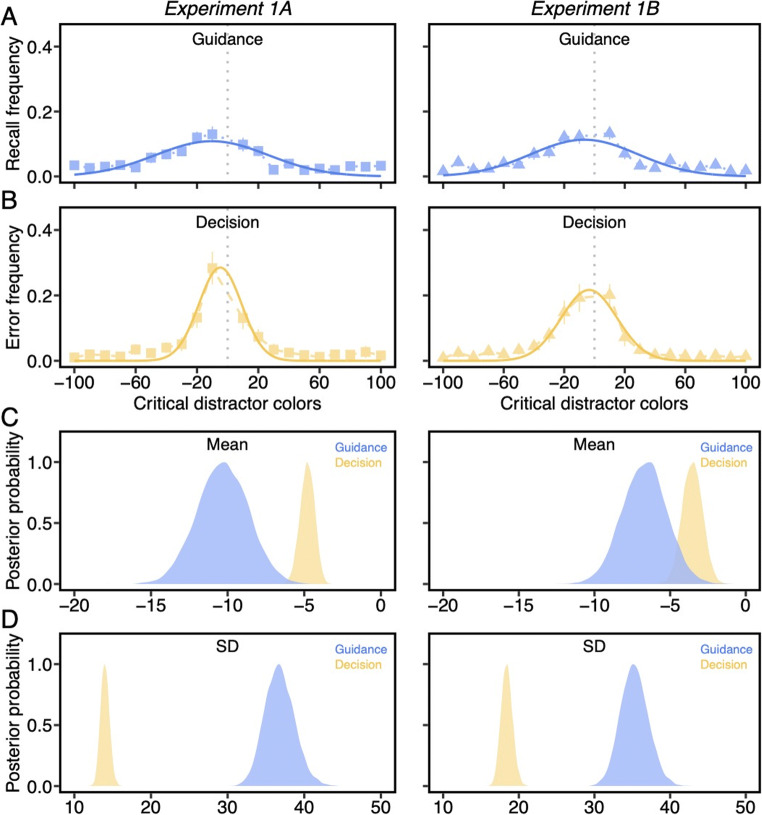
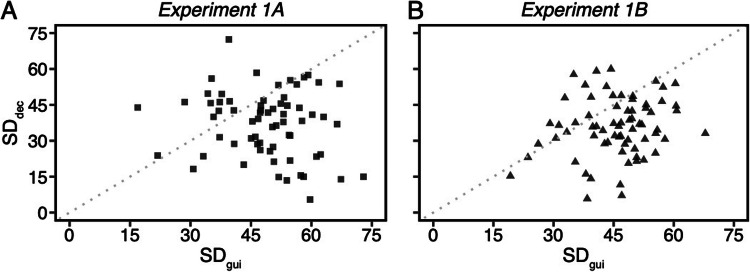
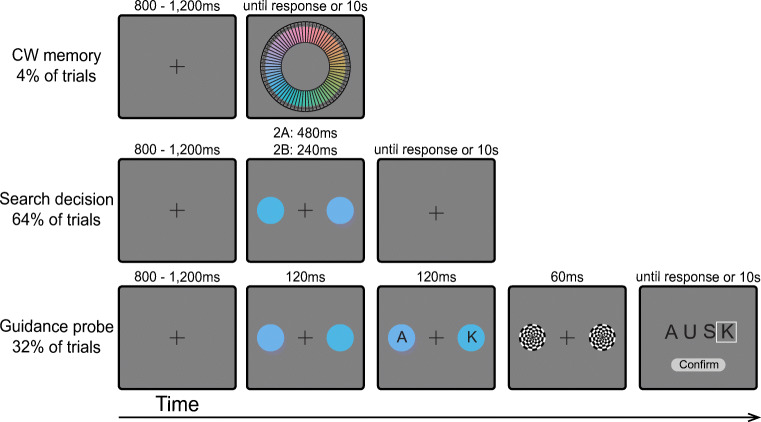
When searching for an object, we use a target template in memory that contains task-relevant information to guide visual attention to potential targets and to determine the identity of attended objects. These processes in visual search have typically been assumed to rely on a common source of template information. However, our recent work (Yu et al., 2022) argued that attentional guidance and target-match decisions rely on different information during search, with guidance using a "fuzzier" version of the template compared with target decisions. However, that work was based on the special case of search for a target amongst linearly separable distractors (e.g., search for an orange target amongst yellower distractors). Real-world search targets, however, are infrequently linearly separable from distractors, and it remains unclear whether the differences between the precision of template information used for guidance compared with target decisions also applies under more typical conditions. In four experiments, we tested this question by varying distractor similarity during visual search and measuring the likelihood of attentional guidance to distractors and target misidentifications. We found that early attentional guidance is indeed less precise than that of subsequent match decisions under varying exposure durations and distractor set sizes. These results suggest that attentional guidance operates on a coarser code than decisions, perhaps because guidance is constrained by lower acuity in peripheral vision or the need to rapidly explore a wide region of space while decisions about selected objects are more precise to optimize decision accuracy.
当我们在搜索一个物体时,我们会在记忆中使用一个目标模板,其中包含与任务相关的信息,以引导视觉注意力到潜在的目标,并确定被注意到的物体的身份。这些在视觉搜索中的过程通常被认为依赖于模板信息的共同来源。然而,我们最近的工作(Yu 等人,2022 年)认为,在搜索过程中,注意力引导和目标匹配决策依赖于不同的信息,与目标决策相比,引导使用的是模板信息的“更模糊”版本。然而,这项工作是基于在可线性分离的干扰物中搜索目标的特殊情况(例如,在更黄的干扰物中搜索橙色目标)。然而,现实世界中的搜索目标很少与干扰物可线性分离,目前尚不清楚在更典型的条件下,用于引导的模板信息的精度差异是否也适用于目标决策。在四项实验中,我们通过在视觉搜索过程中改变干扰物的相似性,并测量注意力对干扰物的引导和目标错误识别的可能性,来检验这个问题。我们发现,在不同的暴露持续时间和干扰物集合大小下,早期的注意力引导确实不如后续的匹配决策精确。这些结果表明,注意力引导的操作代码比决策的操作代码更粗糙,这可能是因为引导受到周边视觉低分辨率或快速探索广泛空间区域的需要的限制,而对选定物体的决策则更精确,以优化决策准确性。