Department of Medical Laboratory Science, College of Medicine and Health Sciences, Bahir Dar University, Bahir Dar, Ethiopia.
Mundo Sano Foundation and Institute of Health Carlos III, Madrid, Spain.
PLoS Negl Trop Dis. 2022 Apr 28;16(4):e0010299. doi: 10.1371/journal.pntd.0010299. eCollection 2022 Apr.
Strongyloides stercoralis is a parasite that causes strongyloidiasis in humans. It is prevalent in the tropics and sub-tropics where poor sanitation is a common problem. The true prevalence of S. stercoralis in Ethiopia is underestimated due to the lack of a "Gold" standard diagnostic method. Moreover, its prevalence across altitudinal gradient in Amhara Region has not been studied.
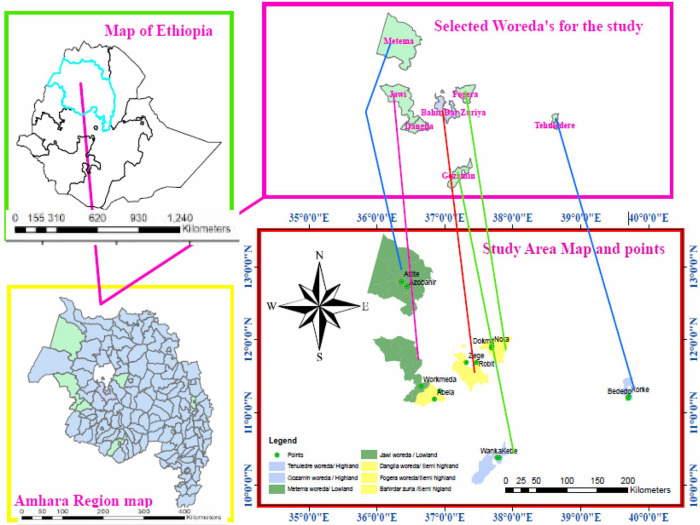
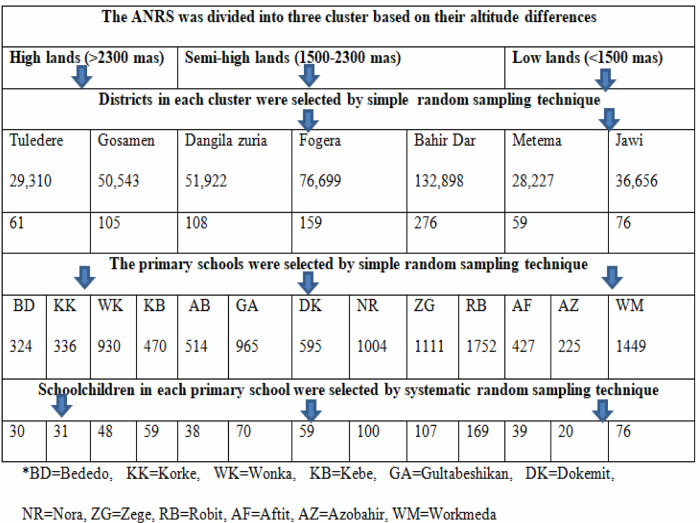
A cross-sectional study was conducted among 844 schoolchildren in Amhara Region from April to December 2019. A stool sample was collected from each study participant and processed using formol ether concentration technique (FECT), spontaneous tube sedimentation technique (STST), Baermann concentration technique (BCT), agar plate culture (APC) and real-time polymerase chain reaction (RT-PCR). Data were entered using EpiData and analyzed by SPSS version 23 statistical software. Prevalence of S. stercoralis infection was determined using a single diagnostic technique and combination of techniques. Association of clinical variables with S. stercoralis infection was assessed by logistic regression and independent variables with p<0.05 were considered statistically significant.
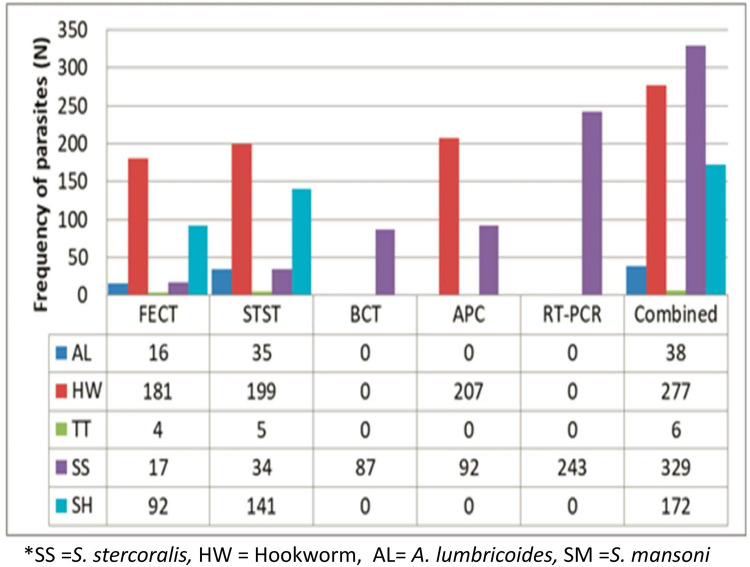
Prevalence of soil-transmitted helminths (STHs) and S. mansoni infections was 38.0% and 20.4%, respectively. Among STHs, the prevalence of hookworm infection was 32.8%. Prevalence of S. stercoralis infection was 39.0%, 28.8%, 10.9%, 10.3%, 4.0% and 2.0% by the respective, combinations of the five methods, RT-PCR, APC, BCT, STST and FECT. The highest prevalence rates, 48.2%, 45.0% and 41.1% of S. stercoralis were recorded in the age group of 12-14 years, males and rural dwellers, respectively. Prevalence rates of S. stercoralis infection in highland, semi-highland and lowland areas were 40.4%, 41.8% and 25.9%, respectively. Having abdominal pain (AOR = 2.48; 95% CI:1.65-3.72), cough (AOR = 1.63;95%CI:1.09-2.42), urticaria (AOR = 2.49;95%CI:1.50-4.01) and being malnourished (AOR = 1.44;95%:1.10-2.01) were significantly associated with strongyloidiasis.
Prevalence of S. stercoralis infection was high and varied across different altitudes in Amhara Region. Some clinical syndromes were found to be significantly associated with S. stercoralis infection. Therefore, proper diagnosis and preventive strategies against S. stercoralis infection are highly recommended to be devised and implemented in Amhara Region.
粪类圆线虫是一种导致人体粪类圆线虫病的寄生虫。它在热带和亚热带地区很常见,那里卫生条件差是一个普遍存在的问题。由于缺乏“黄金”标准诊断方法,埃塞俄比亚粪类圆线虫的真实流行率被低估了。此外,在阿姆哈拉地区,其在不同海拔梯度上的流行情况尚未得到研究。
2019 年 4 月至 12 月,在阿姆哈拉地区对 844 名学童进行了横断面研究。从每个研究参与者中采集粪便样本,并使用甲醛乙醚浓缩技术(FECT)、自然管沉淀技术(STST)、贝曼氏浓缩技术(BCT)、琼脂平板培养(APC)和实时聚合酶链反应(RT-PCR)进行处理。数据使用 EpiData 输入,并使用 SPSS 版本 23 统计软件进行分析。使用单一诊断技术和联合技术确定粪类圆线虫感染的流行率。通过逻辑回归评估临床变量与粪类圆线虫感染的相关性,具有 p<0.05 的独立变量被认为具有统计学意义。
土壤传播性蠕虫(STH)和曼氏血吸虫感染的流行率分别为 38.0%和 20.4%。在 STH 中,钩虫感染的流行率为 32.8%。粪类圆线虫感染的流行率分别为 39.0%、28.8%、10.9%、10.3%、4.0%和 2.0%,分别为五种方法的组合、RT-PCR、APC、BCT、STST 和 FECT。粪类圆线虫感染的最高流行率为 48.2%、45.0%和 41.1%,分别出现在 12-14 岁、男性和农村居民中。在高海拔、中海拔和低海拔地区,粪类圆线虫感染的流行率分别为 40.4%、41.8%和 25.9%。腹痛(AOR = 2.48;95%CI:1.65-3.72)、咳嗽(AOR = 1.63;95%CI:1.09-2.42)、荨麻疹(AOR = 2.49;95%CI:1.50-4.01)和营养不良(AOR = 1.44;95%:1.10-2.01)与粪类圆线虫病显著相关。
粪类圆线虫感染的流行率很高,在阿姆哈拉地区不同海拔高度存在差异。一些临床综合征与粪类圆线虫感染显著相关。因此,强烈建议在阿姆哈拉地区制定和实施针对粪类圆线虫感染的适当诊断和预防策略。