Juntendo University Graduate School of Health and Sports Science, 1-1, Hiragagakuendai, Inzai, Chiba, 270-15, Japan.
Sci Rep. 2022 Apr 28;12(1):6984. doi: 10.1038/s41598-022-10791-y.
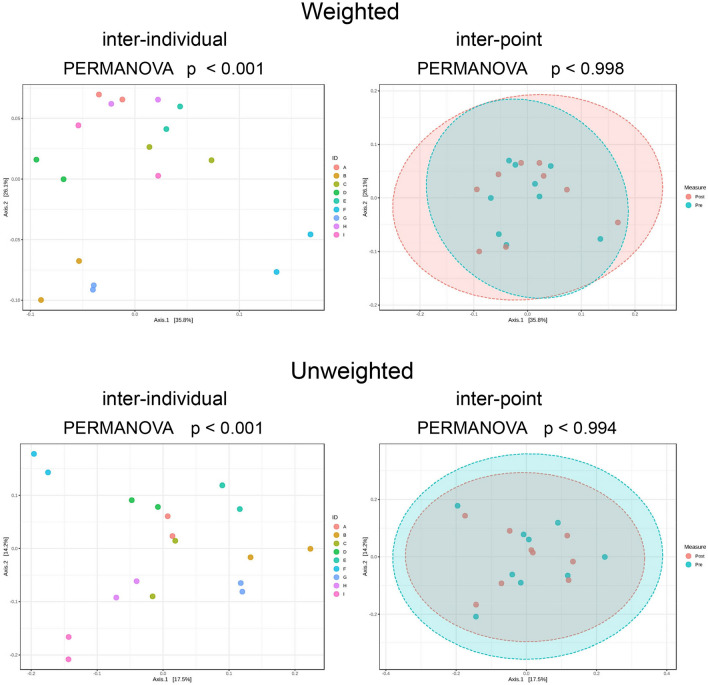
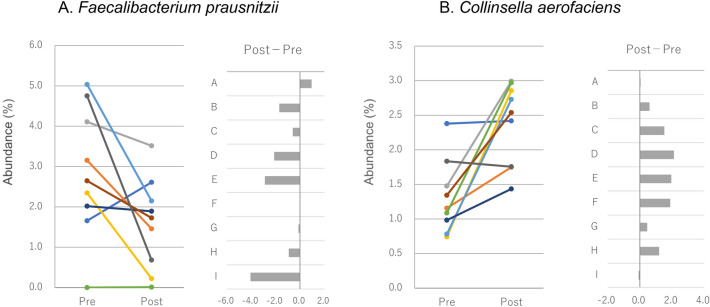
To date, only one study has reported changes in the gut microbiome of an ultramarathon runner before and after competing in the race. Herein we aimed to investigate changes in intestinal microbiota in nine ultramarathon runners. Eight of the nine participants ran 96.102 km (up 8062 m, down 6983 km) and one ran 99.12 km (up 8448 m, down 7369 m) within 38-44 h. Intestinal microbiota alterations were examined at three timepoints: before (Pre), after (Post), and 10 days after (Recovery) the race. The α- and β-diversity of intestinal microbiota were unaffected by the race. Six of the nine participants showed the B-type enterotype, while the remaining three showed the P-type enterotype; however, significant difference between enterotypes was not observed in the influence of the ultramarathon on intestinal microbiota. The abundance of mean Faecalibacterium prausnitzii, was significantly decreased from 2.9% (Pre) to 1.6% (Post), as well as other three butyrate producing bacteria. One participant with the largest decrease in F. prausnitzii abundance (- 85.7%) reported sluggishness and shallow sleep from Post to Recovery. Our findings revealed that the abundance of butyrate-producing bacteria is decreased in ultramarathon runners, which consequently decreases butyrate levels in the intestine and affects host immune function.
迄今为止,仅有一项研究报告了在参加比赛前后,超长马拉松运动员肠道微生物组的变化。在此,我们旨在研究 9 名超长马拉松运动员肠道微生物组的变化。9 名参与者中有 8 人跑了 96.102 公里(上升 8062 米,下降 6983 米),1 人跑了 99.12 公里(上升 8448 米,下降 7369 米),时间在 38-44 小时内。在三个时间点(比赛前(Pre)、比赛后(Post)和比赛后 10 天(Recovery))检查肠道微生物组的变化。肠道微生物组的α多样性和β多样性不受比赛的影响。9 名参与者中有 6 人表现出 B 型肠型,而其余 3 人表现出 P 型肠型;然而,在超长马拉松对肠道微生物组的影响方面,肠型之间没有观察到显著差异。平均粪肠球菌的丰度从 2.9%(Pre)显著下降到 1.6%(Post),以及其他三种产生丁酸的细菌。一名参与者的粪肠球菌丰度下降幅度最大(-85.7%),从 Post 到 Recovery 期间报告了行动迟缓、睡眠浅。我们的研究结果表明,在超长马拉松运动员中,产生丁酸的细菌丰度下降,导致肠道中丁酸水平降低,从而影响宿主免疫功能。