Servicio de Hematología y Oncología Médica, Hospital Universitario Morales Meseguer, Centro Regional de Hemodonación, Universidad de Murcia, IMIB, Centro de Investigación Biomédica en Red de Enfermedades Raras (CIBERER), Murcia, Spain.
Aix-Marseille Univ, INSERM, INRAE, C2VN, Laboratory of Haematology, CRB Assistance Publique - Hôpitaux de Marseille, HemoVasc (CRB AP-HM HemoVasc), Marseille, France.
Blood. 2022 Jul 14;140(2):140-151. doi: 10.1182/blood.2021014708.
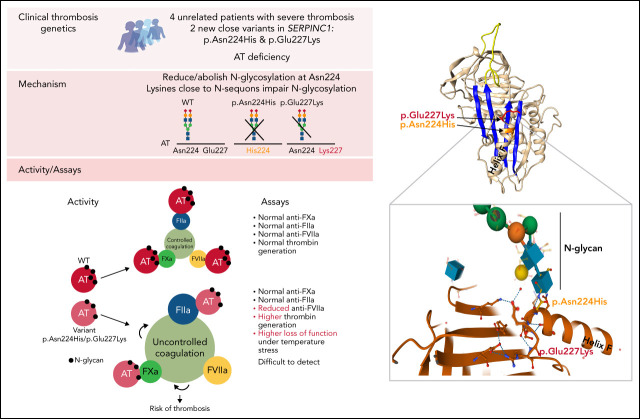
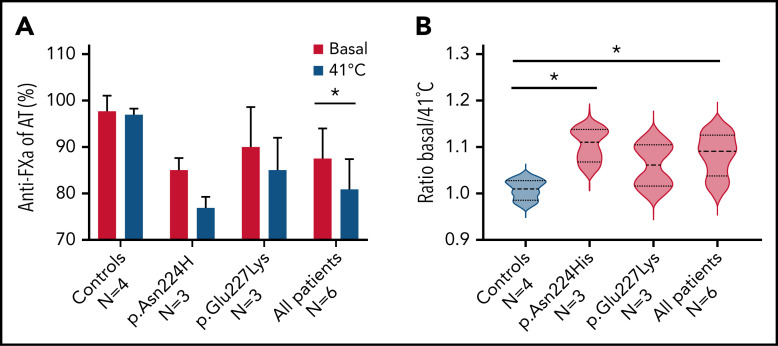
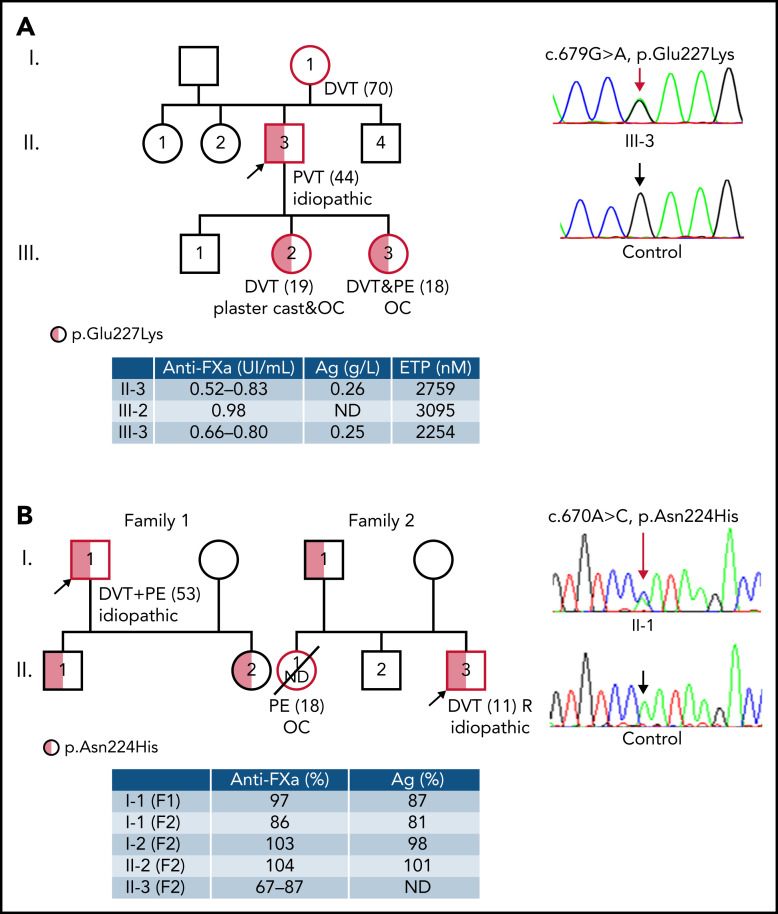
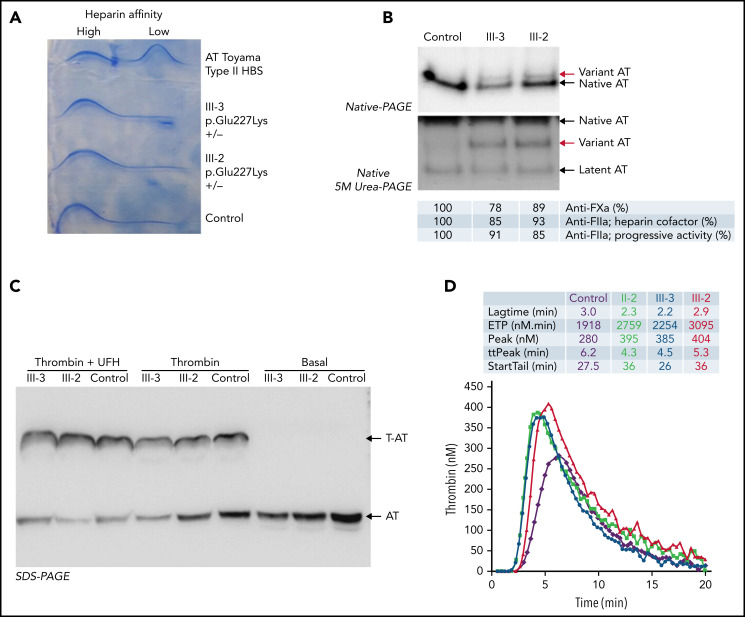
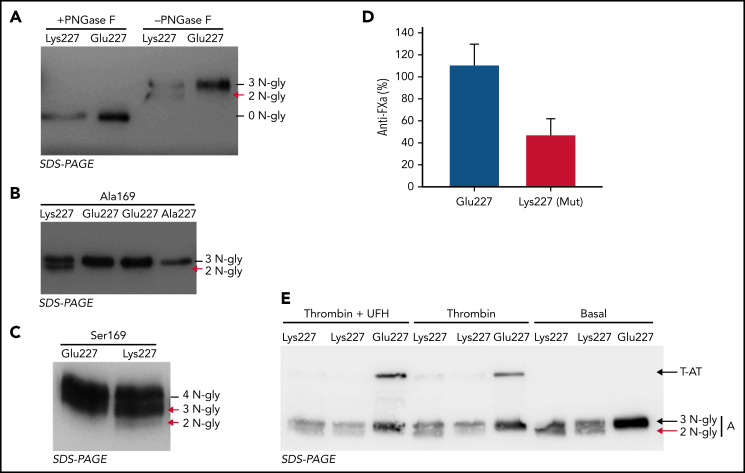
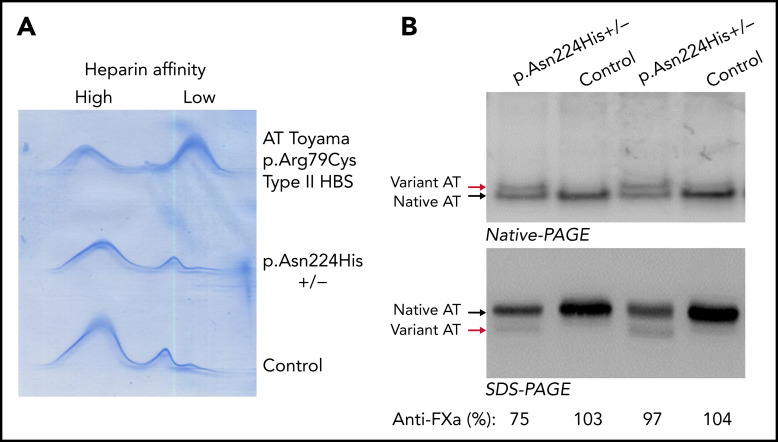
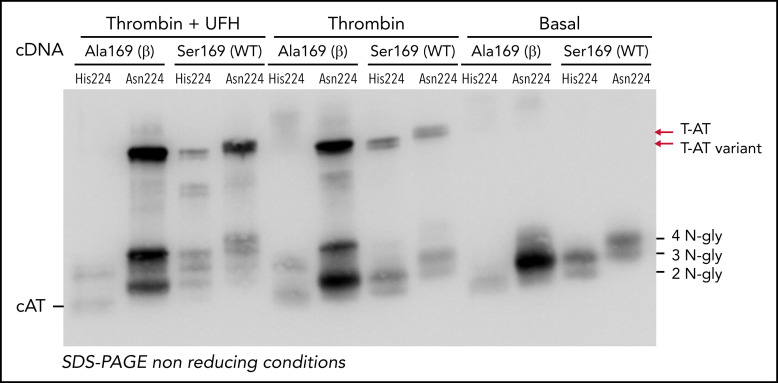
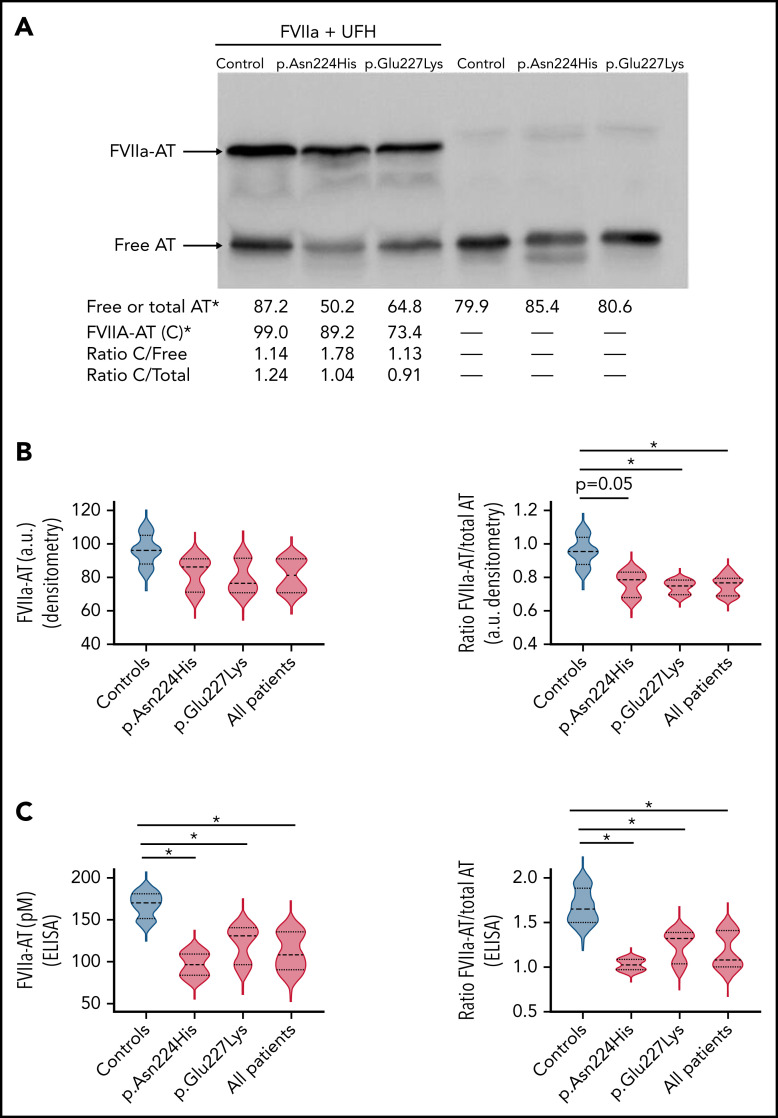
Antithrombin deficiency, the most severe congenital thrombophilia, might be underestimated, as some pathogenic variants are not detected by routine functional methods. We have identified 2 new SERPINC1 variants, p.Glu227Lys and p.Asn224His, in 4 unrelated thrombophilic patients with early and recurrent thrombosis that had normal antithrombin activity. In one case, the mutation was identified by whole genome sequencing, while in the 3 remaining cases, the mutation was identified by sequencing SERPINC1 based on a single functional positive finding supporting deficiency. The 2 variants shared a common functional defect, an impaired or null N-glycosylation of Asn224 according to a eukaryotic expression model. Carriers had normal anti-FXa or anti-FIIa activities but impaired anti-FVIIa activity and a detectable loss of inhibitory function when incubating the plasma for 1 hour at 41°C. Moreover, the β glycoform of the variants, lacking 2 N-glycans, had reduced secretion, increased heparin affinity, no inhibitory activity, and a potential dominant-negative effect. These results explain the increased thrombin generation observed in carriers. Mutation experiments reflected the role that Lysine residues close to the N-glycosylation sequon have in impairing the efficacy of N-glycosylation. Our study shows new elements involved in the regulation of N-glycosylation, a key posttranslational modification that, according to our results, affects folding, secretion, and function, providing new evidence of the pathogenic consequence of an incorrect N-glycosylation of antithrombin. This study supports that antithrombin deficiency is underestimated and encourages the development of new functional and genetic tests to diagnose this severe thrombophilia.
抗凝血酶缺陷是最严重的先天性血栓形成倾向,可能被低估了,因为一些致病变异无法通过常规功能方法检测到。我们在 4 名无亲缘关系的早发性和复发性血栓形成的血栓形成患者中发现了 2 种新的 SERPINC1 变异,p.Glu227Lys 和 p.Asn224His,这些患者的抗凝血酶活性正常。在一种情况下,通过全基因组测序发现了突变,而在其余 3 种情况下,根据支持缺陷的单个功能阳性发现,通过测序 SERPINC1 发现了突变。这 2 种变异具有共同的功能缺陷,根据真核表达模型,Asn224 的 N-糖基化受损或缺失。携带者具有正常的抗 FXa 或抗 FIIa 活性,但抗 FVIIa 活性受损,当在 41°C 孵育血浆 1 小时时,可检测到抑制功能丧失。此外,变体的β糖型缺乏 2 个 N-聚糖,其分泌增加,肝素亲和力增加,无抑制活性,并且具有潜在的显性负效应。这些结果解释了携带者中观察到的凝血酶生成增加。突变实验反映了赖氨酸残基靠近 N-糖基化序列在削弱 N-糖基化功效方面的作用。我们的研究表明,新的调节 N-糖基化的元素,这是一种关键的翻译后修饰,根据我们的结果,影响折叠、分泌和功能,为抗凝血酶异常 N-糖基化的致病后果提供了新的证据。这项研究支持抗凝血酶缺陷被低估了,并鼓励开发新的功能和遗传测试来诊断这种严重的血栓形成倾向。