Division of Urology, Department of Surgery, The University of Hongkong-Shenzhen Hospital, Shenzhen, 518000, China.
Department of Pathology, Maternity and Child Care Centers in Fujian Province, Fuzhou, 350000, China.
Sci Rep. 2022 Apr 29;12(1):7003. doi: 10.1038/s41598-022-11137-4.
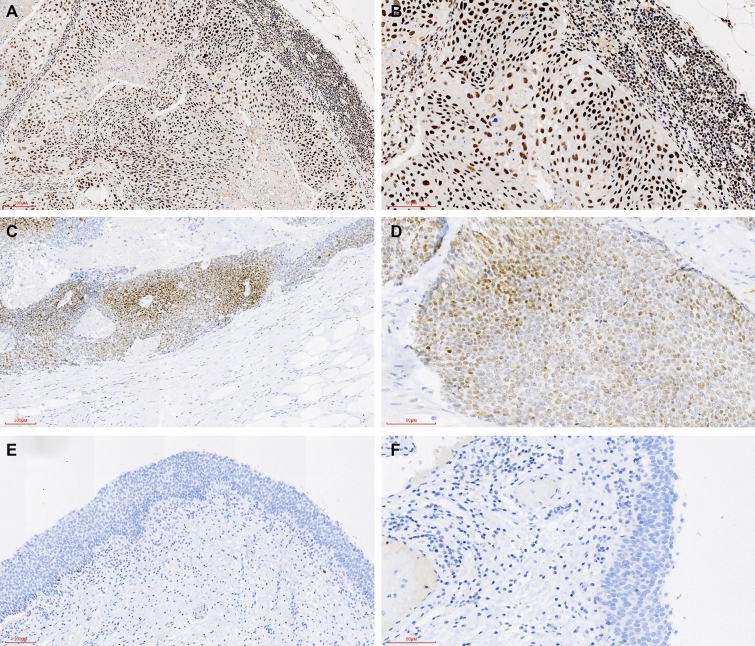
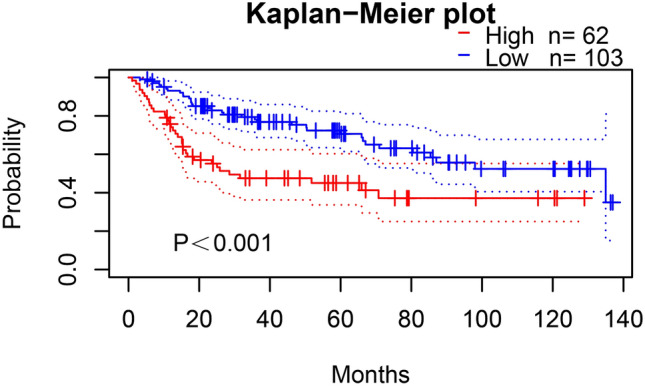
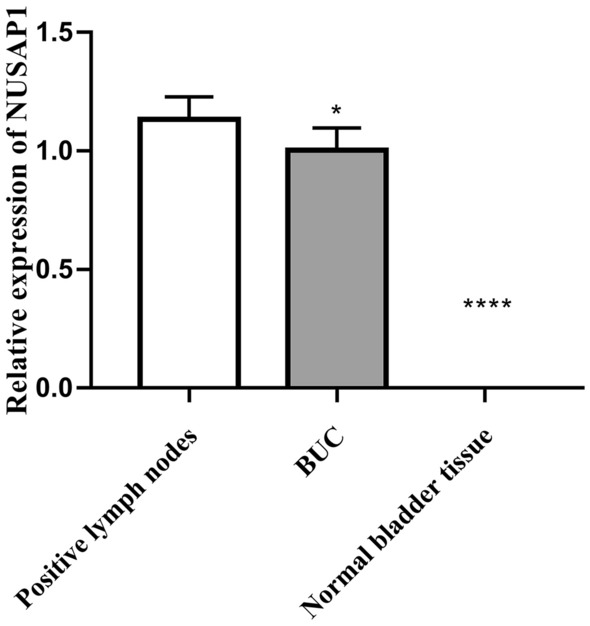
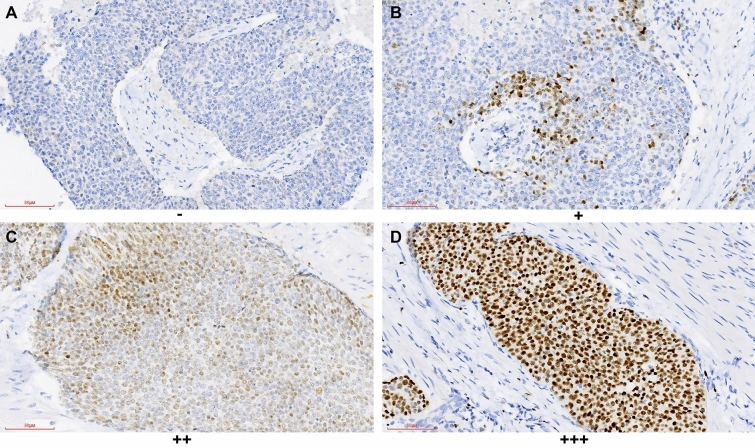
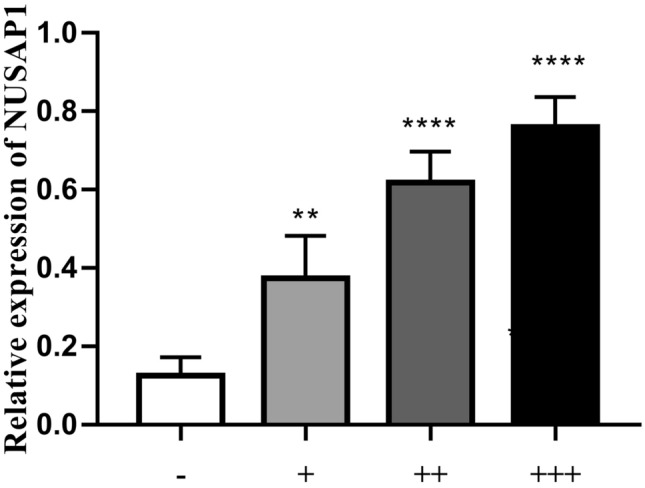
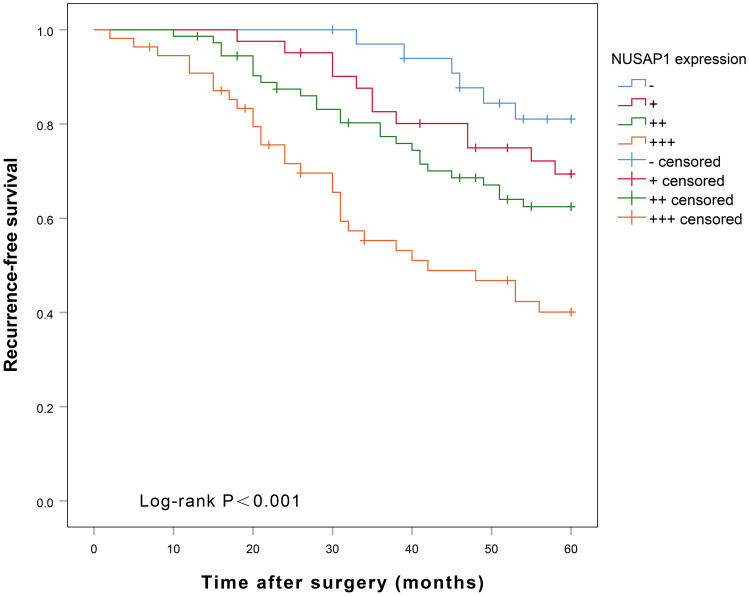
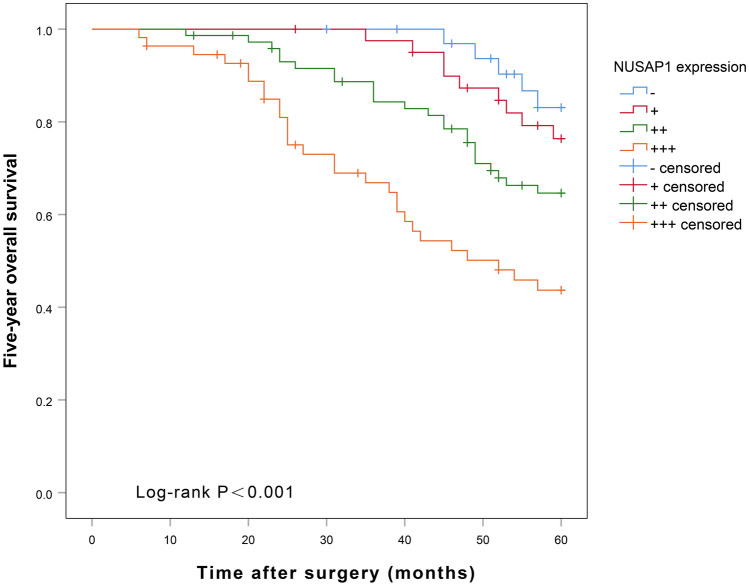
The main route of metastasis of bladder urothelial carcinoma is through lymph nodes; however, its exact mechanism remains unclear. In this study, we found an association of nucleolar and spindle associated protein 1 (NUSAP1) expression with BUC tissues along with lymph node metastasis and the survival prognosis. A total of 178 pathological specimens following radical bladder cancer resection were obtained. NUSAP1 expression was analyzed by immunohistochemistry. We evaluated the correlation between clinicopathological characteristics and NUSAP1 expression. Logistic regression was used to determine the independent variables that influenced lymph node metastasis. Uni- and multi-factorial Cox regression methods were used to determine the prognostic value of NUSAP1 expression in urothelial carcinoma of the bladder. High expression of NUSAP1 in BUC was not significantly related to the patient's gender, age, or tumor number (p > 0.05), however was significantly associated with pathological grade, tumor diameter, pathological stage, and lymph node metastasis (p < 0.05). Lymph node metastasis was significantly correlated with pathological stage, pathological grade, tumor number, tumor diameter, and NUSAP1 expression (p < 0.05); only NUSAP1 expression was an independent predictor of lymph node metastasis in BUC (OR:1.786, 95% CI 1.229-2.596, p = 0.002). In addition, high NUSAP1 expression was an independent prognostic predictor for BUC. In BUC, NUSAP1 showed high expression and was significantly associated with lymph node metastasis, pathological stage, pathological grade, and tumor diameter. NUSAP1 was an independent predictor of lymph node metastasis and prognosis in BUC; higher expression indicated poorer prognosis of BUC patients.
膀胱癌尿路上皮癌的主要转移途径是通过淋巴结转移;然而,其确切机制尚不清楚。在本研究中,我们发现核仁纺锤体相关蛋白 1(NUSAP1)的表达与膀胱癌组织及淋巴结转移和生存预后有关。共获得根治性膀胱癌切除术后的 178 例病理标本。通过免疫组织化学分析 NUSAP1 的表达。我们评估了临床病理特征与 NUSAP1 表达之间的相关性。采用 logistic 回归确定影响淋巴结转移的独立变量。采用单因素和多因素 Cox 回归方法确定 NUSAP1 表达在膀胱癌中的预后价值。NUSAP1 在膀胱癌中的高表达与患者的性别、年龄或肿瘤数量无关(p>0.05),但与病理分级、肿瘤直径、病理分期和淋巴结转移显著相关(p<0.05)。淋巴结转移与病理分期、病理分级、肿瘤数量、肿瘤直径和 NUSAP1 表达显著相关(p<0.05);只有 NUSAP1 表达是膀胱癌淋巴结转移的独立预测因子(OR:1.786,95%CI 1.229-2.596,p=0.002)。此外,NUSAP1 高表达是膀胱癌的独立预后预测因子。在膀胱癌中,NUSAP1 高表达,与淋巴结转移、病理分期、病理分级和肿瘤直径显著相关。NUSAP1 是膀胱癌淋巴结转移和预后的独立预测因子;高表达预示着膀胱癌患者预后较差。